Tenant Isolation Strategies for SaaS Platforms in 2026
Explore essential tenant isolation strategies for SaaS platforms as the industry heads toward a $315 billion market in 2026. Learn about isolation models, implementation patterns, and best practices to ensure secure, scalable multi-tenant systems that protect customer data and maintain performance.

Zakariae

As the SaaS industry accelerates toward a projected $315 billion market in 2026, the challenge of building secure, scalable multi-tenant systems has never been more critical. Every cloud tenant sharing your infrastructure expects their data to remain completely isolated from other customers, their performance unaffected by neighboring workloads, and their compliance requirements fully satisfied. Failing to deliver on these expectations can result in catastrophic data breaches, customer churn, and irreparable damage to your platform's reputation.
For founders and developers building no-code platforms, app builders, and white-label SaaS solutions, understanding tenant isolation strategies is not optional. It is the foundation upon which trust, scalability, and long-term success are built. This comprehensive guide explores the isolation models, implementation patterns, and best practices that will define successful multi-tenant SaaS platforms in 2026 and beyond.
Key Takeaways
- Tenant isolation is non-negotiable for SaaS platforms, protecting customer data and preventing cross-tenant performance degradation from noisy neighbors.
- Three primary isolation models exist: pooled (shared resources), siloed (dedicated resources), and bridge (hybrid approaches), each with distinct cost, security, and operational tradeoffs.
- Database isolation strategy is often the most critical decision, ranging from shared tables with row-level security to completely separate database instances per tenant.
- Network isolation through Kubernetes namespaces, network policies, and service mesh technologies provides essential compute-level separation.
- Automated tenant provisioning is the single most important investment before scaling, eliminating manual configuration errors and enabling rapid onboarding.
- Hybrid isolation models are becoming the standard, offering shared infrastructure for standard tiers and dedicated resources for enterprise customers.
- Per-tenant observability is essential for troubleshooting, billing accuracy, and maintaining SLA commitments across your customer base.
- Modern boilerplates and starter kits can dramatically accelerate implementation by providing pre-built isolation patterns and multi-tenant architecture foundations.
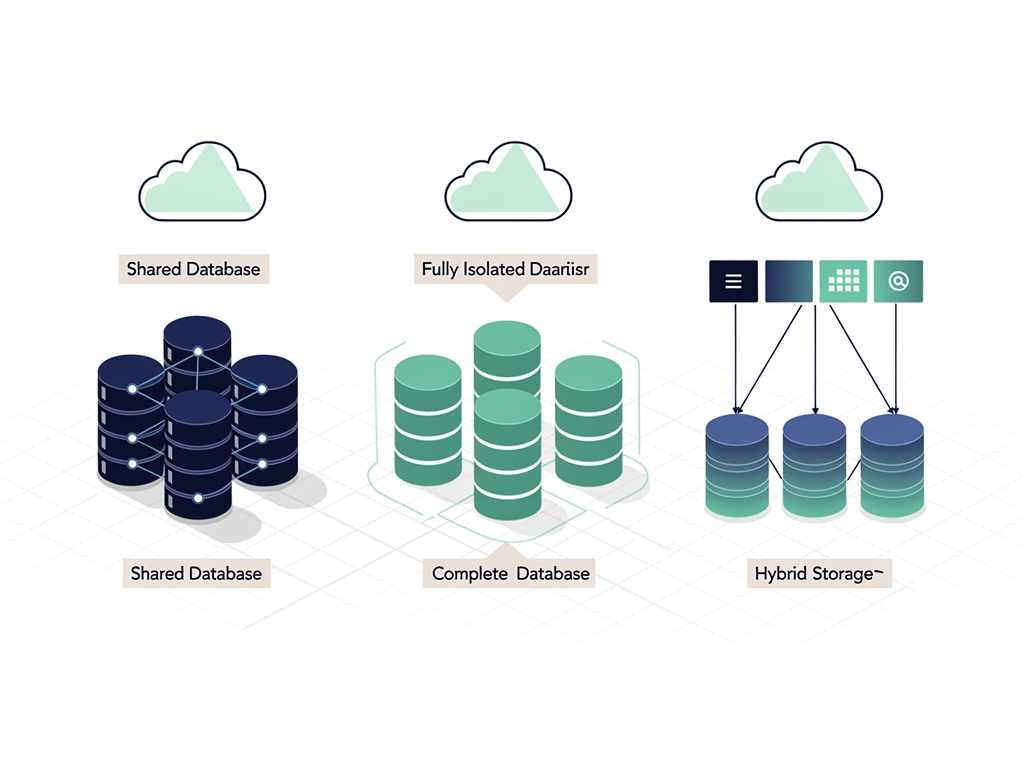
Understanding the Fundamentals of Tenant Isolation
Tenant isolation refers to the mechanisms and strategies that prevent one customer's data, operations, and resources from being accessed by or affecting another customer within a shared infrastructure environment. This concept sits at the heart of every successful multi-tenant SaaS platform, whether you are building a simple subscription service or a complex no-code platform where clients create their own applications.
The need for isolation extends beyond simple data protection. Modern SaaS platforms must address multiple isolation concerns simultaneously. Data isolation ensures that one tenant cannot query, view, or modify another tenant's information under any circumstances. Performance isolation prevents resource-intensive operations by one tenant from degrading the experience for others, a phenomenon commonly known as the "noisy neighbor" problem. Security isolation maintains separate authentication contexts, API keys, and access controls per tenant.
According to AWS's whitepaper on tenant isolation strategies, crossing the isolation boundary in any form represents a significant and potentially unrecoverable event for a SaaS business. This is why isolation must be designed into your architecture from the beginning, not bolted on as an afterthought.
For developers working with a Next.js boilerplate or similar foundation, understanding these isolation requirements early helps you make informed decisions about database schemas, authentication flows, and API design patterns that will scale with your platform.
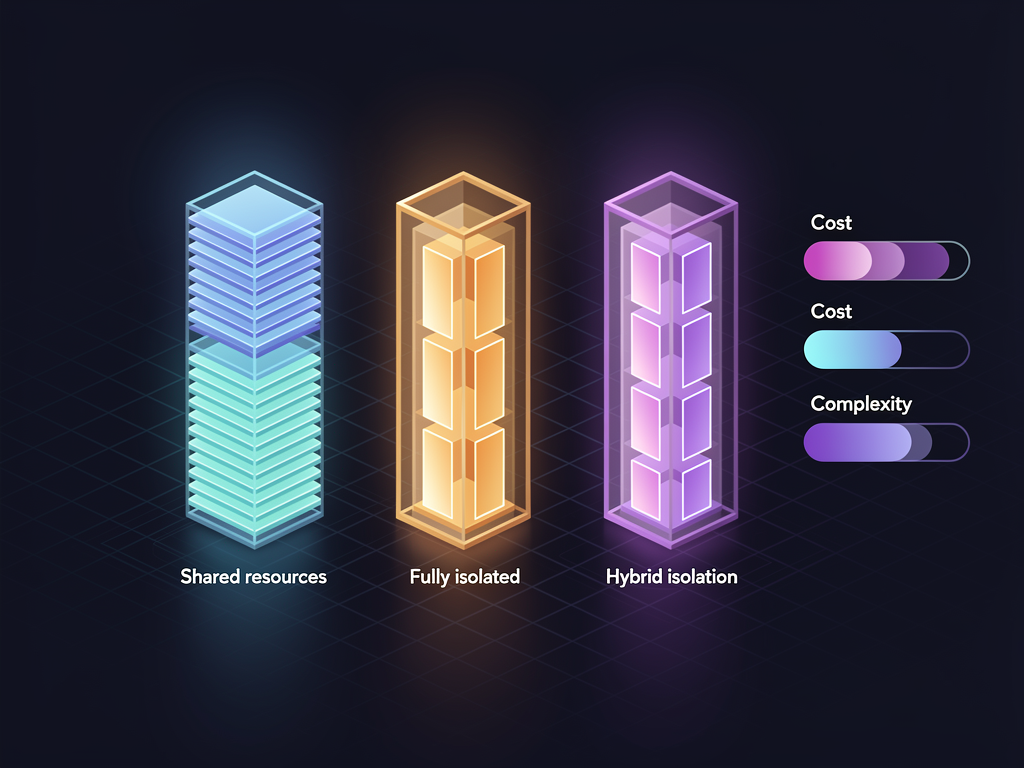
The Three Core Isolation Models Explained
Every multi-tenant SaaS platform implements one of three fundamental isolation models, or increasingly, a hybrid combination of these approaches. Understanding the tradeoffs of each model is essential for making the right architectural decisions for your specific use case and customer requirements.
The Pooled Model (Shared Resources)
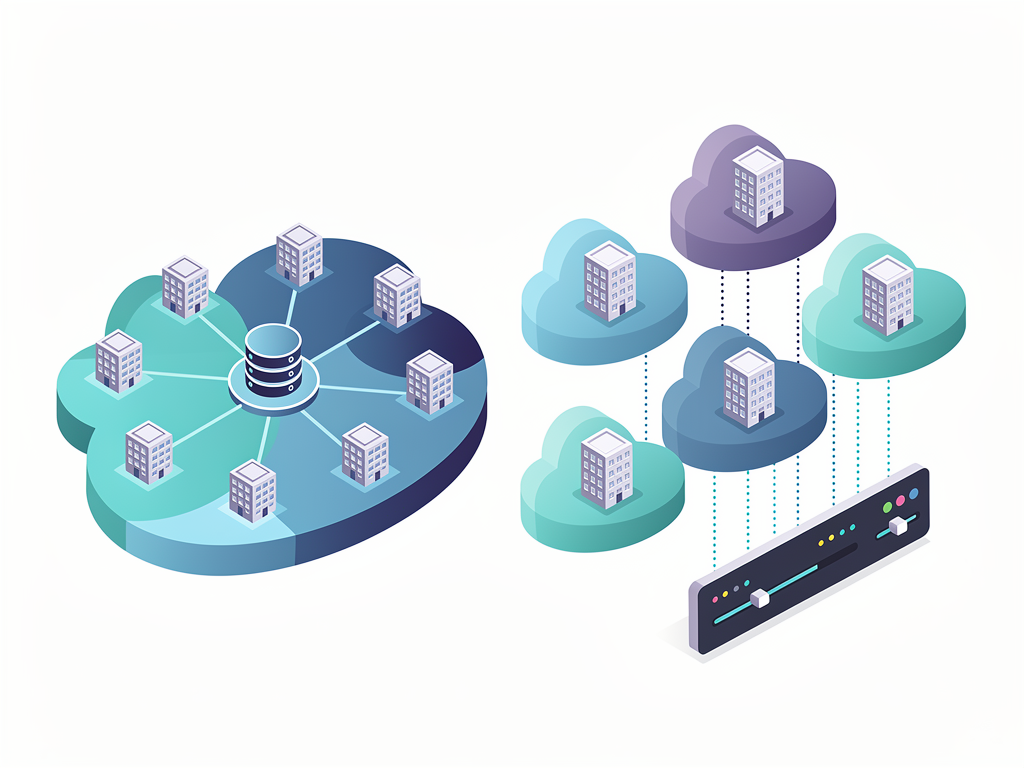
In the pooled model, all tenants share the same infrastructure resources, including compute instances, databases, and storage systems. Isolation is achieved through logical separation at the application layer, typically using tenant identifiers in database queries and middleware that enforces access boundaries.
This model offers the highest cost efficiency because resources are maximally utilized across your entire customer base. It is ideal for early-stage SaaS products, internal tools, and platforms where customers have similar resource requirements and lower compliance demands. However, the pooled model requires careful implementation of row-level security, tenant-aware caching, and robust access control mechanisms to prevent data leakage.
The Siloed Model (Dedicated Resources)
The siloed model provides each tenant with dedicated infrastructure components, potentially including separate database instances, compute clusters, or even entirely isolated Kubernetes namespaces. This approach delivers the strongest isolation guarantees and is often required for enterprise customers with strict compliance requirements or sensitive data handling needs.
The tradeoff is significantly higher infrastructure costs and increased operational complexity. You must manage provisioning, updates, and monitoring across potentially hundreds or thousands of separate environments. For platforms using a SaaS boilerplate as their foundation, implementing silo isolation typically requires additional infrastructure automation and tenant lifecycle management capabilities.
The Bridge Model (Hybrid Approach)
The bridge model combines elements of both pooled and siloed approaches, typically offering shared infrastructure for standard customers while providing dedicated resources for enterprise tiers. This has become the dominant pattern for successful SaaS platforms in 2026, allowing founders to optimize costs for the majority of customers while meeting the elevated requirements of high-value accounts.
Implementing a bridge model requires sophisticated tenant tiering logic, automated provisioning systems that can deploy either shared or dedicated resources based on subscription level, and billing systems that accurately reflect the different cost structures.
Database Isolation Strategies for Multi-Tenant Platforms
Database isolation is often the most consequential architectural decision for multi-tenant SaaS platforms. The strategy you choose impacts query performance, backup and recovery procedures, compliance capabilities, and the complexity of your data access layer. There are four primary approaches to database isolation, each with distinct characteristics.
Shared Database with Shared Schema
In this approach, all tenants share the same database and the same tables. A tenant identifier column distinguishes records belonging to different customers. Every query must include a tenant filter, and row-level security policies at the database level provide an additional safety net against accidental cross-tenant data access.
This strategy offers maximum cost efficiency and simplifies schema migrations since changes only need to be applied once. However, it requires meticulous attention to query construction and presents challenges for tenants with vastly different data volumes. A single tenant with millions of records can impact query performance for all other tenants sharing those tables.
Shared Database with Separate Schemas
Each tenant receives their own schema within a shared database instance. This provides stronger logical separation than shared tables while still benefiting from shared database infrastructure costs. Schema-per-tenant isolation simplifies certain compliance scenarios and makes it easier to implement tenant-specific customizations.
The downside is increased complexity for cross-tenant operations, analytics, and schema migrations. You must apply changes to potentially thousands of schemas, requiring robust automation and careful rollout procedures.
Separate Database Instances
Providing each tenant with their own database instance delivers the strongest data isolation guarantees. This approach is often required for customers in regulated industries such as healthcare, finance, or government. It also simplifies backup, recovery, and data portability scenarios since each tenant's data exists in a completely independent container.
The cost implications are significant, as you are paying for dedicated database resources for each customer. This model typically only makes economic sense for enterprise-tier customers with correspondingly higher subscription fees.
Hybrid Database Strategies
Many successful platforms implement hybrid database strategies, using shared schemas for standard tiers and dedicated instances for enterprise customers. Some platforms further optimize by grouping tenants into database clusters based on region, compliance requirements, or resource consumption patterns.
| Strategy | Cost Efficiency | Isolation Strength | Migration Complexity | Best For |
|---|---|---|---|---|
| Shared Schema | Highest | Lowest | Low | Early-stage, low compliance |
| Separate Schemas | High | Medium | Medium | Growing platforms, moderate compliance |
| Separate Instances | Low | Highest | High | Enterprise, regulated industries |
| Hybrid | Variable | Flexible | High | Tiered pricing models |
Network and Compute Isolation Techniques
Beyond database isolation, modern SaaS platforms must implement network and compute-level separation to prevent cross-tenant interference and satisfy security requirements. Kubernetes has become the dominant platform for deploying multi-tenant workloads, and it offers several mechanisms for achieving isolation at the infrastructure layer.
Namespace Isolation
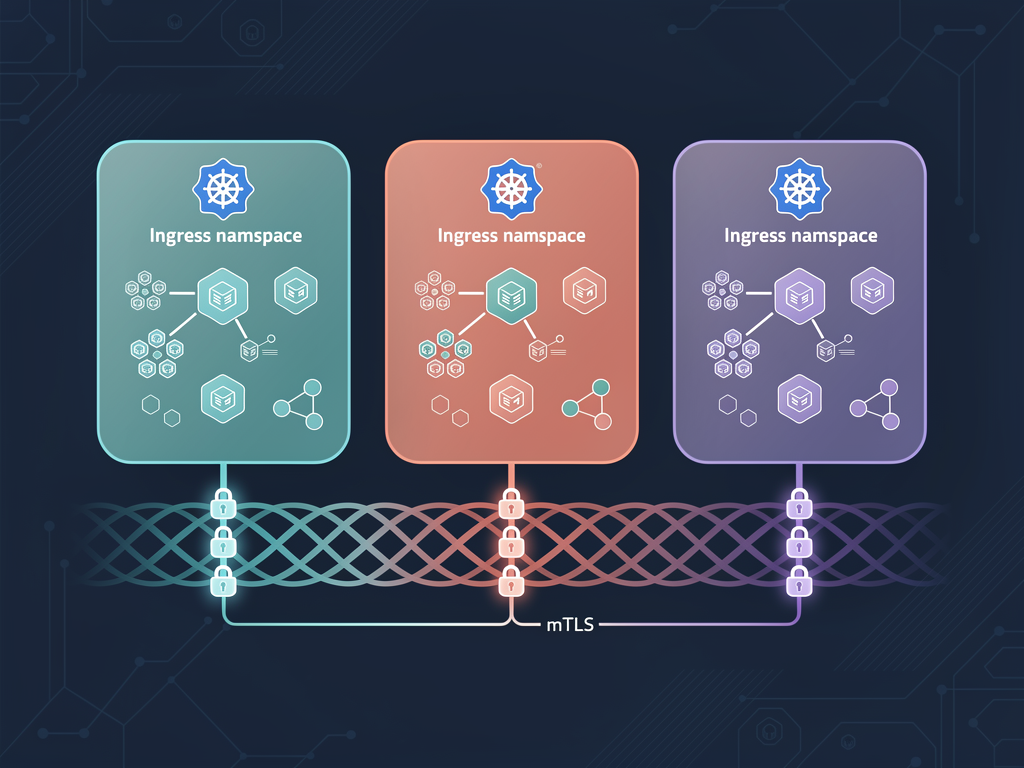
Kubernetes namespaces provide logical separation for workloads, allowing you to deploy tenant-specific resources in isolated contexts. Each namespace can have its own resource quotas, preventing any single tenant from consuming excessive CPU, memory, or storage. Role-based access control (RBAC) policies can be scoped to namespaces, ensuring that administrative access is appropriately limited.
For platforms built on a multi-tenant boilerplate, namespace isolation typically integrates with your tenant provisioning system. When a new customer signs up, your automation creates a dedicated namespace with appropriate quotas, network policies, and RBAC configurations.
Network Policies and Service Mesh
Kubernetes network policies control traffic flow between pods, enabling you to prevent cross-namespace communication and restrict ingress and egress patterns. Service mesh technologies like Istio or Linkerd add additional capabilities including mutual TLS (mTLS) for encrypted service-to-service communication, fine-grained traffic management, and observability features.
According to Northflank's production guide for multi-tenant deployment, Cilium-based network policies combined with automatic mTLS provide robust isolation where workloads are separated between tenants with nothing shared between them. This level of isolation is particularly important for SaaS vendors whose customers have strict data isolation and compliance requirements.
Container Runtime Isolation
For workloads requiring the strongest isolation guarantees, technologies like Kata Containers and Firecracker provide micro-VM isolation. Each container runs in its own lightweight virtual machine, providing hardware-level separation that prevents container escape vulnerabilities from affecting other tenants. This approach adds overhead but may be necessary for platforms handling extremely sensitive data or operating in high-security environments.
Implementing Automated Tenant Provisioning
Automated tenant provisioning is the single most important investment you can make before scaling your multi-tenant platform. Manual provisioning might work when you have ten customers, but it becomes an operational nightmare and a source of configuration errors as your tenant count grows into the hundreds or thousands.
The Complete Provisioning Sequence
A robust automated provisioning system handles the entire onboarding sequence when a new customer signs up. This includes creating the tenant's namespace or environment with appropriate network policies and resource quotas, provisioning database resources according to your isolation strategy, generating and securely storing tenant-specific secrets and API keys, configuring DNS records and subdomains, and setting up RBAC assignments for the tenant's users.
Each step in this sequence must be idempotent, meaning that running the provisioning process multiple times produces the same result as running it once. This property is essential for handling retries, recovering from partial failures, and maintaining consistency across your infrastructure.
Infrastructure as Code for Tenant Management
Modern tenant provisioning leverages infrastructure as code (IaC) tools like Terraform, Pulumi, or the Kubernetes operator pattern. These approaches enable you to define tenant infrastructure declaratively, version control your configurations, and apply changes consistently across all environments.
For platforms using a Next.js starter kit or similar foundation, integrating tenant provisioning with your application's signup flow requires careful coordination between your frontend, backend API, and infrastructure automation layers. Webhooks, message queues, or event-driven architectures can help decouple these concerns while ensuring reliable provisioning.
Pro Tip: Implement a tenant provisioning status API that your frontend can poll to provide real-time feedback during the signup process. This improves user experience and helps you identify provisioning failures before they impact customer onboarding.
Handling Tenant Lifecycle Events
Beyond initial provisioning, your automation must handle the complete tenant lifecycle. This includes upgrading tenants between tiers (which may involve migrating from shared to dedicated resources), suspending tenants for non-payment while preserving their data, reactivating suspended tenants, and eventually deprovisioning tenants who churn while maintaining appropriate data retention policies.
Authentication and Authorization Isolation Patterns
Multi-tenant platforms require sophisticated authentication and authorization systems that maintain strict separation between tenant contexts while providing a seamless user experience. The complexity increases significantly when your platform supports multiple user types, such as platform administrators, tenant owners, and end-users of applications built on your platform.
Tenant-Scoped Authentication
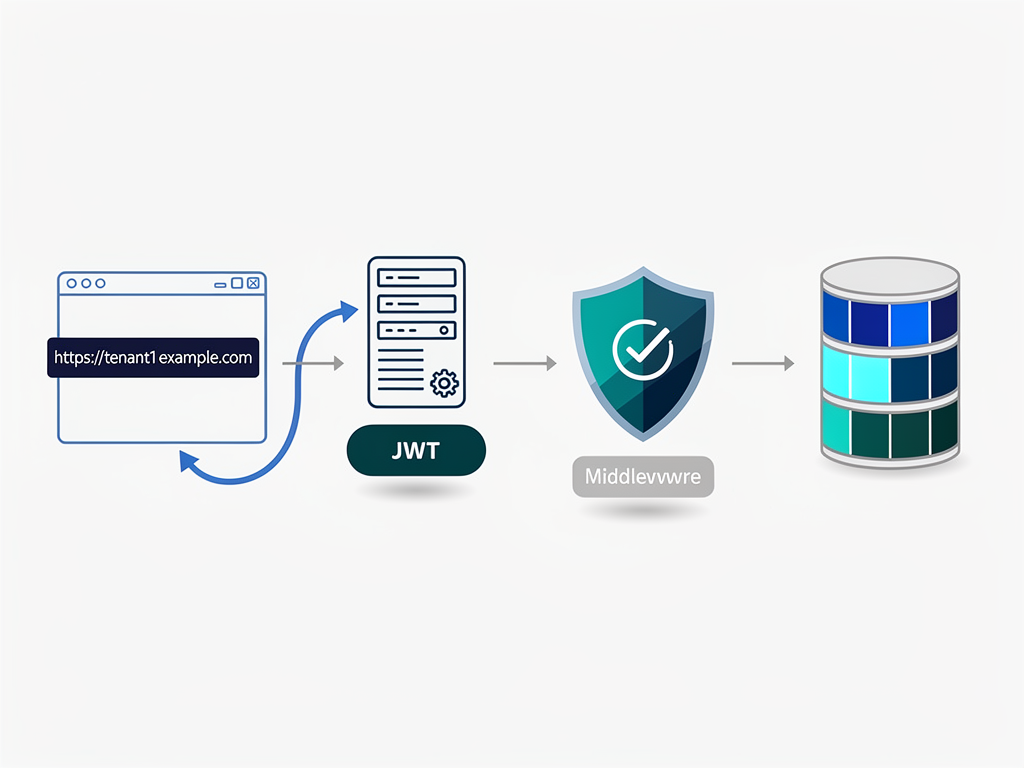
Every authentication token issued by your platform must include tenant context, ensuring that subsequent API requests can be properly scoped. JSON Web Tokens (JWTs) commonly include tenant identifiers in their claims, allowing your middleware to extract and validate tenant context on every request.
For platforms where tenants have custom domains or subdomains, the authentication flow must correctly associate users with their tenant based on the domain they are accessing. This requires careful coordination between your DNS configuration, SSL certificate management, and authentication system.
Hierarchical Permission Models
Complex multi-tenant platforms often implement hierarchical permission models with multiple levels of access control. A typical structure might include platform-level administrators who manage the overall system, tenant owners who control their organization's settings and billing, tenant administrators who manage users within their organization, and regular users with varying permission levels.
Platforms built on a SaaS template often include pre-built permission systems that can be customized for specific use cases. These foundations save significant development time while ensuring that authorization logic follows security best practices.
API Key and Secret Management
Many SaaS platforms provide API access for tenants to integrate with external systems. Each tenant must have isolated API keys that cannot access other tenants' resources. Implementing proper key rotation, revocation, and audit logging is essential for maintaining security and compliance.
Consider using dedicated secrets management services like HashiCorp Vault or cloud provider equivalents (AWS Secrets Manager, Google Secret Manager) to store tenant credentials securely. These services provide encryption at rest, access auditing, and automated rotation capabilities that would be complex to implement from scratch.
Performance Isolation and the Noisy Neighbor Problem
The noisy neighbor problem occurs when one tenant's resource-intensive operations degrade performance for other tenants sharing the same infrastructure. This challenge has become increasingly critical as 59% of SaaS businesses adopt usage-based pricing models that require accurate, isolated performance data for billing purposes.
Resource Quotas and Limits
Implementing resource quotas at multiple levels helps prevent any single tenant from monopolizing shared resources. Kubernetes resource quotas can limit CPU, memory, and storage consumption per namespace. Database connection pools can be partitioned per tenant to prevent connection exhaustion. API rate limiting can throttle requests per tenant to protect backend services.
The key is implementing these limits in a way that provides predictable performance for well-behaved tenants while constraining those who exceed their allocation. Soft limits with warnings allow tenants to burst temporarily while hard limits prevent complete resource exhaustion.
Tenant-Aware Caching Strategies
Caching is essential for performance, but multi-tenant caching requires careful design to prevent cache pollution and ensure fair resource distribution. Each cache entry must be keyed with tenant identifiers to prevent cross-tenant data leakage. Cache eviction policies should consider tenant fairness, preventing a single tenant with high traffic from evicting other tenants' cached data.
Consider implementing per-tenant cache partitions or using cache systems that support tenant-aware memory allocation. Redis Cluster, for example, can be configured with separate keyspaces per tenant, providing logical isolation within a shared cache infrastructure.
Query Optimization and Tenant-Aware Indexing
Database performance in multi-tenant systems requires tenant-aware query optimization. Composite indexes that include tenant identifiers ensure that queries efficiently filter to the relevant tenant's data. Query analysis should identify slow queries and their tenant context, allowing you to optimize for specific usage patterns or reach out to tenants whose queries are impacting overall system performance.
Some platforms implement query governors that automatically terminate long-running queries or complex operations that exceed defined thresholds. This prevents a single tenant's analytical query from blocking transactional operations for other customers.
Observability and Monitoring in Multi-Tenant Environments
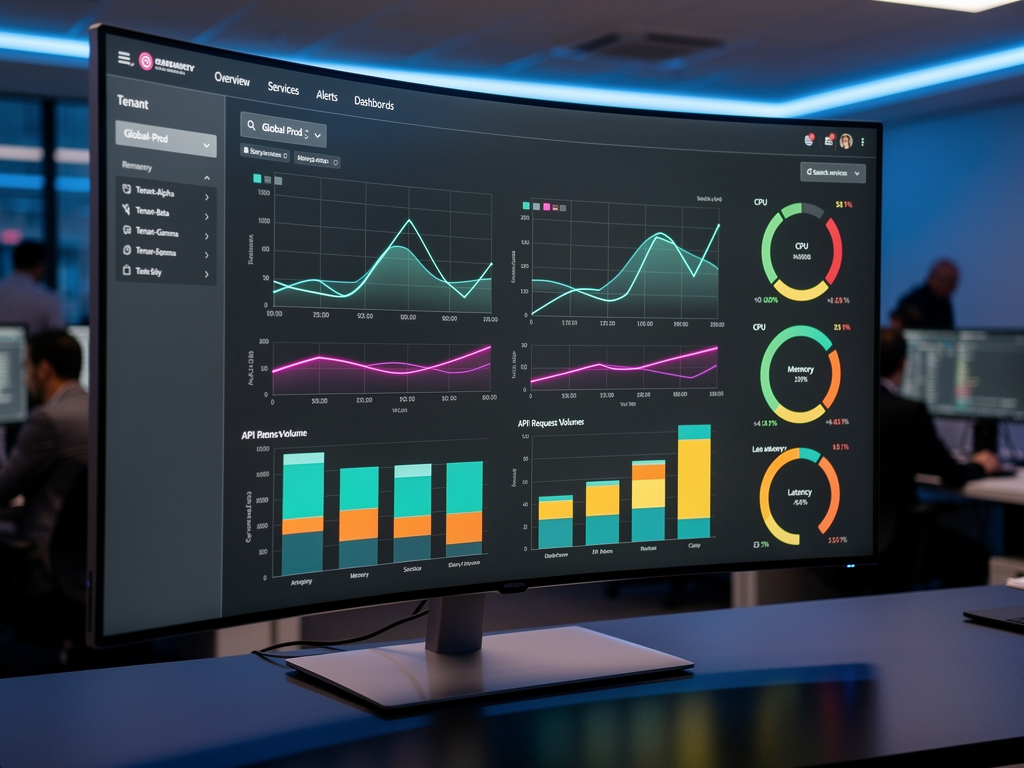
Per-tenant observability is essential for troubleshooting issues, maintaining SLA commitments, and providing accurate usage data for billing. Without tenant-aware monitoring, you cannot determine which customer is experiencing problems or causing them.
Tenant-Tagged Metrics and Logs
Every metric, log entry, and trace in your observability stack should include tenant identifiers as tags or labels. This enables you to filter dashboards by tenant, create tenant-specific alerts, and drill down into issues affecting individual customers. Tools like Prometheus, Grafana, and the ELK stack all support label-based filtering that works well for multi-tenant scenarios.
Structured logging with consistent tenant context makes troubleshooting significantly easier. When a customer reports an issue, your support team can immediately filter logs to that specific tenant and time window, dramatically reducing mean time to resolution.
Tenant-Specific Alerting
Beyond platform-wide alerts, consider implementing tenant-specific alerting for your highest-value customers. Enterprise tenants with dedicated SLAs may require custom alert thresholds and escalation procedures. Some platforms even expose monitoring dashboards directly to tenants, allowing them to track their own usage and performance metrics.
Usage Metering for Billing
Accurate usage metering is critical for platforms with usage-based pricing models. Your metering system must capture resource consumption at the tenant level with sufficient granularity for billing purposes. This includes API calls, compute time, storage usage, bandwidth, and any other billable dimensions.
Implement metering as close to the resource consumption as possible to ensure accuracy. Aggregating metrics after the fact can introduce errors, especially during high-traffic periods or system disruptions.
Compliance and Data Residency Considerations
Tenant isolation strategies must account for compliance requirements that vary by industry, geography, and customer type. Regulations like GDPR, HIPAA, SOC 2, and industry-specific standards impose specific requirements on how tenant data must be stored, processed, and protected.
Data Residency Requirements
Many regulations require that data remain within specific geographic boundaries. GDPR, for example, restricts the transfer of EU residents' personal data to countries without adequate data protection laws. Your multi-tenant architecture must support deploying tenant data in specific regions based on their compliance requirements.
This may require maintaining infrastructure in multiple regions and implementing tenant routing logic that directs requests to the appropriate regional deployment. For platforms using a Next.js SaaS template as their foundation, this typically involves configuring edge routing and ensuring that database connections are region-aware.
Audit Logging and Data Lineage
Compliance frameworks typically require comprehensive audit logging of all data access and modifications. Your audit system must capture who accessed what data, when, and from where. For multi-tenant platforms, this logging must be tenant-aware and tamper-resistant.
Data lineage tracking becomes important for platforms that process or transform tenant data. Understanding how data flows through your system helps demonstrate compliance and supports data subject access requests under regulations like GDPR.
Tenant Data Portability and Deletion
Regulations like GDPR grant individuals the right to data portability and erasure. Your platform must support exporting all of a tenant's data in a portable format and completely deleting tenant data upon request. These capabilities are easier to implement with stronger isolation models, where tenant data is clearly separated from other customers.
For shared schema approaches, data deletion requires careful query construction to ensure complete removal without affecting other tenants. Soft deletion patterns that simply flag records as deleted may not satisfy regulatory requirements for true data erasure.
Bring Your Own Cloud (BYOC) Deployment Models
An emerging trend in enterprise SaaS is the Bring Your Own Cloud (BYOC) deployment model, where the SaaS application runs within the customer's own cloud account rather than the vendor's infrastructure. This model provides the strongest possible isolation guarantees since tenant data never leaves their controlled environment.
BYOC Architecture Patterns
BYOC deployments typically involve the SaaS vendor providing deployment automation (Terraform modules, Helm charts, or similar) that customers run in their own cloud accounts. The vendor's control plane connects to these customer-hosted deployments for management, updates, and monitoring, but data remains entirely within the customer's infrastructure.
This model is particularly attractive for customers in regulated industries who cannot send data to third-party infrastructure. Companies like Databricks, Redpanda, and others have successfully implemented BYOC models for their enterprise customers.
Operational Challenges of BYOC
BYOC introduces significant operational complexity for SaaS vendors. You must support deployments across multiple cloud providers and account configurations. Debugging issues requires coordination with customers who control the underlying infrastructure. Updates must be carefully orchestrated to avoid disrupting customer operations.
Despite these challenges, BYOC can be a powerful differentiator for platforms targeting enterprise customers with strict data sovereignty requirements. The key is building robust deployment automation and remote management capabilities from the start.
Implementing Tenant Isolation with Modern Frameworks
Building multi-tenant isolation from scratch requires significant engineering investment. Modern frameworks, boilerplates, and starter kits can dramatically accelerate development by providing pre-built patterns for common isolation scenarios.
Choosing the Right Foundation
When evaluating a SaaS starter kit or boilerplate for your multi-tenant platform, assess its isolation capabilities carefully. Key features to look for include built-in tenant context management that propagates tenant identifiers through your application stack, database abstraction layers that automatically scope queries to the current tenant, authentication systems that support tenant-specific user pools and custom domains, and middleware that enforces tenant boundaries at the API layer.
Platforms like SaaSCore's Next.js boilerplate provide production-ready foundations with multi-tenant architecture patterns already implemented. These foundations can save hundreds of hours compared to building isolation mechanisms from scratch.
Custom Domain and Subdomain Management
Many multi-tenant platforms allow tenants to use custom domains or subdomains for their applications. Implementing this requires automated SSL certificate provisioning (typically using Let's Encrypt), DNS configuration management, and routing logic that maps incoming requests to the correct tenant context.
Wildcard SSL certificates can simplify subdomain management, while services like Cloudflare or AWS Certificate Manager can automate certificate provisioning for custom domains. Your tenant provisioning system must coordinate these DNS and SSL configurations as part of the onboarding flow.
Tenant-Aware Middleware Patterns
Middleware that extracts and validates tenant context is fundamental to multi-tenant applications. This middleware typically runs early in the request processing pipeline, identifying the tenant from the subdomain, custom domain, or authentication token, and making this context available to subsequent handlers.
In Next.js applications, middleware can intercept requests at the edge, extracting tenant information before the request reaches your application code. This pattern enables efficient tenant routing and early rejection of requests that cannot be associated with a valid tenant.
Testing Strategies for Multi-Tenant Isolation
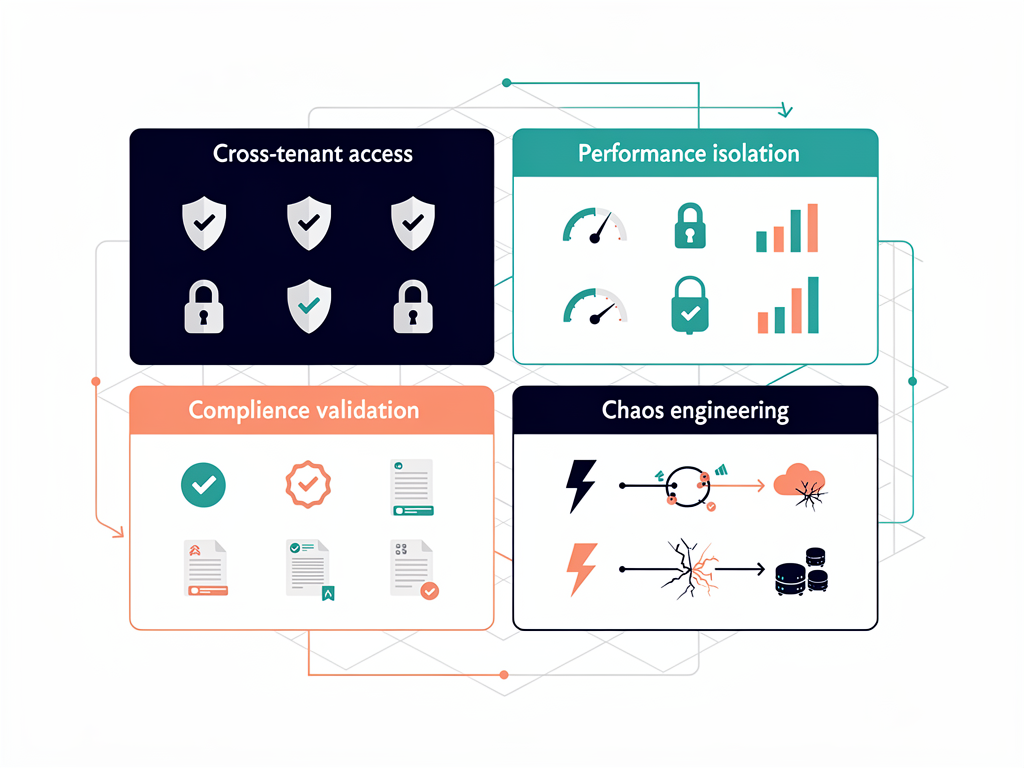
Verifying that your tenant isolation actually works requires comprehensive testing strategies that specifically target cross-tenant scenarios. Standard unit and integration tests are necessary but not sufficient for validating isolation guarantees.
Cross-Tenant Access Testing
Develop test suites that explicitly attempt to access one tenant's resources while authenticated as another tenant. These tests should cover all API endpoints, database queries, file storage, and cache access patterns. Any test that successfully retrieves cross-tenant data represents a critical security vulnerability that must be addressed immediately.
Automated penetration testing tools can supplement manual testing by systematically probing for isolation failures. Consider engaging security specialists to conduct periodic audits of your isolation implementation, particularly before launching enterprise tiers or handling sensitive data.
Performance Isolation Testing
Load testing should verify that performance isolation mechanisms work under stress. Create test scenarios where one tenant generates extreme load while monitoring the performance experienced by other tenants. Your resource quotas and rate limiting should prevent the loaded tenant from degrading service for others.
Chaos engineering practices can help identify isolation failures that only manifest under unusual conditions. Deliberately introducing failures, resource constraints, or network partitions can reveal edge cases where isolation breaks down.
Compliance Validation
If your platform must meet specific compliance requirements, develop test suites that validate compliance controls. This might include verifying that audit logs capture all required events, that data deletion actually removes all tenant data, and that data residency constraints are enforced correctly.
Cost Optimization Strategies for Multi-Tenant Platforms
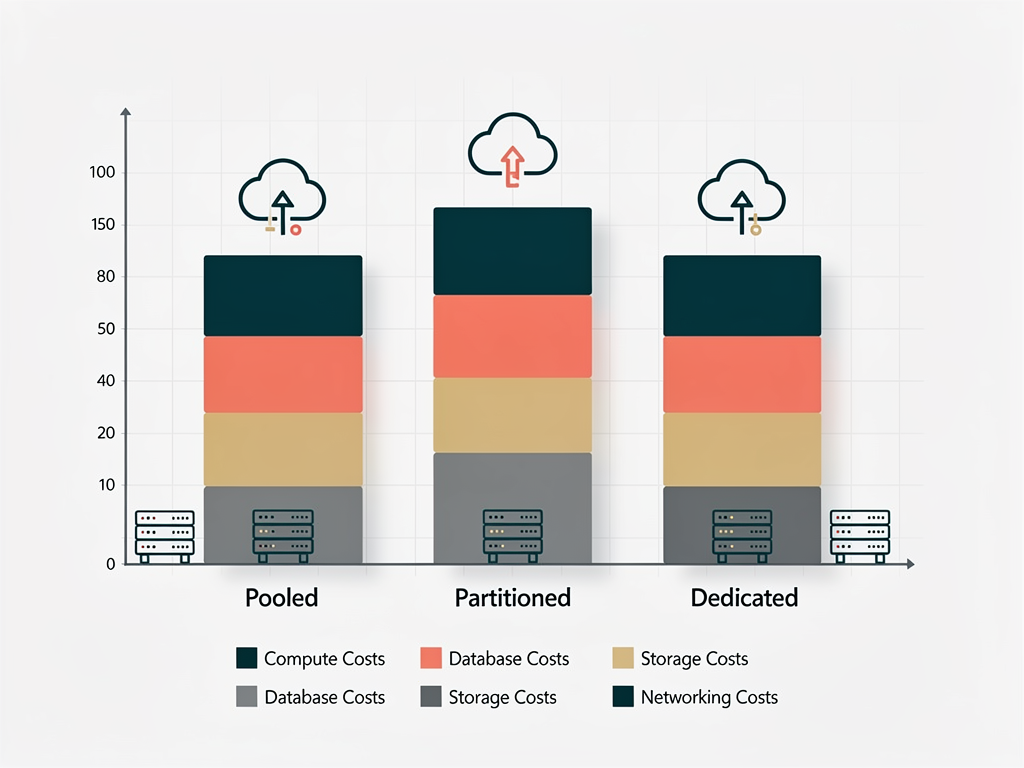
Tenant isolation and cost efficiency often pull in opposite directions. Stronger isolation typically requires more resources, while maximizing resource sharing reduces costs but weakens isolation. Finding the right balance is essential for building a profitable SaaS business.
Tiered Isolation Based on Customer Value
Most successful platforms implement tiered isolation that aligns with pricing tiers. Free and starter tiers receive pooled resources with logical isolation, providing cost-effective service for price-sensitive customers. Professional tiers might receive dedicated database schemas or enhanced resource quotas. Enterprise tiers receive fully siloed infrastructure with dedicated compute, storage, and networking.
This tiered approach allows you to optimize costs for the majority of customers while meeting the elevated requirements of high-value accounts whose subscription fees justify the additional infrastructure expense.
Right-Sizing Tenant Resources
Automated resource right-sizing can significantly reduce costs without compromising isolation. Monitor actual resource consumption per tenant and adjust allocations accordingly. Tenants with consistently low usage can be consolidated onto shared infrastructure, while those approaching their limits can be proactively upgraded.
Kubernetes vertical and horizontal pod autoscalers can dynamically adjust resources based on demand, ensuring that you are not over-provisioning during low-traffic periods while maintaining capacity for peak loads.
Efficient Database Resource Utilization
Database costs often dominate multi-tenant infrastructure expenses. Strategies for optimization include using connection pooling to reduce the number of database connections required, implementing read replicas for read-heavy workloads, leveraging database serverless options that scale to zero during idle periods, and archiving historical data to cheaper storage tiers.
For platforms with separate database instances per tenant, consider using smaller instance sizes for low-usage tenants and implementing automated scaling based on actual demand patterns.
Scaling Multi-Tenant Platforms for Growth
As your platform grows from dozens to thousands of tenants, your isolation strategies must scale accordingly. Patterns that work at small scale may become bottlenecks or security risks at larger scale.
Horizontal Scaling Patterns
Design your architecture for horizontal scaling from the beginning. Stateless application tiers that can be replicated across multiple instances provide the foundation for handling increased load. Load balancers with tenant-aware routing can distribute traffic across application instances while maintaining session affinity when required.
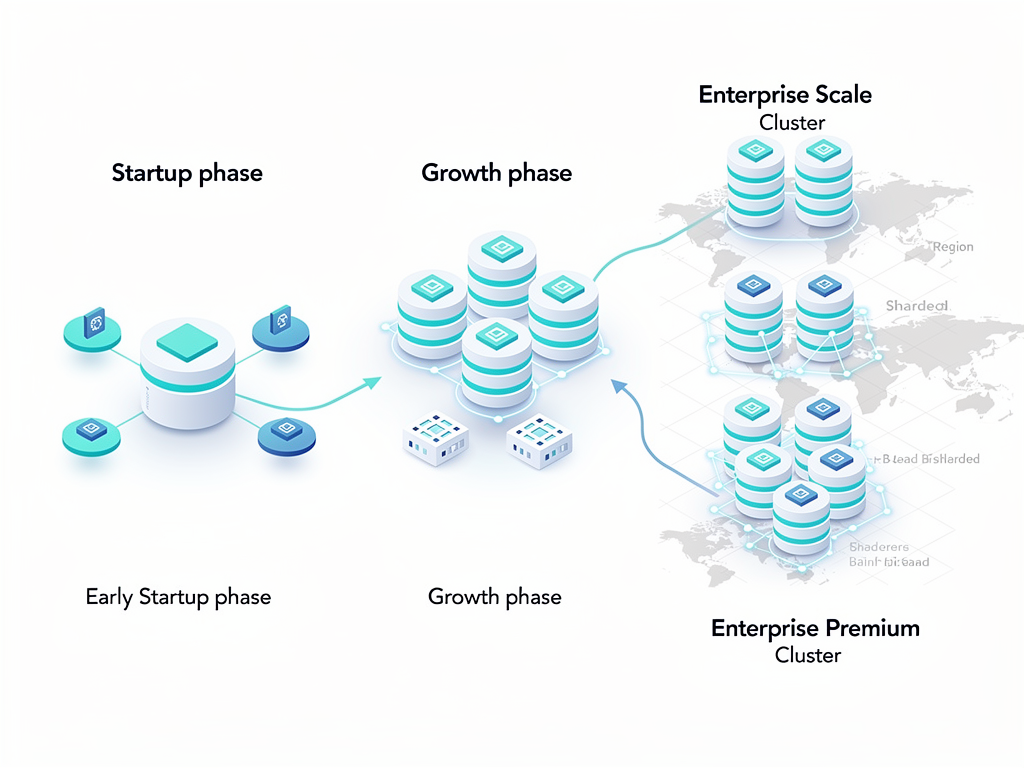
Database scaling is often the most challenging aspect of growth. Sharding strategies that partition tenants across multiple database clusters can provide horizontal scalability, though they add complexity to cross-tenant operations and tenant migrations.
Tenant Onboarding at Scale
Your automated provisioning system must handle high volumes of concurrent tenant creations without becoming a bottleneck. Implement queuing and rate limiting to smooth out spikes in signup traffic. Ensure that provisioning failures are handled gracefully with automatic retries and clear error reporting.
Consider pre-provisioning resources during off-peak hours to reduce signup latency. Having a pool of pre-configured tenant environments ready for assignment can dramatically improve the onboarding experience for new customers.
Managing Tenant Migrations
As tenants grow or change tiers, you may need to migrate them between isolation levels. A tenant upgrading from a shared to a dedicated database requires careful data migration with minimal downtime. Build migration tooling that can handle these transitions smoothly, including rollback capabilities if issues arise.
Document and test your migration procedures thoroughly. A failed tenant migration can result in data loss or extended downtime, damaging customer trust and potentially triggering SLA penalties.
Future Trends in Tenant Isolation for 2026 and Beyond
The landscape of tenant isolation continues to evolve as new technologies emerge and customer expectations increase. Understanding these trends helps you make architectural decisions that will remain relevant as the industry advances.
AI-Driven Resource Allocation
Machine learning models are increasingly being used to predict tenant resource needs and optimize allocation dynamically. These systems analyze historical usage patterns to anticipate demand spikes, automatically adjust resource quotas, and identify tenants whose behavior suggests they may need to upgrade to higher isolation tiers.
Confidential Computing
Hardware-based confidential computing technologies like Intel SGX and AMD SEV provide encryption of data while it is being processed, not just at rest or in transit. These technologies enable new isolation models where even the SaaS provider cannot access tenant data during computation, addressing concerns from customers with the most stringent security requirements.
Edge-Based Tenant Isolation
Edge computing platforms are enabling new patterns for tenant isolation, where tenant workloads run at edge locations closer to end users. This improves latency while potentially providing stronger isolation through geographic separation. Platforms like Cloudflare Workers and Deno Deploy are pioneering these approaches.
Zero Trust Architecture Integration
Zero trust security models, which assume no implicit trust based on network location, are becoming standard for enterprise SaaS. Integrating zero trust principles with tenant isolation means continuously verifying tenant context on every request, implementing fine-grained access controls, and maintaining comprehensive audit trails.

Conclusion
Tenant isolation is the foundation upon which successful multi-tenant SaaS platforms are built. As the industry continues its rapid growth toward $315 billion in 2026, the platforms that thrive will be those that implement robust isolation strategies while maintaining cost efficiency and operational simplicity.
The key insights from this guide include understanding that isolation is not a single decision but a spectrum of choices across data, compute, network, and application layers. Most successful platforms implement hybrid models that align isolation strength with customer tiers and pricing. Automated provisioning is essential for scaling beyond a handful of tenants. Per-tenant observability enables troubleshooting, billing accuracy, and SLA compliance.
For founders and developers building no-code platforms, app builders, and white-label SaaS solutions, investing in proper isolation architecture from the beginning pays dividends as your platform scales. The cost of retrofitting isolation into an existing system far exceeds the investment of building it correctly from the start.
Modern boilerplates and starter kits can dramatically accelerate your path to production by providing pre-built isolation patterns. Evaluate these foundations carefully, ensuring they support the isolation models your customers will require as your platform grows.
Frequently Asked Questions
What is the difference between logical and physical tenant isolation?
Logical isolation separates tenants through software mechanisms like database row filters, application middleware, and access control policies, while physical isolation provides separation through dedicated infrastructure components such as separate database instances, Kubernetes namespaces, or even distinct servers. Logical isolation offers higher cost efficiency since resources are shared across tenants, making it suitable for standard tiers and price-sensitive customers. Physical isolation provides stronger security guarantees and is often required for enterprise customers with compliance requirements or sensitive data. Most production platforms implement a hybrid approach, using logical isolation for the majority of tenants while offering physical isolation as a premium feature for enterprise accounts willing to pay for dedicated resources.
How do I prevent noisy neighbor problems in a shared database?
Preventing noisy neighbor issues in shared databases requires multiple complementary strategies. Implement connection pooling with per-tenant limits to prevent any single tenant from exhausting database connections. Use query governors that automatically terminate long-running queries exceeding defined thresholds, protecting transactional workloads from analytical queries. Create composite indexes that include tenant identifiers, ensuring efficient query filtering. Implement tenant-aware caching to reduce database load for frequently accessed data. Monitor query performance by tenant and proactively reach out to customers whose queries are impacting system performance. Consider implementing separate read replicas for heavy analytical workloads, routing reporting queries away from your primary transactional database. For tenants with consistently high resource consumption, migration to dedicated database resources may be the most effective solution.
What compliance certifications require specific tenant isolation levels?
Different compliance frameworks impose varying requirements on tenant isolation. SOC 2 Type II requires demonstrable controls for data security and availability but does not mandate specific isolation architectures, allowing logical isolation with proper access controls. HIPAA for healthcare data requires stricter controls and often leads organizations to prefer dedicated database instances for protected health information. FedRAMP for US government workloads has specific requirements around data residency and access controls that typically require stronger isolation. PCI DSS for payment card data requires network segmentation and strict access controls. GDPR focuses on data protection, portability, and deletion rights rather than specific isolation architectures, but data residency requirements may necessitate regional deployments. Always consult with compliance specialists to understand the specific requirements for your target industries and customer base.
How do I handle tenant data migration when upgrading isolation levels?
Tenant data migration between isolation levels requires careful planning and robust tooling. Start by creating a complete backup of the tenant's data in the source environment. Provision the target environment with the new isolation level, ensuring all configurations, schemas, and permissions are correctly established. Implement a data synchronization process that copies data to the new environment while tracking changes in the source. Plan a cutover window, ideally during low-traffic periods, where you pause writes to the source, complete final synchronization, update routing to point to the new environment, and verify data integrity. Maintain the ability to rollback by keeping the source environment available for a defined period after migration. Test your migration procedures thoroughly in staging environments before executing on production tenants. Document the process and train your operations team to handle migrations confidently.
What are the cost implications of different isolation strategies?
Cost varies dramatically across isolation strategies. Shared schema approaches offer the lowest infrastructure costs, potentially serving thousands of tenants from a single database instance, with costs as low as a few dollars per tenant monthly for small workloads. Separate schema approaches add modest overhead for schema management but maintain similar infrastructure efficiency. Dedicated database instances significantly increase costs, with even small managed database instances starting at $15 to $50 monthly per tenant before accounting for compute, storage, and networking. Fully siloed deployments with dedicated Kubernetes namespaces, databases, and networking can cost hundreds of dollars monthly per tenant. The key is aligning isolation costs with pricing tiers, ensuring that enterprise customers paying premium subscriptions cover the cost of their dedicated infrastructure while standard tiers remain profitable on shared resources. Usage-based pricing models can help align costs with actual resource consumption across all tiers.
How do I implement tenant isolation in a serverless architecture?
Serverless architectures present unique challenges and opportunities for tenant isolation. Function-level isolation is inherent since each invocation runs in a separate execution context, but you must ensure tenant context is properly propagated through function chains. Use environment variables or function parameters to pass tenant identifiers, never relying on global state. For database access, implement tenant-scoped connection strings or use row-level security policies that filter based on the authenticated tenant. API Gateway can enforce tenant-based rate limiting and authentication before requests reach your functions. For storage, use tenant-prefixed paths in object storage (S3, GCS) with IAM policies that restrict access to the appropriate prefix. Event-driven architectures should include tenant identifiers in all event payloads, ensuring downstream processors maintain proper context. Serverless platforms like AWS Lambda, Vercel, and Cloudflare Workers each have specific patterns for multi-tenant isolation that you should study for your chosen platform.
Ready to Build Your Multi-Tenant Platform?
Implementing robust tenant isolation does not have to mean months of infrastructure engineering. NextBuilder provides a complete Next.js foundation for building multi-tenant SaaS platforms with custom subdomains, SSL, and enterprise-grade isolation patterns already implemented. Stop reinventing the wheel and start shipping your platform in days instead of months. Visit Nextbuilder.dev to explore the demo and see how quickly you can launch your no-code SaaS platform with production-ready tenant isolation.
Subscribe to our newsletter
Subscribe to our newsletter and stay up-to-date with the latest news and updates.