Prisma vs Drizzle ORM: Which is Best for SaaS Platforms?
Explore the performance benchmarks of Prisma and Drizzle ORM to make an informed decision for your SaaS platform. Understand their philosophies, bundle sizes, and query performance to optimize your multi-tenant applications.

Zakariae

Choosing the right Object Relational Mapper (ORM) for your SaaS platform is one of the most consequential technical decisions you will make during development. The database layer touches every feature, from user authentication to billing, from tenant isolation to real-time analytics. When you are building a multi-tenant platform that needs to handle thousands of concurrent users across hundreds of client applications, performance at the ORM level directly translates to infrastructure costs, user experience, and ultimately, your bottom line.
The debate between prisma vs drizzle has intensified throughout 2024 and into 2025, particularly among TypeScript developers building production SaaS applications. Both ORMs offer compelling features, but they represent fundamentally different philosophies about how developers should interact with databases. Understanding these differences, backed by real performance data, will help you make an informed decision that aligns with your platform's specific requirements.
Key Takeaways
- Drizzle ORM delivers significantly smaller bundle sizes (approximately 12.2 KB minified and gzipped) compared to Prisma's approximately 1.6 MB, making it ideal for serverless and edge deployments.
- Prisma 7 eliminated the Rust query engine, dramatically improving cold start times and reducing bundle sizes by 90% compared to Prisma 6.
- Drizzle provides near-instant type inference without a generation step, while Prisma requires running
prisma generateafter schema changes. - For multi-tenant SaaS platforms, both ORMs can handle tenant isolation effectively, but Drizzle's SQL-first approach offers more granular control over complex queries.
- Prisma offers a more mature ecosystem with comprehensive documentation, while Drizzle provides better performance for SQL-comfortable teams.
- Edge runtime support is first-class in Drizzle and now supported in Prisma 7, making both viable for modern serverless architectures.

Understanding the Philosophical Differences Between Prisma and Drizzle
Before diving into benchmarks, you need to understand the fundamental design philosophies that separate these two ORMs. This is not merely an implementation detail; it shapes everything from how you write queries to how you debug production issues. The philosophical divide influences developer experience, learning curves, and long-term maintainability of your codebase.
Prisma takes an abstraction-first approach. You write a schema file using Prisma's own Domain Specific Language (DSL), and Prisma generates a type-safe client for you. The philosophy centers on hiding SQL complexity from developers. Prisma believes you should not need to think about SQL directly; instead, you describe your data model, and the ORM handles the rest. This approach appeals to developers coming from frameworks like Ruby on Rails or Django, where convention over configuration reigns supreme.
Drizzle takes an SQL-first approach. You define your schema in TypeScript using functions that mirror SQL constructs directly. Drizzle's philosophy is straightforward: if you know SQL, you already know Drizzle. The ORM does not hide the database; it gives you type-safe SQL with full visibility into every query. This approach resonates with backend developers who want precise control over database operations.
These philosophical differences cascade into practical implications. Prisma developers think in terms of models and relations, while Drizzle developers think in terms of tables and joins. Neither approach is inherently superior, but your team's background and comfort level with SQL should heavily influence your choice. For a SaaS boilerplate that needs to scale, understanding these trade-offs early prevents costly rewrites later.
Bundle Size and Cold Start Performance Comparisons
For SaaS platforms deploying to serverless environments like Vercel Edge Functions, Cloudflare Workers, or AWS Lambda, bundle size directly impacts cold start times and operational costs. Every millisecond of cold start latency affects user experience, particularly for applications serving global audiences across multiple regions.
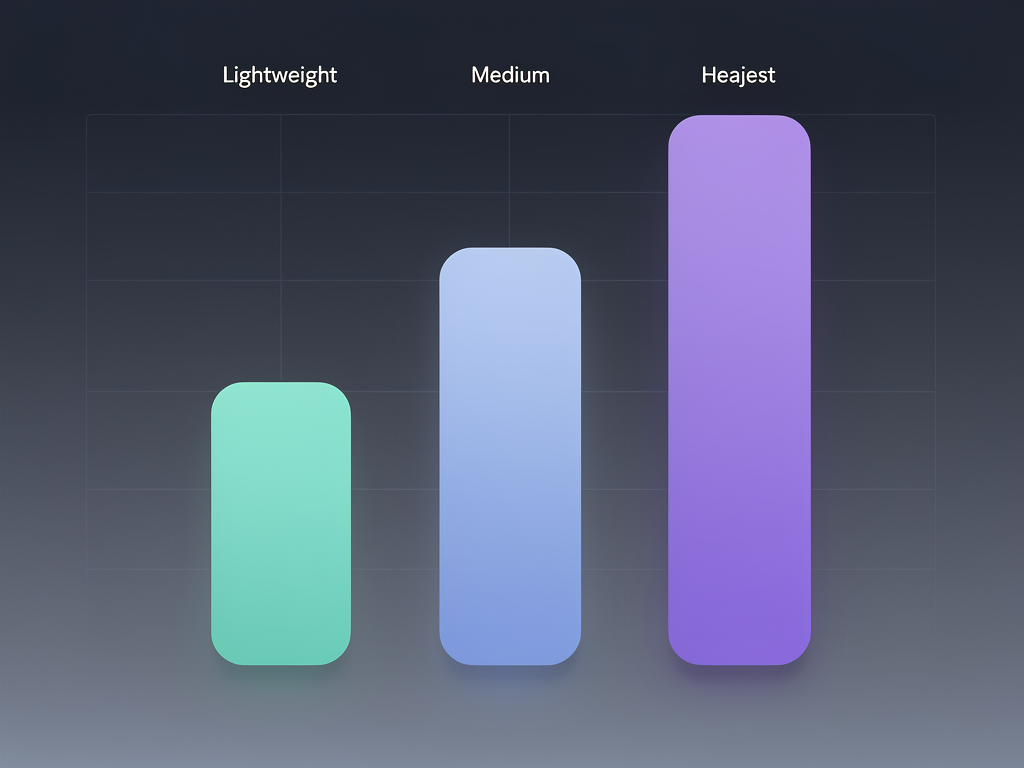
Drizzle maintains a remarkably small footprint at approximately 12.2 KB minified and gzipped with zero external dependencies. This minimal bundle size translates to near-instant cold starts, making Drizzle exceptionally well-suited for edge deployments where functions spin up and down frequently. When your multi-tenant platform serves requests from edge locations worldwide, these milliseconds compound into meaningful performance improvements.
| Metric | Drizzle ORM | Prisma 6 | Prisma 7 |
|---|---|---|---|
| Bundle Size (min+gzip) | ~12.2 KB | ~14 MB | ~1.6 MB |
| Cold Start Time | Near-instant | Slow (Rust binary) | Competitive |
| External Dependencies | Zero | Rust engine | None |
| Edge Runtime Support | First-class | Problematic | Supported |
Prisma 7 represents a significant architectural shift. The team completely removed the Rust query engine that powered previous versions, rewriting the entire client in pure TypeScript. This change reduced bundle size by approximately 90% compared to Prisma 6 and eliminated the binary loading overhead that plagued serverless deployments. The improvement is substantial: Prisma 7 now achieves competitive cold start times, though Drizzle still maintains an edge for the most latency-sensitive applications.
For developers building a Next.js boilerplate for SaaS applications, these bundle size differences matter most during initial page loads and API route cold starts. If your platform serves hundreds of tenants with their own subdomains, each subdomain request potentially triggers a cold start. Optimizing this layer can reduce infrastructure costs significantly while improving perceived performance for end users.
Query Performance Benchmarks for Production Workloads
Raw query performance determines how your SaaS platform handles scale. When thousands of users simultaneously access your application, every microsecond of query latency multiplies across requests. Understanding real-world performance characteristics helps you architect systems that remain responsive under load.
Prisma has published open-source benchmarks comparing query latencies across TypeScript ORMs with different database providers including PostgreSQL on AWS RDS, Supabase, and Neon. Their methodology measures query latency using performance.now() across 14 equivalent queries for each ORM, providing a standardized comparison framework.
The benchmark results reveal an important truth: no single ORM consistently outperforms the others across all query types. Performance depends on the specific query, dataset size, schema complexity, and infrastructure configuration. Simple findMany operations might favor one ORM, while complex joins with nested includes might favor another. This nuance matters for SaaS platforms that execute diverse query patterns throughout their codebase.
Key Insight: Rather than asking "which ORM is faster," ask "which ORM is faster for my specific query patterns?" Profile your actual application queries against both ORMs before making a final decision.
Drizzle's benchmarks, available on their official benchmarks page, demonstrate impressive throughput numbers. In tests using a PostgreSQL database with approximately 370,000 records, Drizzle handled 4,600 requests per second while maintaining approximately 100ms p95 latency. These numbers represent production-like e-commerce traffic patterns, making them relevant for SaaS platforms with similar workloads.
For multi-tenant applications specifically, query performance often hinges on how efficiently you can filter by tenant ID. Both ORMs handle simple where clauses efficiently, but Drizzle's SQL-first approach provides more transparency when debugging slow queries. You see exactly what SQL executes, making it easier to identify and optimize problematic patterns.
Schema Definition Approaches and Developer Experience
How you define your database schema affects daily development workflow, onboarding new team members, and long-term maintainability. Both ORMs offer type-safe schema definitions, but they take dramatically different approaches that suit different team compositions and preferences.
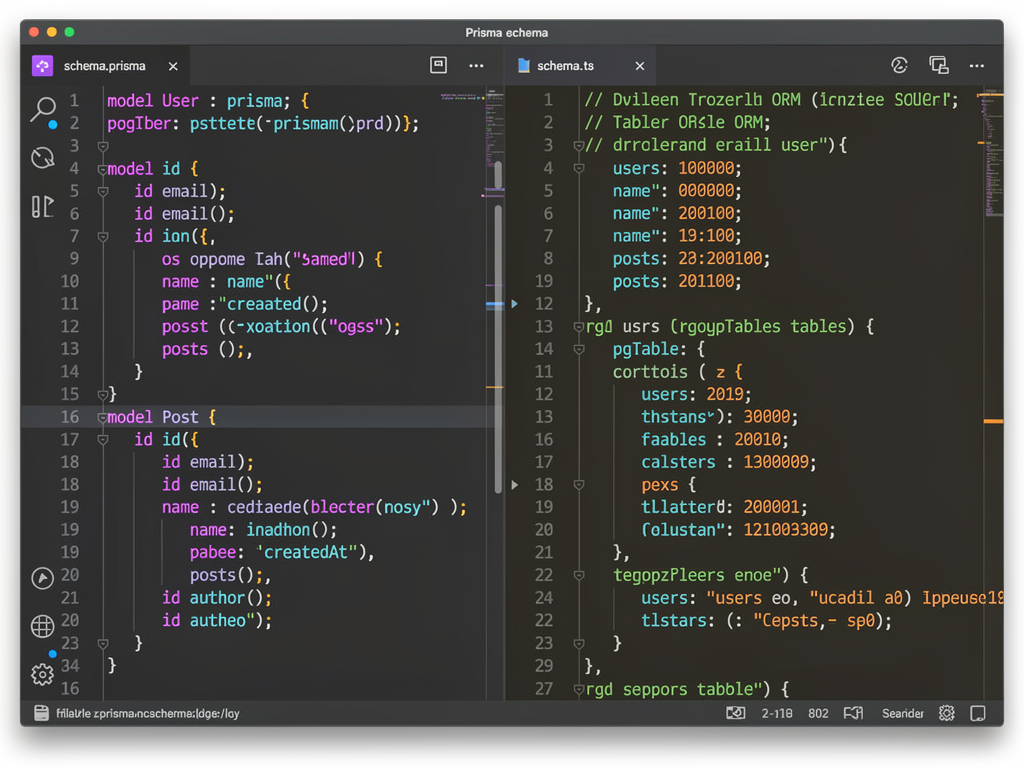
Prisma uses its own schema language stored in .prisma files. This DSL is purpose-built for data modeling, offering clean and declarative syntax that many developers find intuitive. Relations are defined at the model level, making it easy to understand data relationships at a glance. However, this approach means your schema lives in a separate file with its own syntax, requiring dedicated IDE extensions for proper support.
// Prisma schema example
model User {
  id        Int      @id @default(autoincrement())
  email     String   @unique
  tenantId  String
  posts     Post[]
  createdAt DateTime @default(now())
}

model Post {
  id       Int    @id @default(autoincrement())
  title    String
  author   User   @relation(fields: [authorId], references: [id])
  authorId Int
}
Drizzle defines schemas in pure TypeScript, using functions that mirror SQL constructs. This approach means your schema benefits from full TypeScript IntelliSense, refactoring tools, and IDE features without additional extensions. Type inference happens instantly on save, eliminating the generation step required by Prisma.
// Drizzle schema example
import { pgTable, serial, text, integer, timestamp } from 'drizzle-orm/pg-core';

export const users = pgTable('users', {
  id: serial('id').primaryKey(),
  email: text('email').notNull().unique(),
  tenantId: text('tenant_id').notNull(),
  createdAt: timestamp('created_at').defaultNow().notNull(),
});

export const posts = pgTable('posts', {
  id: serial('id').primaryKey(),
  title: text('title').notNull(),
  authorId: integer('author_id').references(() => users.id).notNull(),
});
For teams building a Next.js SaaS template, the schema definition approach influences development velocity. Drizzle's instant type updates eliminate the friction of running generation commands after every schema change. Prisma's dedicated schema language, while requiring an extra step, provides cleaner separation between data modeling and application code that some teams prefer.
Migration Workflows for Production SaaS Deployments
Database migrations in production environments require careful orchestration, especially for SaaS platforms where downtime directly impacts paying customers. Both ORMs provide migration tooling, but their approaches differ in ways that matter for enterprise deployments.
Prisma migrations use prisma migrate dev for development and prisma migrate deploy for production. Migrations are stored in timestamped folders containing SQL files and metadata. This approach provides excellent traceability, as each migration is a discrete, auditable change. Prisma also offers prisma db push for rapid prototyping, which syncs your schema directly without creating migration files.
Drizzle uses drizzle-kit generate to create numbered SQL migration files based on schema changes. The migrations are pure SQL, giving you complete visibility and control over what executes against your database. This transparency is valuable for teams that need to review and potentially modify migrations before deployment, a common requirement in regulated industries or enterprise environments.
| Migration Feature | Prisma | Drizzle |
|---|---|---|
| Generation Command | prisma migrate dev | drizzle-kit generate |
| Migration Format | Timestamped folders | Numbered SQL files |
| Prototyping Mode | prisma db push | drizzle-kit push |
| Visual Studio | Prisma Studio (polished) | Drizzle Studio |
| Rollback Support | Manual SQL required | Manual SQL required |
For multi-tenant boilerplate projects, migration complexity increases because you often need to handle tenant-specific schema variations or data migrations. Both ORMs support custom SQL within migrations, allowing you to write tenant-aware migration logic when necessary. The key difference is visibility: Drizzle migrations are always plain SQL, while Prisma migrations include additional metadata that some teams find helpful for tracking.
Production deployment workflows should include migration testing against staging environments, backup procedures, and rollback plans. Neither ORM provides automatic rollback functionality; you need to write reverse migrations manually. For SaaS platforms with strict uptime requirements, consider implementing blue-green deployment strategies that allow database migrations to complete before switching traffic.
Type Safety and TypeScript Integration Depth
Type safety is a primary reason developers choose either Prisma or Drizzle over raw SQL or older ORMs like TypeORM or Sequelize. Both provide excellent TypeScript integration, but the mechanisms differ in ways that affect development workflow and runtime behavior.
Prisma generates TypeScript types from your schema file during the prisma generate step. These generated types live in node_modules/.prisma/client (or a custom output directory in Prisma 7), providing comprehensive type coverage for all queries. The generated client includes types for every model, relation, and query variant, catching errors at compile time before they reach production.
Drizzle infers types directly from your TypeScript schema definitions without any generation step. When you save a schema file, TypeScript immediately recognizes the updated types throughout your codebase. This instant feedback loop accelerates development, particularly during rapid prototyping phases when schemas change frequently. The trade-off is that Drizzle's type inference can occasionally be slower in very large codebases, though this is rarely noticeable in practice.
Developer Experience Tip: If your team frequently modifies database schemas during development, Drizzle's instant type inference eliminates the friction of remembering to run generation commands. If your schema is relatively stable, Prisma's explicit generation step has minimal impact on workflow.
Both ORMs provide type-safe query builders that prevent common SQL injection vulnerabilities and catch query errors at compile time. However, Drizzle's SQL-like syntax means developers familiar with SQL can predict query behavior more easily. Prisma's abstracted API, while powerful, occasionally generates SQL that differs from developer expectations, requiring familiarity with Prisma's query optimization strategies.
For SaaS starter kit projects targeting rapid MVP development, type safety reduces debugging time and increases confidence when deploying new features. Both ORMs excel in this area, making the choice more about workflow preferences than type safety capabilities.

Multi-Tenant Architecture Patterns and ORM Support
Building multi-tenant SaaS platforms requires careful consideration of data isolation strategies. Whether you choose database-per-tenant, schema-per-tenant, or shared-database-with-tenant-ID approaches, your ORM must support your chosen pattern efficiently. Both Prisma and Drizzle can implement all common multi-tenancy patterns, but with different levels of elegance.
Shared Database with Tenant ID is the most common pattern for SaaS applications due to its simplicity and cost-effectiveness. Both ORMs handle this pattern well. In Prisma, you typically add a tenantId field to relevant models and filter queries accordingly. Drizzle's approach is similar, with the advantage of more explicit SQL that makes tenant filtering logic immediately visible in queries.
Schema-per-Tenant requires dynamic schema selection at runtime. Prisma supports this through connection URL manipulation or the $extends API for more sophisticated scenarios. Drizzle's approach involves creating separate schema definitions and switching between them based on the current tenant context. Both require careful connection pool management to avoid resource exhaustion.
Database-per-Tenant provides maximum isolation but increases operational complexity. This pattern works with both ORMs by dynamically selecting connection strings based on tenant context. For platforms requiring strict data isolation (healthcare, finance, government), this pattern combined with either ORM provides enterprise-grade security.
When building a SaaS template for no-code platforms where clients create their own applications, tenant isolation becomes critical. Each client's data must remain completely separate, and queries must never accidentally leak data across tenants. Implementing row-level security (RLS) at the database level provides an additional safety layer regardless of which ORM you choose.
Prisma's middleware feature allows you to inject tenant filtering logic globally, ensuring every query automatically includes tenant context. Drizzle achieves similar functionality through wrapper functions or custom query builders. Both approaches work, but Prisma's middleware feels more declarative while Drizzle's approach offers more explicit control.
Edge Runtime and Serverless Deployment Compatibility
Modern SaaS platforms increasingly deploy to edge runtimes for improved global performance. Vercel Edge Functions, Cloudflare Workers, and similar platforms offer sub-millisecond cold starts and global distribution, but they impose strict constraints on bundle size and runtime APIs. Your ORM choice significantly impacts edge deployment viability.
Drizzle was designed with edge runtimes as a first-class deployment target. Its minimal bundle size and zero external dependencies make it immediately compatible with edge environments. You can deploy Drizzle-powered API routes to Vercel Edge or Cloudflare Workers without configuration changes or special adapters. This simplicity is valuable for SaaS platforms serving global audiences where edge deployment provides meaningful latency improvements.
Prisma 7's architecture changes dramatically improved edge compatibility. By removing the Rust query engine, Prisma eliminated the binary loading issues that previously made edge deployment problematic. The pure TypeScript client works in edge environments, though the larger bundle size still results in slightly longer cold starts compared to Drizzle. For most applications, this difference is acceptable, but latency-critical applications should benchmark both options.
| Edge Deployment Factor | Drizzle | Prisma 7 |
|---|---|---|
| Vercel Edge Functions | Full support | Supported |
| Cloudflare Workers | Full support | Supported |
| AWS Lambda@Edge | Full support | Supported |
| Bundle Size Impact | Minimal | Moderate |
| Cold Start Impact | Negligible | Acceptable |
| D1/Turso Support | Native | Limited |
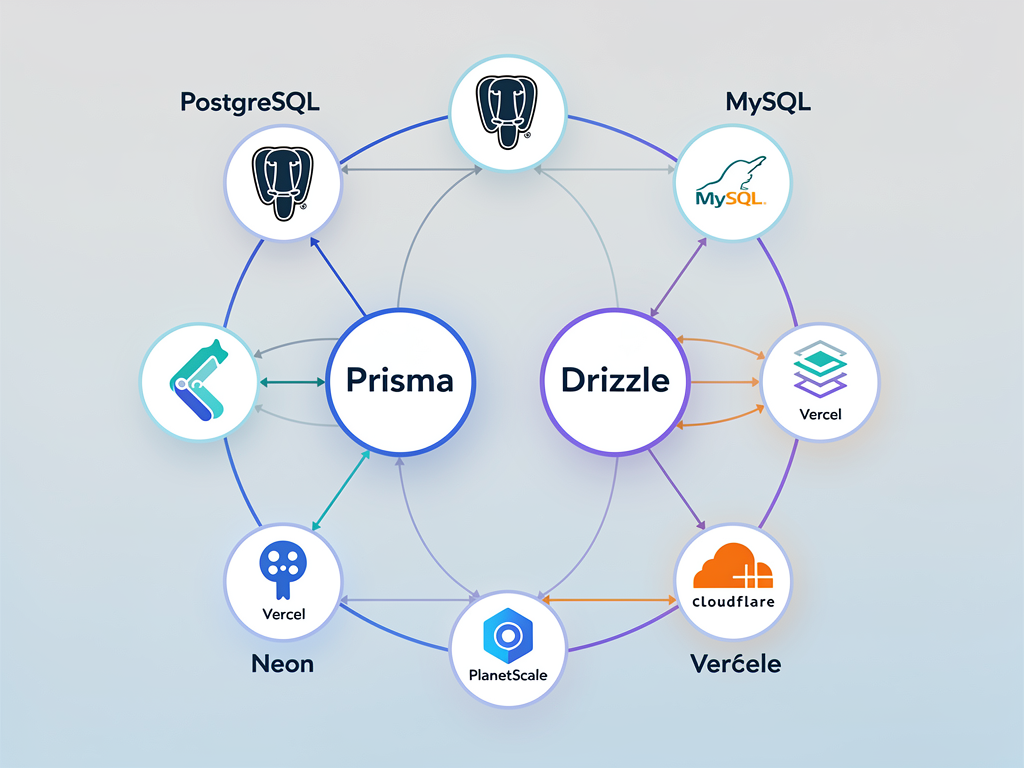
For databases, edge deployments typically connect to distributed databases like Neon, PlanetScale, Turso, or Cloudflare D1. Drizzle provides native support for all these providers with optimized drivers. Prisma supports Neon and PlanetScale well, with D1 support being more limited. If your architecture relies on Cloudflare's ecosystem, Drizzle's broader database support provides more flexibility.

Query API Styles and Complex Query Handling
The query API is where you spend most of your time as a developer, making API ergonomics a crucial consideration. Prisma and Drizzle take fundamentally different approaches that suit different developer preferences and query complexity requirements.
Prisma's query API uses an object-based approach with methods like findMany, findUnique, create, update, and delete. Relations are handled through include and select options, allowing you to fetch related data in a single query. This API feels familiar to developers coming from ORMs like ActiveRecord or Django ORM, where you think in terms of objects rather than SQL.
// Prisma query example
const usersWithPosts = await prisma.user.findMany({
  where: { tenantId: currentTenant },
  include: {
    posts: {
      where: { published: true },
      orderBy: { createdAt: 'desc' },
      take: 10,
    },
  },
});
Drizzle's query API mirrors SQL syntax with methods like select, from, where, join, and orderBy. If you can write the SQL query, you can write the Drizzle equivalent with minimal translation. This transparency is valuable when debugging performance issues or optimizing complex queries, as you always know exactly what SQL will execute.
// Drizzle query example
const usersWithPosts = await db
  .select()
  .from(users)
  .leftJoin(posts, eq(posts.authorId, users.id))
  .where(and(
    eq(users.tenantId, currentTenant),
    eq(posts.published, true)
  ))
  .orderBy(desc(posts.createdAt))
  .limit(10);
For complex queries involving multiple joins, subqueries, or aggregations, Drizzle's SQL-first approach often feels more natural to developers with SQL experience. Prisma's abstracted API can handle these scenarios, but the syntax sometimes feels awkward for queries that do not map cleanly to the object model. Conversely, simple CRUD operations often feel more intuitive in Prisma's object-based API.
Drizzle also offers a Relational Query API that provides Prisma-like syntax for developers who prefer that style. This flexibility allows teams to choose the query style that best fits each use case, using SQL-like syntax for complex queries and relational syntax for simple data fetching.
Database Provider Support and Ecosystem Maturity
Your choice of database provider influences ORM selection, as support depth varies between Prisma and Drizzle. Both ORMs support PostgreSQL, MySQL, and SQLite, but edge cases and advanced features differ in important ways.
Prisma supports a broader range of databases including PostgreSQL, MySQL, SQLite, SQL Server, MongoDB, and CockroachDB. This breadth makes Prisma suitable for enterprises with diverse database requirements or teams migrating between database technologies. MongoDB support, in particular, is unique to Prisma among TypeScript ORMs, making it the default choice for teams committed to document databases.
Drizzle focuses on SQL databases with excellent support for PostgreSQL, MySQL, SQLite, Turso, Cloudflare D1, Neon, and PlanetScale. While the database list is shorter, Drizzle's support for modern distributed databases and edge-native options is often deeper. For SaaS platforms deploying to serverless environments, Drizzle's native Turso and D1 support provides meaningful advantages.
| Database | Prisma Support | Drizzle Support |
|---|---|---|
| PostgreSQL | Excellent | Excellent |
| MySQL | Excellent | Excellent |
| SQLite | Good | Excellent |
| SQL Server | Good | Limited |
| MongoDB | Supported | Not supported |
| CockroachDB | Supported | Supported |
| Neon | Excellent | Excellent |
| PlanetScale | Excellent | Excellent |
| Turso | Limited | Native |
| Cloudflare D1 | Limited | Native |
Ecosystem maturity extends beyond database support. Prisma has been in production longer, resulting in more community resources, tutorials, and third-party integrations. Stack Overflow answers, blog posts, and video tutorials for Prisma significantly outnumber Drizzle resources. For teams that rely heavily on community support, this maturity provides tangible value during development and debugging.
Drizzle's ecosystem is growing rapidly, with strong community engagement and frequent releases. The documentation has improved substantially, though it still lacks the depth of Prisma's comprehensive guides. For teams comfortable navigating newer ecosystems, Drizzle's trajectory suggests the gap will continue narrowing.
Real-World Performance in Next.js Applications
Theory and benchmarks matter, but real-world performance in actual Next.js applications provides the most relevant data for SaaS developers. Both ORMs integrate seamlessly with Next.js, but performance characteristics differ based on rendering strategy and deployment target.
For Server Components and Server Actions, both ORMs perform excellently. Database queries execute on the server, and the ORM's bundle size does not impact client-side performance. The primary consideration is query latency, where both ORMs deliver comparable results for typical CRUD operations. Complex queries with multiple joins may favor Drizzle's more predictable SQL generation.
For API Routes deployed to serverless functions, cold start times become relevant. Drizzle's smaller bundle size results in faster cold starts, particularly noticeable when functions scale from zero. Prisma 7's improvements have narrowed this gap significantly, but Drizzle maintains an advantage for the most latency-sensitive applications.
For Edge API Routes, Drizzle's first-class edge support provides smoother deployment experiences. Prisma 7 works in edge environments, but some developers report occasional compatibility issues with specific edge runtime versions. If edge deployment is central to your architecture, testing both ORMs in your specific deployment environment is advisable.
When building a Next.js starter kit for SaaS applications, consider how your chosen ORM integrates with other stack components. Both Prisma and Drizzle work well with popular authentication libraries like NextAuth.js, state management solutions like Zustand, and UI component libraries like shadcn/ui. The ORM choice rarely constrains other architectural decisions.
Cost Implications for Scaling SaaS Platforms
Infrastructure costs scale with your SaaS platform, and ORM efficiency directly impacts your cloud bills. Understanding the cost implications of each ORM helps you make financially informed decisions, particularly important for bootstrapped startups and cost-conscious enterprises.
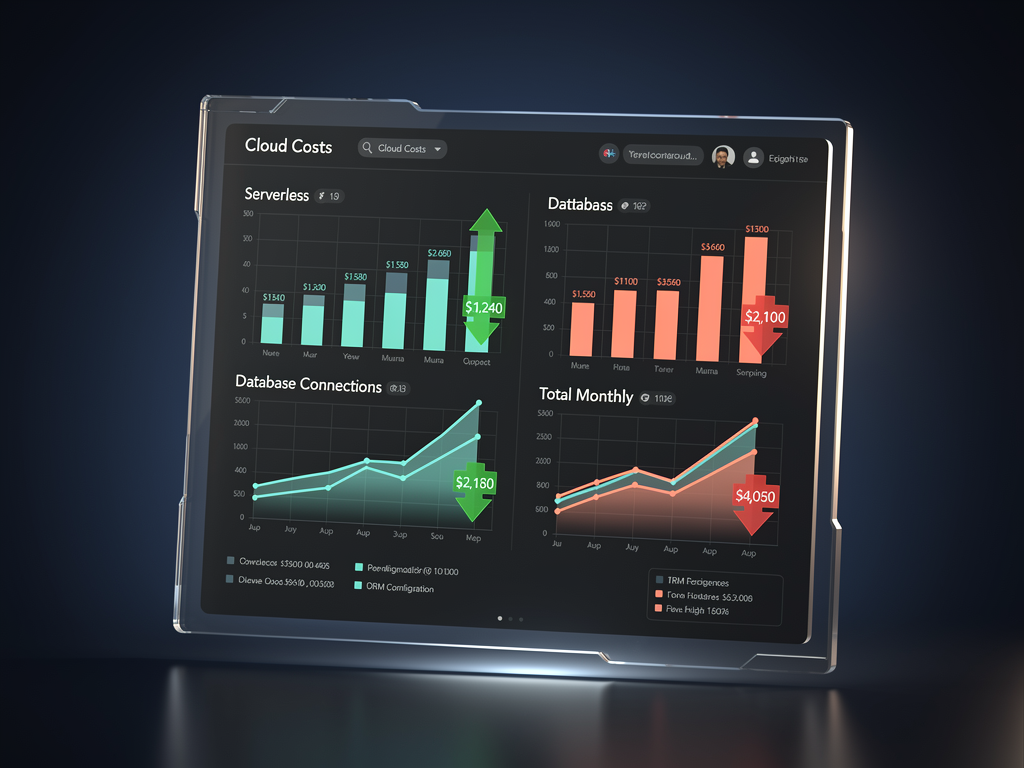
Serverless function costs correlate with execution time and memory usage. Drizzle's smaller bundle size and faster cold starts can reduce function execution times, particularly for infrequently accessed routes that experience cold starts regularly. For high-traffic applications where functions remain warm, the difference diminishes. Calculate your expected traffic patterns to estimate potential savings.
Database connection costs matter for serverless deployments where each function invocation potentially opens a new connection. Both ORMs support connection pooling through external services like PgBouncer or built-in pooling from providers like Neon and PlanetScale. Prisma's connection management has historically been more complex in serverless environments, though recent versions have improved significantly.
Development velocity costs are often overlooked but significant. If one ORM allows your team to ship features faster, the productivity gains may outweigh infrastructure cost differences. Prisma's mature ecosystem and comprehensive documentation can accelerate development for teams new to TypeScript ORMs. Drizzle's SQL-first approach may be faster for teams with strong SQL backgrounds.
Cost Optimization Tip: For SaaS platforms with predictable traffic patterns, consider reserved capacity or committed use discounts from your cloud provider. The ORM choice becomes less significant when functions remain warm and connection pools are properly configured.
For platforms like SaaSCore's Next.js boilerplate, which provides production-ready SaaS foundations, ORM selection is already optimized for the target deployment environment. Evaluating how boilerplate choices align with your scaling expectations helps avoid costly migrations later.
Migration Path Between ORMs and Future-Proofing
Technology decisions are rarely permanent. Understanding the migration path between ORMs helps you make decisions with appropriate reversibility in mind. Both Prisma and Drizzle store data in standard SQL databases, making migrations technically feasible though not trivial.
Migrating from Prisma to Drizzle requires rewriting your schema definitions from Prisma's DSL to Drizzle's TypeScript format. Query code needs translation from Prisma's object-based API to Drizzle's SQL-like syntax. The database itself requires no changes, as both ORMs work with standard PostgreSQL, MySQL, or SQLite databases. Expect the migration to take several days for small applications and weeks for larger codebases.
Migrating from Drizzle to Prisma follows a similar pattern in reverse. Drizzle's TypeScript schemas translate to Prisma's DSL, and queries need rewriting. Prisma's introspection feature (prisma db pull) can generate an initial schema from your existing database, accelerating the migration process. However, you will still need to manually adjust relations and add Prisma-specific attributes.
To minimize migration risk, consider these strategies:
- Abstract your data access layer behind repository interfaces, allowing you to swap ORM implementations without changing business logic.
- Write integration tests that verify data access behavior independently of ORM implementation details.
- Document your query patterns to simplify translation if migration becomes necessary.
- Evaluate both ORMs thoroughly before committing, using proof-of-concept implementations for your most complex queries.
For long-term projects, consider the trajectory of each ORM. Prisma has substantial venture funding and a large team, suggesting continued development and support. Drizzle has strong community momentum and rapid feature development. Both appear sustainable choices for production applications, though Prisma's longer track record provides additional confidence for risk-averse organizations.
Decision Framework for Choosing Your ORM
After examining performance benchmarks, developer experience, and architectural considerations, you need a practical framework for making your decision. The following criteria help match ORM characteristics to your specific project requirements.
Choose Drizzle if:
- Your team is comfortable writing SQL and wants full visibility into generated queries
- Bundle size and cold start performance are critical requirements
- You are deploying to edge runtimes as a primary architecture pattern
- You prefer instant type inference without generation steps
- You are using Turso, Cloudflare D1, or other edge-native databases
- Your application has complex queries that benefit from SQL-first syntax
Choose Prisma if:
- Your team prefers abstraction over SQL and thinks in terms of models
- Comprehensive documentation and community resources are important
- You need MongoDB support or plan to use multiple database types
- You value mature tooling like Prisma Studio for data management
- Your team includes developers from Rails, Django, or similar frameworks
- You want the most battle-tested option for enterprise deployments
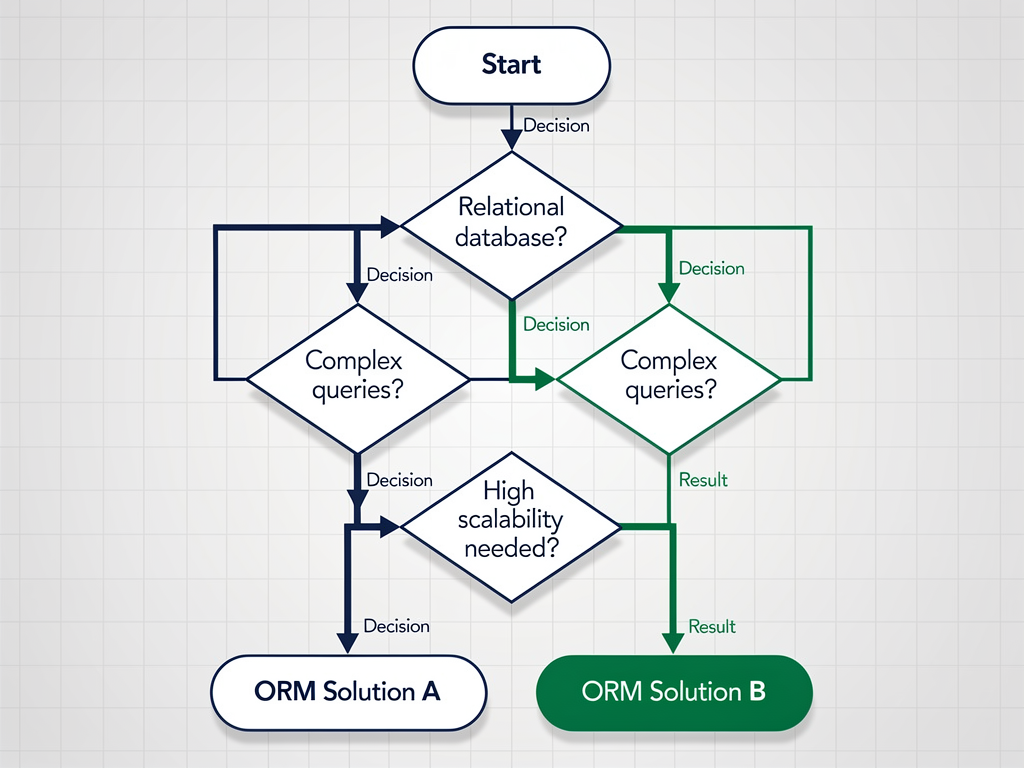
For teams building with a multi-tenant architecture where clients create their own applications with custom subdomains, both ORMs can support your requirements. The choice often comes down to team preference and existing expertise rather than technical limitations.
Integration with Modern SaaS Architecture Patterns
Modern SaaS platforms combine multiple architectural patterns including multi-tenancy, microservices, event-driven systems, and real-time features. Understanding how each ORM fits into these patterns helps you build cohesive systems.
Event-driven architectures often require efficient database operations within event handlers. Both ORMs work well in this context, though Drizzle's lighter weight may provide advantages in high-throughput event processing scenarios. Consider connection pooling carefully, as event handlers may execute concurrently at scale.
Microservices architectures benefit from consistent ORM usage across services, simplifying developer onboarding and code sharing. However, different services may have different requirements; a high-throughput analytics service might benefit from Drizzle's performance while a content management service might prefer Prisma's developer experience.
Real-time features using WebSockets or Server-Sent Events require efficient database queries to avoid blocking the event loop. Both ORMs support async operations properly, but Drizzle's predictable query generation makes it easier to optimize for real-time workloads where latency consistency matters.
For platforms offering no-code app building capabilities, database operations often occur in user-defined workflows. Both ORMs can power these dynamic query scenarios, though Drizzle's SQL-first approach may provide more flexibility for generating queries based on user-defined schemas.

Testing Strategies for ORM-Powered Applications
Robust testing ensures your database layer behaves correctly across all scenarios. Both ORMs support common testing patterns, but implementation details differ in ways that affect test setup and execution speed.
Unit testing typically involves mocking the ORM client to isolate business logic from database operations. Prisma provides @prisma/client/mock utilities for creating type-safe mocks. Drizzle's simpler architecture often allows direct mocking of the database connection, providing more control over mock behavior.
Integration testing requires actual database connections to verify query correctness. Both ORMs work with test databases, though setup patterns differ. Prisma's migration tooling integrates well with test setup scripts, automatically applying migrations to test databases. Drizzle's SQL-based migrations offer similar capabilities with more explicit control.
End-to-end testing exercises the full stack including database operations. Test execution speed depends partly on ORM overhead; Drizzle's lighter weight may provide faster test suites for large test collections. Consider using database transactions to isolate tests and enable parallel execution regardless of ORM choice.
Testing Best Practice: Use separate test databases with automated setup and teardown. Both ORMs support programmatic migration application, enabling clean database states for each test run.
Community Resources and Learning Paths
Your ability to learn and troubleshoot depends on available community resources. The quantity and quality of learning materials differ significantly between Prisma and Drizzle, affecting onboarding time and problem-solving efficiency.
Prisma offers extensive official documentation covering every feature in depth. The Prisma blog publishes regular tutorials, best practices, and performance guides. Community resources include thousands of Stack Overflow answers, numerous YouTube tutorials, and active Discord and GitHub discussions. For teams new to TypeScript ORMs, this wealth of resources accelerates learning.
Drizzle's documentation has improved substantially but remains less comprehensive than Prisma's. The official docs cover core features well, but advanced scenarios sometimes require community exploration. The Drizzle Discord is active and helpful, with core team members frequently answering questions. YouTube content is growing but still limited compared to Prisma.
For teams evaluating both ORMs, consider building small proof-of-concept applications with each. Implement your most complex anticipated queries and evaluate developer experience firsthand. This investment of a few days can prevent months of friction if you choose an ORM that does not fit your team's working style.

Conclusion
The choice between Prisma and Drizzle for your SaaS platform ultimately depends on your team's SQL comfort level, deployment environment requirements, and development workflow preferences. Both ORMs are production-ready and capable of powering successful multi-tenant applications at scale.
Drizzle excels in scenarios requiring minimal bundle sizes, edge deployment compatibility, and SQL-first query control. Its instant type inference and transparent query generation appeal to developers who want to stay close to the database while enjoying TypeScript's type safety benefits.
Prisma provides a more abstracted experience with comprehensive documentation, mature tooling, and broader database support. The improvements in Prisma 7, particularly the removal of the Rust engine, have addressed many historical performance concerns while maintaining the developer experience that made Prisma popular.
For SaaS platforms where clients create their own applications with custom subdomains and SSL, either ORM can support your multi-tenant architecture effectively. Focus on matching the ORM's philosophy to your team's preferences and existing expertise. A team that enjoys working with their chosen ORM will build better software than one fighting against unfamiliar abstractions.
Whichever ORM you choose, invest in proper testing, monitoring, and optimization practices. The ORM is one component of your data layer; connection pooling, query optimization, and database indexing matter equally for production performance. Build proof-of-concept implementations, benchmark your specific query patterns, and make an informed decision based on your unique requirements.
Frequently Asked Questions
Which ORM is faster for simple CRUD operations in a SaaS application?
For simple CRUD operations like creating users, updating records, or fetching single items by ID, both Prisma and Drizzle deliver comparable performance. Benchmark data from both teams shows query latencies within milliseconds of each other for basic operations. The performance difference becomes more noticeable in complex scenarios involving multiple joins, nested includes, or large result sets. Drizzle's lighter runtime overhead provides slight advantages in serverless cold start scenarios, but once functions are warm, the difference is negligible for simple queries. Focus on query optimization, proper indexing, and connection pooling rather than ORM choice for basic CRUD performance.
Can I use Prisma or Drizzle with Supabase for my multi-tenant platform?
Both ORMs work excellently with Supabase's PostgreSQL database. Prisma has official documentation for Supabase integration, and many production applications use this combination successfully. Drizzle also supports Supabase with its PostgreSQL driver, offering native compatibility without additional configuration. For multi-tenant platforms, both ORMs can implement tenant isolation through tenant ID filtering or Supabase's Row Level Security (RLS) policies. The choice between ORMs does not limit your Supabase integration options. Consider your team's SQL comfort level and deployment requirements when deciding, as both provide type-safe access to Supabase's PostgreSQL instance.
How do migration workflows differ between Prisma and Drizzle in team environments?
Prisma migrations use timestamped folders containing SQL files and metadata, tracked in version control alongside your code. The prisma migrate dev command generates migrations during development, while prisma migrate deploy applies them in production. Drizzle uses numbered SQL files generated by drizzle-kit generate, providing pure SQL migrations without additional metadata. Both approaches work well in team environments with proper version control practices. Prisma's migration history includes checksums that detect drift, while Drizzle's simpler format allows easier manual editing when needed. Teams should establish clear migration review processes regardless of ORM choice to prevent conflicting schema changes.
Is Drizzle stable enough for production SaaS applications in 2025?
Drizzle has matured significantly and powers numerous production applications including high-traffic SaaS platforms. The ORM has reached version 1.0 milestones with stable APIs and comprehensive database support. Many developers report positive production experiences with Drizzle, citing its performance characteristics and developer experience as key benefits. However, Drizzle's ecosystem is younger than Prisma's, meaning fewer community resources and third-party integrations exist. For production deployments, ensure your specific database provider and query patterns are well-supported by testing thoroughly before committing. The Drizzle team maintains active development with frequent releases addressing issues and adding features.
How do Prisma and Drizzle handle connection pooling for serverless deployments?
Connection pooling is critical for serverless deployments where each function invocation may attempt to open a new database connection. Prisma recommends using external connection poolers like PgBouncer or built-in pooling from providers like Neon's serverless driver or PlanetScale's connection handling. Prisma 7 improved connection management significantly, reducing the complexity that plagued earlier versions. Drizzle works with the same external pooling solutions and also supports provider-specific serverless drivers natively. Both ORMs can connect through Neon's HTTP-based serverless driver, eliminating traditional connection pool concerns entirely. Configure your database provider's recommended pooling solution and test under realistic load to ensure proper behavior.
Can I migrate an existing Prisma project to Drizzle without downtime?
Migrating from Prisma to Drizzle is technically feasible without database downtime since both ORMs work with standard SQL databases. The migration involves rewriting schema definitions from Prisma's DSL to Drizzle's TypeScript format and translating queries from Prisma's object-based API to Drizzle's SQL-like syntax. The database itself requires no changes. For zero-downtime migration, consider a gradual approach: implement Drizzle alongside Prisma, migrate routes incrementally, and remove Prisma once all code is converted. This process typically takes days for small applications and weeks for larger codebases. Write comprehensive integration tests before migrating to ensure query behavior remains consistent throughout the transition.
Ready to Build Your Multi-Tenant SaaS Platform?
Whether you choose Prisma or Drizzle for your database layer, having a solid foundation accelerates your development timeline significantly. NextBuilder provides a complete Next.js boilerplate for building multi-tenant SaaS platforms, featuring production-ready authentication, billing integration, custom subdomain support with SSL, and comprehensive admin dashboards. Skip months of boilerplate development and focus on building features that differentiate your platform. With support for both Prisma and modern database patterns, NextBuilder gives you the flexibility to implement your preferred ORM while benefiting from battle-tested multi-tenant architecture.
Subscribe to our newsletter
Subscribe to our newsletter and stay up-to-date with the latest news and updates.