Nuxt vs Next.js: Choosing the Best Framework for SaaS
Explore the key differences between Nuxt and Next.js for SaaS development. Learn how each framework affects team scalability, multi-tenant architecture, and developer experience.

Zakariae

Choosing the right JavaScript framework for your SaaS application is one of the most consequential technical decisions you will make as a founder or lead developer. The debate around nuxt vs next has intensified as both frameworks have matured into powerful, production-ready solutions capable of handling complex multi-tenant architectures. For entrepreneurs building no-code platforms, client portals, or subscription-based software, this choice will influence everything from your time-to-market to your long-term maintenance burden and team scalability.
Both Nuxt and Next.js emerged from the same fundamental need: to provide server-side rendering capabilities and improved developer experience on top of their respective core libraries, Vue and React. However, their philosophical approaches, ecosystem sizes, and enterprise adoption rates differ significantly. Understanding these differences is essential for making an informed decision that aligns with your business goals, team expertise, and product roadmap.
Key Takeaways
- Next.js dominates enterprise SaaS with a larger ecosystem, more job market availability, and deeper integration with deployment platforms like Vercel.
- Nuxt offers faster initial development for Vue-experienced teams through convention-over-configuration patterns and automatic component registration.
- Migration costs are substantial in either direction, with Nuxt to Next.js requiring approximately 40% code rewrite and the reverse demanding 50% rewrite.
- Multi-tenant architecture support is robust in both frameworks, but Next.js has more documented patterns and community resources for complex tenant isolation.
- Team expertise should drive your decision more than theoretical performance benchmarks or feature comparisons.
- Long-term scalability favors Next.js for enterprise applications due to React's broader adoption and the availability of specialized SaaS boilerplate solutions.
Understanding the Fundamental Philosophy Behind Each Framework
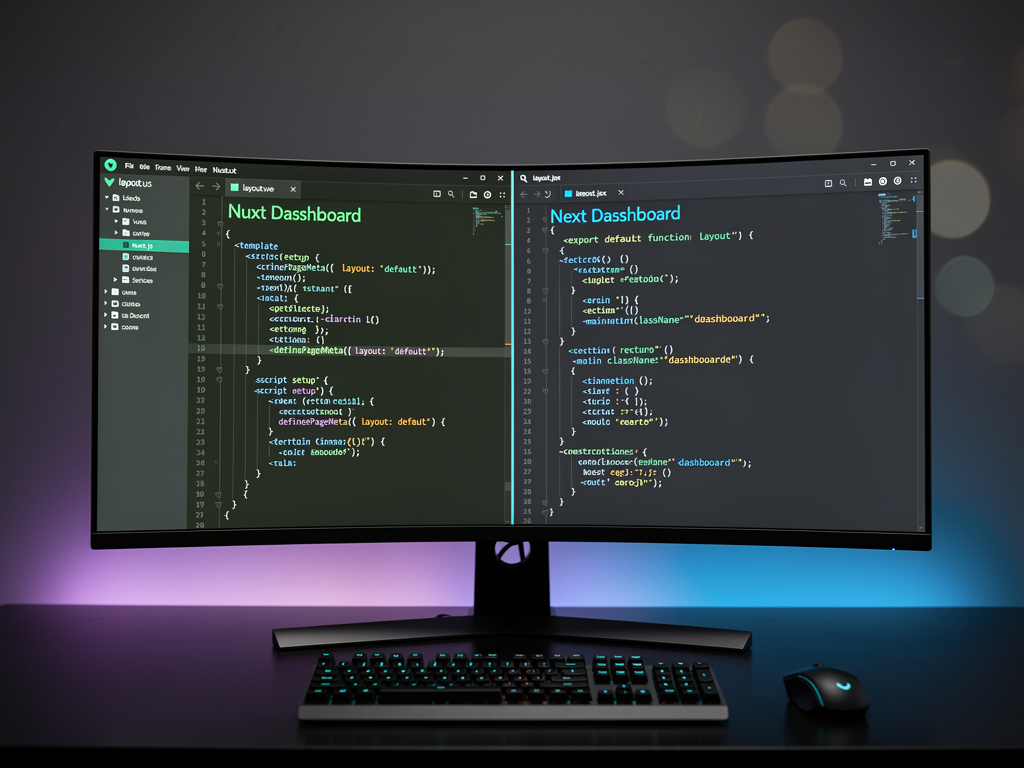
The philosophical differences between Nuxt and Next.js extend far beyond their underlying libraries. Nuxt embraces a convention-over-configuration approach that prioritizes developer velocity through automatic behaviors and sensible defaults. When you create a component in the components directory, Nuxt automatically registers it globally. When you add a file to the pages directory, routing is configured without any additional code. This approach reduces boilerplate significantly but can feel restrictive when you need to deviate from established patterns.
Next.js takes a different stance, offering what the community often describes as "configuration with flexibility." While the framework provides powerful defaults, it exposes configuration options at nearly every level. This philosophy appeals to teams that want to understand exactly what their framework is doing and maintain fine-grained control over build processes, routing logic, and rendering strategies. For SaaS applications with complex requirements, this transparency can prevent unexpected behaviors in production.
The practical implications of these philosophies become apparent during the development lifecycle. Nuxt developers typically experience faster initial setup, with projects reaching a functional state in approximately five minutes compared to eight minutes for Next.js projects that require more upfront decisions. However, as applications grow in complexity, the configuration flexibility of Next.js often proves valuable for implementing custom authentication flows, complex middleware chains, and tenant-specific rendering logic.
Consider how each framework handles data fetching as a concrete example. Nuxt provides the useFetch composable, which abstracts server-side and client-side data fetching into approximately 20 lines of code for common scenarios. Next.js requires developers to understand and implement getServerSideProps, getStaticProps, or client-side fetch patterns, typically requiring around 30 lines for equivalent functionality. The Nuxt approach accelerates development but can obscure what happens during the request lifecycle, while the Next.js approach demands more code but provides clearer mental models for debugging.
Ecosystem Size and Community Support Comparison
The ecosystem surrounding each framework significantly impacts your ability to find solutions, hire developers, and integrate third-party services. React and Next.js command a substantially larger market share than Vue and Nuxt, which translates into tangible advantages for SaaS development teams. According to industry surveys, React developers outnumber Vue developers by approximately three to one in the United States job market, making it considerably easier to scale a Next.js development team.
This ecosystem disparity manifests in the availability of pre-built components, authentication libraries, payment integrations, and specialized tooling. When searching for a Next.js SaaS template or starter project, developers encounter dozens of well-maintained options with active communities. The Nuxt ecosystem, while growing, offers fewer specialized solutions for complex SaaS requirements like multi-tenant architecture, subscription billing, and role-based access control.
| Ecosystem Factor | Next.js | Nuxt |
|---|---|---|
| NPM Weekly Downloads | ~5 million | ~500,000 |
| GitHub Stars | 120,000+ | 55,000+ |
| Stack Overflow Questions | 150,000+ | 25,000+ |
| Available Job Postings (US) | High | Moderate |
| Enterprise Adoption | Widespread | Growing |
| SaaS-Specific Boilerplates | Abundant | Limited |
The community support differential becomes particularly important when encountering edge cases or bugs. Next.js issues typically receive faster responses on GitHub and Stack Overflow due to the larger developer population. For SaaS founders operating under tight deadlines, the ability to quickly find solutions to technical problems can mean the difference between launching on schedule and missing critical market windows.
However, the Nuxt community compensates for its smaller size with a reputation for being welcoming and responsive. The official Nuxt Discord server maintains active participation from core team members, and the framework's documentation has improved substantially in recent versions. For teams already invested in the Vue ecosystem, these community resources often prove sufficient for building production-ready applications.
Server-Side Rendering Performance for SaaS Applications
Server-side rendering (SSR) performance directly impacts user experience, search engine optimization, and conversion rates for SaaS applications. Both frameworks excel at SSR, but they achieve it through different mechanisms that create distinct performance profiles. Next.js leverages React Server Components in its latest versions, enabling granular control over which components render on the server versus the client. This architecture can significantly reduce JavaScript bundle sizes and improve time-to-interactive metrics.
Nuxt utilizes the Nitro server engine, which provides impressive flexibility in deployment targets. Nitro can compile your application for Node.js servers, Deno, Cloudflare Workers, and various other runtimes without code changes. This deployment flexibility appeals to SaaS founders who want to optimize infrastructure costs or leverage edge computing for improved global performance. The ability to deploy the same codebase to multiple platforms reduces vendor lock-in concerns.
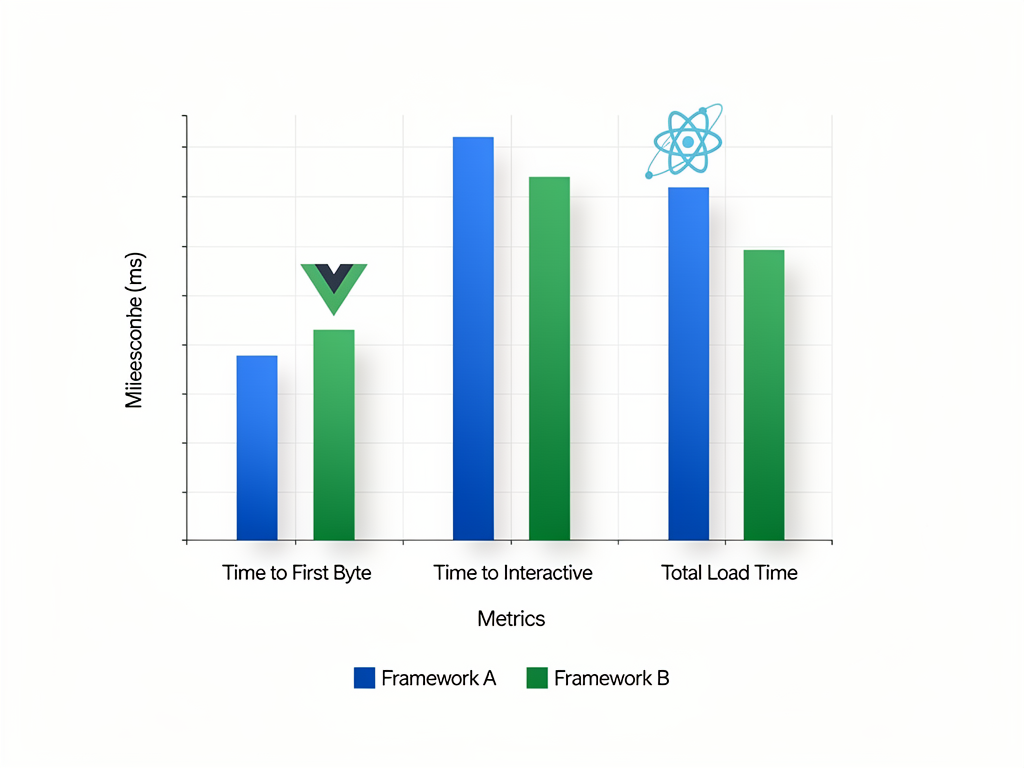
Real-world performance differences between the frameworks are often negligible for typical SaaS use cases. Both can achieve sub-second time-to-first-byte when properly optimized, and both support static site generation for content that does not require dynamic rendering. The performance decision should focus less on synthetic benchmarks and more on your team's ability to implement performance best practices within each framework's paradigm.
For multi-tenant SaaS applications specifically, the rendering strategy becomes more complex. You need to consider how tenant-specific data affects caching strategies, how authentication state influences SSR decisions, and how to balance personalization with performance. Next.js provides more documented patterns for these scenarios through its middleware system and edge runtime capabilities. Nuxt handles these requirements capably but with fewer community-tested patterns to reference.
Multi-Tenant Architecture Implementation Patterns
Building a multi-tenant SaaS platform requires careful consideration of data isolation, subdomain routing, and tenant-specific customization. Both frameworks support multi-tenant architectures, but the implementation approaches and available resources differ significantly. Next.js has emerged as the preferred choice for complex multi-tenant applications due to its flexible middleware system and the availability of specialized multi-tenant boilerplate solutions.
In Next.js, implementing subdomain-based tenant routing typically involves middleware that extracts the tenant identifier from the request hostname and makes it available throughout the request lifecycle. This pattern integrates cleanly with the App Router architecture introduced in Next.js 13, allowing tenant context to flow through server components without prop drilling. The middleware can also handle tenant-specific authentication, rate limiting, and feature flagging before the page rendering begins.
Nuxt approaches multi-tenancy through its server middleware and runtime configuration capabilities. The framework's auto-import system and composables make it straightforward to access tenant context throughout your application, but the patterns are less standardized than in the Next.js ecosystem. Teams building multi-tenant Nuxt applications often need to develop more custom infrastructure compared to their Next.js counterparts who can leverage existing solutions.
Pro Tip: When evaluating frameworks for multi-tenant SaaS, prioritize the availability of production-tested patterns over theoretical capabilities. A framework that technically supports your requirements but lacks community examples will require significantly more development time than one with abundant reference implementations.
Custom domain support with SSL certificates represents another critical multi-tenant requirement. Both frameworks can handle custom domains, but the implementation complexity varies based on your deployment platform. Next.js deployed on Vercel benefits from built-in custom domain support with automatic SSL provisioning. Nuxt applications require more manual configuration regardless of the hosting platform, though solutions like Cloudflare and Caddy can simplify the process.
For founders seeking to minimize development time, a comprehensive Next.js starter kit that includes multi-tenant architecture, custom domain support, and SSL provisioning can save hundreds of development hours. These pre-built solutions handle the complex infrastructure concerns, allowing your team to focus on the unique value proposition of your SaaS product rather than reinventing common patterns.
Authentication and Authorization Strategies
Authentication represents one of the most critical components of any SaaS application, and both frameworks offer robust solutions with different trade-offs. Next.js benefits from NextAuth.js (now Auth.js), a mature authentication library with support for dozens of providers, database adapters, and advanced features like JWT and session-based authentication. The library's documentation is extensive, and its integration patterns are well-established in the community.
Nuxt provides the @nuxt/auth module, which offers similar functionality within the Vue ecosystem. The module supports OAuth providers, local authentication strategies, and token refresh patterns. While capable, the Nuxt authentication ecosystem is smaller, meaning fewer pre-built integrations and community examples for complex scenarios like multi-tenant authentication with organization-level permissions.
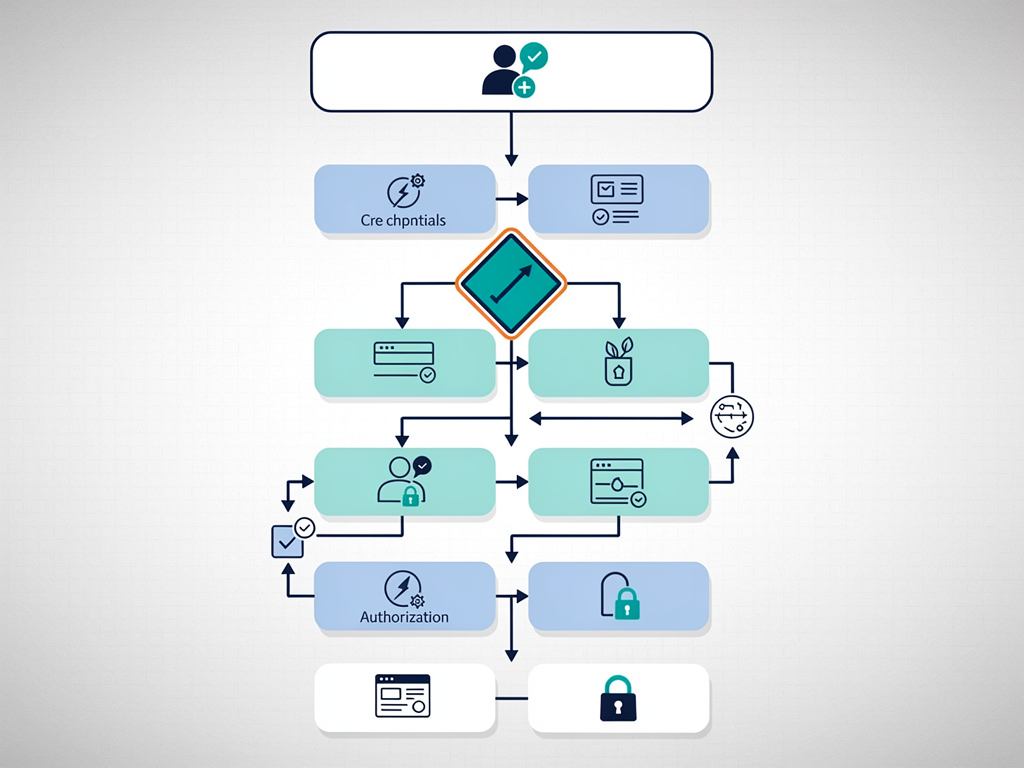
For SaaS applications, authentication complexity extends beyond simple login flows. You need to consider organization invitations, team member management, role-based access control, and potentially separate authentication systems for platform administrators versus end-user app members. Next.js's larger ecosystem provides more reference implementations for these advanced patterns, reducing the research and development time required.
The authorization layer presents similar considerations. Both frameworks can integrate with authorization libraries like CASL or implement custom permission systems. However, the availability of SaaS-specific authorization patterns, including subscription-based feature gating and tenant-level permissions, is more abundant in the Next.js ecosystem. This difference becomes particularly important when building platforms where clients can create their own applications with independent user bases.
Database Integration and ORM Compatibility
Modern SaaS applications require robust database integration with support for complex queries, migrations, and multi-tenant data isolation. Both frameworks integrate seamlessly with Prisma, the most popular TypeScript ORM, as well as alternatives like Drizzle, TypeORM, and Sequelize. The choice of framework does not significantly constrain your database options, but the ecosystem support for specific patterns varies.
Next.js applications commonly use Prisma with PostgreSQL, leveraging the ORM's type safety and migration capabilities. The combination has extensive documentation and community support, with many SaaS template projects providing pre-configured database schemas for common features like user management, subscriptions, and tenant isolation. This head start can accelerate development significantly for teams building on established patterns.
Nuxt integrates equally well with Prisma and other ORMs through its Nitro server engine. The framework's server routes provide a clean abstraction for database operations, and the Vue composition API makes it straightforward to manage data fetching and state. However, fewer Nuxt-specific database patterns exist in the community, requiring more custom development for complex scenarios.
| Database Consideration | Next.js Ecosystem | Nuxt Ecosystem |
|---|---|---|
| Prisma Integration | Excellent, many examples | Good, fewer examples |
| Multi-tenant Schemas | Well-documented patterns | Custom implementation needed |
| Connection Pooling | Vercel-optimized solutions | Standard solutions |
| Edge Database Support | Strong (Planetscale, Neon) | Growing support |
| Serverless Considerations | Mature patterns | Developing patterns |
For self-hosted SaaS applications, both frameworks work well with traditional PostgreSQL deployments through services like Supabase or direct database hosting. The choice between managed services and self-hosting often has more impact on your architecture than the framework selection. Teams prioritizing cost optimization can achieve enterprise-level database performance with either framework when properly configured.
Payment Integration and Subscription Management
Monetization capabilities are essential for any SaaS business, and both frameworks support integration with major payment processors. Stripe remains the dominant choice for SaaS subscription billing, and both Next.js and Nuxt can integrate with Stripe's APIs effectively. However, the availability of pre-built integration patterns and webhook handling examples differs between the ecosystems.
Next.js benefits from numerous open-source projects and commercial boilerplates that include complete Stripe integration with subscription management, usage-based billing, and customer portal functionality. These solutions handle the complex webhook processing, subscription lifecycle events, and database synchronization that subscription billing requires. For founders seeking rapid deployment, these pre-built solutions can save weeks of development time.
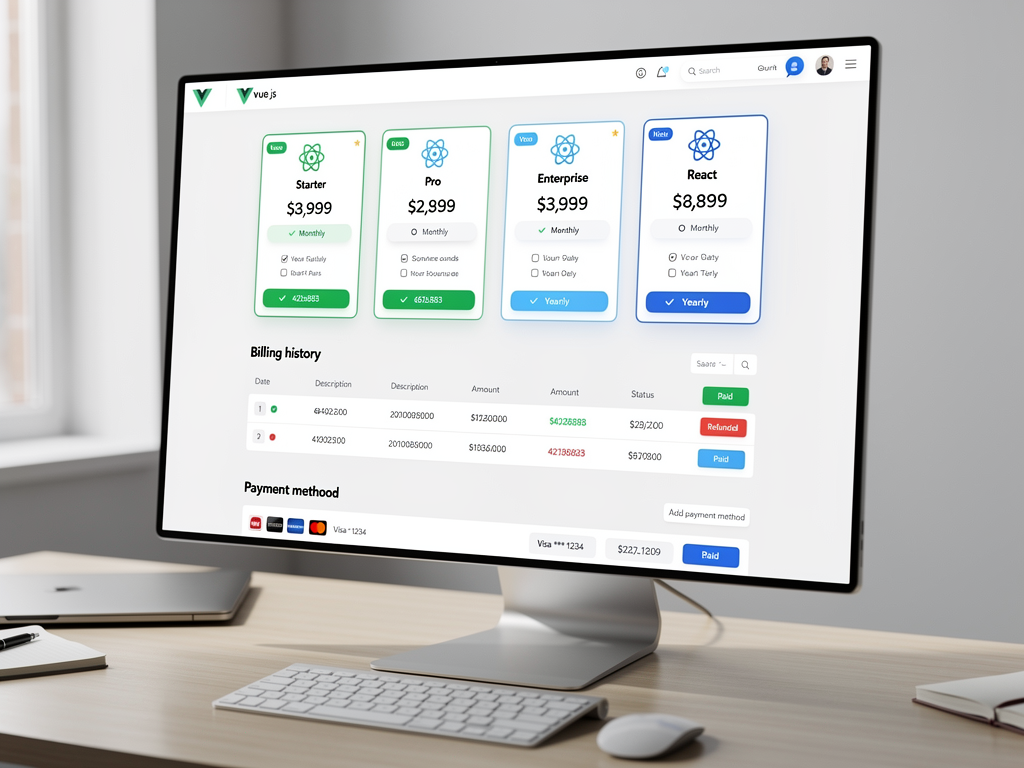
Nuxt can achieve the same payment integration functionality, but teams typically need to implement more custom code. The Vue ecosystem has fewer SaaS-focused payment integration examples, meaning developers spend more time translating React-based tutorials and adapting patterns to Vue's reactivity system. This translation overhead adds development time without providing additional value.
Beyond basic payment processing, SaaS platforms often need to support client monetization, allowing your customers to accept payments from their end users. This requirement adds complexity around payment account connections, fee splitting, and compliance considerations. Next.js's larger ecosystem includes more examples of these advanced payment patterns, particularly for marketplace and platform business models.
Developer Experience and Learning Curve Analysis
Developer experience significantly impacts team productivity, code quality, and long-term maintainability. Both frameworks prioritize developer experience, but they optimize for different scenarios and skill sets. Your team's existing expertise should heavily influence this decision, as the learning curve for switching between Vue and React is substantial.
For developers with Vue experience, Nuxt provides an immediately familiar environment. The single-file component structure, template syntax, and reactivity system carry over directly from Vue, with Nuxt adding server-side rendering and file-based routing on top. The learning curve focuses on Nuxt-specific concepts like the useFetch composable, server routes, and the Nitro deployment system rather than fundamental programming paradigms.
React developers transitioning to Next.js encounter a similarly smooth experience. The framework extends React's component model with server-side rendering capabilities, API routes, and optimized image handling. Recent versions have introduced React Server Components, which require learning new mental models but provide powerful capabilities for reducing client-side JavaScript. The learning investment pays dividends in application performance and user experience.
For teams without strong preferences, the broader React ecosystem often tips the decision toward Next.js. The abundance of tutorials, courses, and community resources accelerates learning and problem-solving. Additionally, React skills transfer more readily to other contexts, including React Native for mobile development and various React-based frameworks for different use cases.
Consider This: The time invested in learning a framework compounds over the lifetime of your project. A framework that feels slightly harder initially but has better long-term ecosystem support often proves more valuable than one that offers faster initial productivity but limited growth potential.
Deployment Options and Infrastructure Considerations
Deployment flexibility affects both your operational costs and your ability to scale as your SaaS grows. Both frameworks support multiple deployment targets, but their optimization profiles and platform integrations differ. Next.js has the strongest integration with Vercel, the platform created by the same team that maintains the framework. This integration provides zero-configuration deployments, automatic preview environments, and optimized edge caching.
However, Next.js is not limited to Vercel deployment. The framework runs effectively on AWS, Google Cloud, Azure, and self-hosted infrastructure. Docker deployments work well for teams preferring container-based infrastructure, and solutions like Coolify provide simplified self-hosting experiences. For cost-conscious founders, self-hosting a Next.js application on providers like Hetzner can reduce infrastructure costs to as little as fifteen dollars per month while maintaining enterprise-level performance.
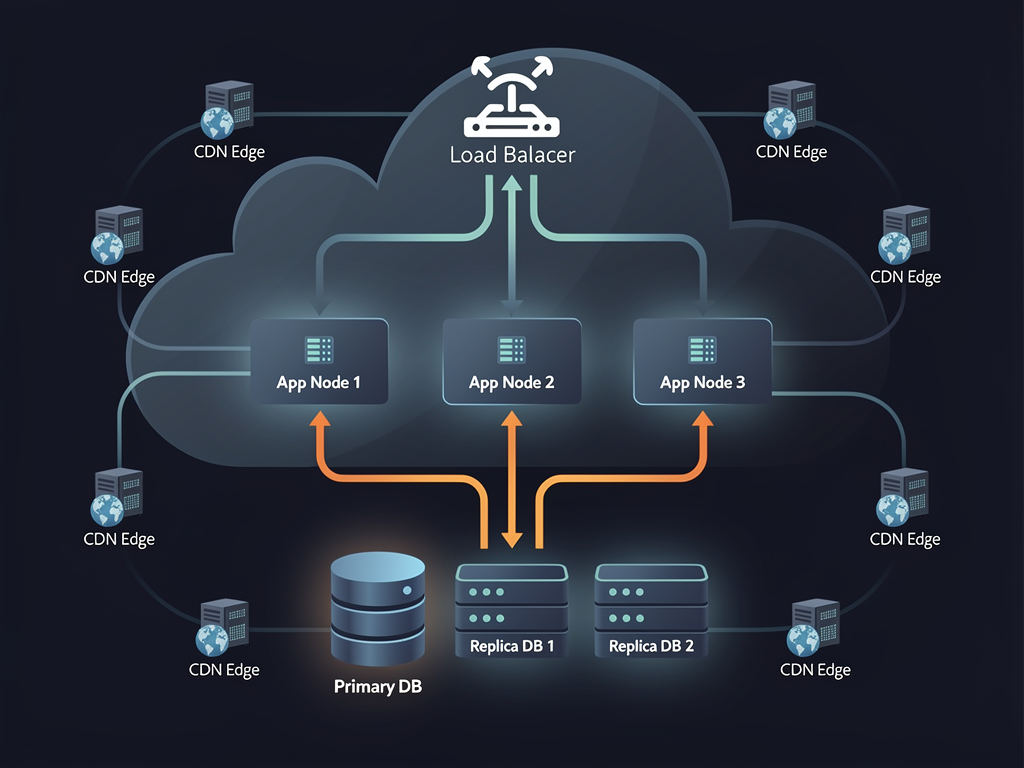
Nuxt's Nitro engine provides impressive deployment flexibility, supporting Node.js servers, Deno, Cloudflare Workers, AWS Lambda, and numerous other targets from a single codebase. This flexibility appeals to teams with specific infrastructure requirements or those wanting to avoid vendor lock-in. The ability to deploy to edge computing platforms can improve global performance for SaaS applications with international user bases.
For multi-tenant SaaS specifically, deployment considerations extend to custom domain handling and SSL certificate provisioning. Both frameworks can support these requirements, but the implementation complexity varies by platform. Managed platforms like Vercel and Netlify simplify custom domain handling, while self-hosted deployments require additional infrastructure like Caddy or Traefik for automatic SSL management.
State Management and Data Flow Patterns
Complex SaaS applications require sophisticated state management to handle user sessions, tenant context, real-time updates, and cached data. Both frameworks integrate with their respective ecosystem's state management solutions, but the patterns and available tools differ. Next.js applications commonly use Zustand or Redux Toolkit for client-side state, while server state management increasingly relies on React Query or SWR for data fetching and caching.
Nuxt provides Pinia as its recommended state management solution, which offers a similar developer experience to Zustand with Vue-specific optimizations. The framework's auto-import system makes Pinia stores immediately available throughout the application without explicit imports. For server state, Nuxt's useFetch composable handles caching and revalidation automatically, reducing the need for additional libraries.
The choice between these state management approaches often comes down to team familiarity and project requirements. Both ecosystems provide capable solutions for common SaaS patterns like optimistic updates, real-time synchronization, and offline support. The implementation details differ, but the architectural patterns remain similar across frameworks.
For multi-tenant applications, state management must account for tenant context isolation. Both frameworks can implement patterns where tenant-specific state is scoped appropriately, preventing data leakage between tenants. The implementation requires careful attention regardless of framework choice, as state management bugs in multi-tenant contexts can have serious security implications.
Testing Strategies and Quality Assurance
Maintaining code quality in a growing SaaS application requires comprehensive testing strategies. Both frameworks support modern testing tools, but the ecosystem maturity and available patterns differ. Next.js testing typically involves Jest or Vitest for unit tests, React Testing Library for component tests, and Playwright or Cypress for end-to-end testing. The abundance of React testing resources makes it straightforward to establish testing practices.
Nuxt applications use similar tools, with Vitest being the recommended test runner and Vue Testing Library providing component testing utilities. The testing patterns translate well from the React ecosystem, though Vue-specific considerations around reactivity and the composition API require attention. End-to-end testing with Playwright or Cypress works identically across both frameworks.

For SaaS applications, testing strategies must account for multi-tenant scenarios, subscription state variations, and permission-based access control. Both frameworks support these testing requirements, but the availability of example test suites and testing patterns is greater in the Next.js ecosystem. Teams can reference open-source SaaS projects for testing inspiration and adapt established patterns to their specific requirements.
Long-Term Maintainability and Upgrade Paths
SaaS applications often operate for years, requiring ongoing maintenance, feature development, and framework upgrades. The long-term maintainability of your chosen framework affects your total cost of ownership and your ability to attract and retain development talent. Both frameworks have demonstrated commitment to backward compatibility and provide migration guides for major version upgrades.
Next.js has a longer track record of stable releases and well-documented upgrade paths. The transition from the Pages Router to the App Router, while significant, was handled with extensive documentation and a gradual migration strategy that allowed both approaches to coexist. This approach to major changes reduces the risk of forced rewrites and allows teams to upgrade incrementally.
Nuxt's transition from version 2 to version 3 represented a more substantial change, requiring significant code modifications for many applications. However, the Nuxt team has indicated a commitment to more stable APIs going forward, and the framework's architecture has matured considerably. Teams adopting Nuxt 3 today can expect a more stable upgrade path than early adopters experienced.
The broader ecosystem stability also affects long-term maintainability. React's dominance in the frontend landscape suggests continued investment, tooling development, and community support for the foreseeable future. Vue maintains a dedicated community and corporate backing through sponsors, but its smaller market share introduces slightly more uncertainty about long-term ecosystem growth.
Cost Analysis for SaaS Development
The total cost of building and operating a SaaS application extends beyond hosting fees to include development time, hiring costs, and opportunity costs. Framework choice influences all these factors, making it important to consider the full financial picture rather than focusing solely on technical capabilities.
Development time represents the largest cost component for most SaaS projects. Teams using a comprehensive Next.js boilerplate or SaaS starter kit can reduce initial development time by hundreds of hours compared to building from scratch. These pre-built solutions include authentication, payment processing, multi-tenant architecture, and administrative dashboards, allowing teams to focus on their unique value proposition rather than common infrastructure.
Hiring costs favor Next.js due to the larger pool of React developers. Competitive salaries for Vue developers can actually exceed React developer salaries in some markets due to supply constraints. Additionally, the time required to find qualified Vue developers is typically longer, which can delay project timelines and increase recruitment costs.
Infrastructure costs are relatively similar between frameworks when self-hosting, though Vercel's pricing model for Next.js applications can become expensive at scale. Teams prioritizing cost optimization should evaluate self-hosting options regardless of framework choice. Both frameworks can achieve excellent performance on modest infrastructure when properly optimized.
Making the Right Choice for Your SaaS Project
After examining the technical capabilities, ecosystem support, and practical considerations, the framework decision ultimately depends on your specific circumstances. Neither framework is universally superior; each excels in different contexts and for different team compositions. The following decision framework can help clarify which choice aligns with your situation.
Choose Next.js if your team has React experience, you prioritize ecosystem size and available resources, you need extensive multi-tenant patterns and SaaS-specific tooling, you want the broadest hiring pool for future team growth, or you plan to leverage Vercel's deployment platform. The framework's maturity, community size, and enterprise adoption make it a safe choice for ambitious SaaS projects.
Choose Nuxt if your team has strong Vue expertise, you prefer convention-over-configuration approaches, you need deployment flexibility across multiple platforms, you value the Vue community's collaborative culture, or you have existing Vue components you want to leverage. Nuxt provides a capable foundation for SaaS development, particularly for teams already invested in the Vue ecosystem.
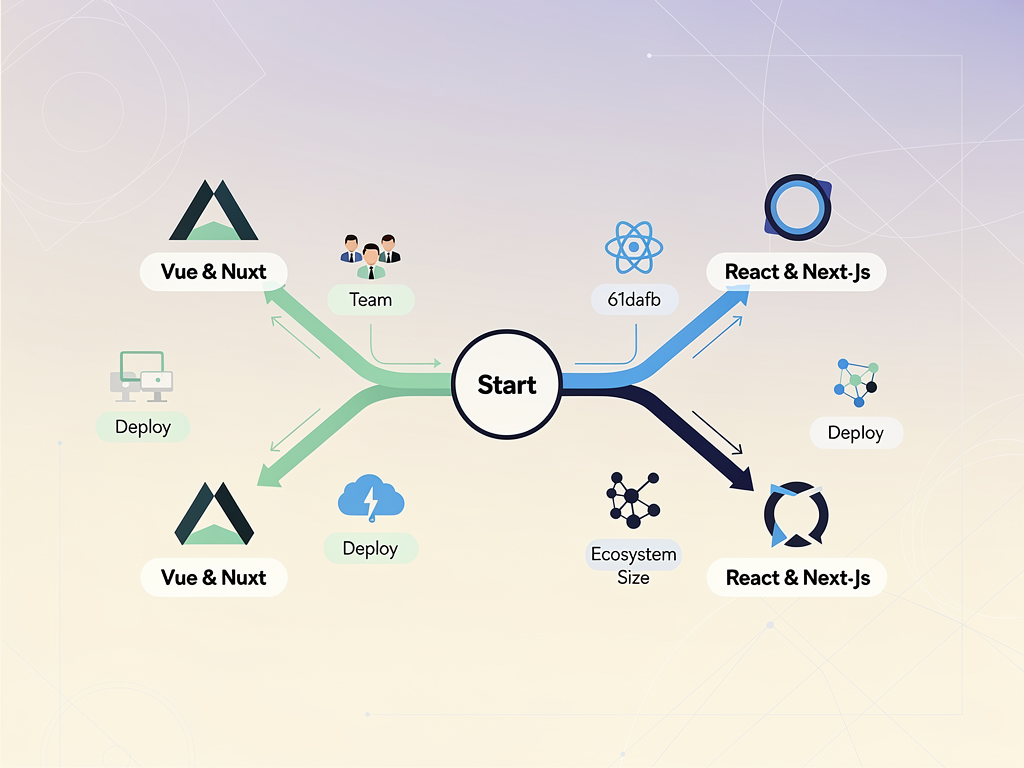
For founders without strong framework preferences who are starting fresh, the evidence generally favors Next.js for SaaS development. The larger ecosystem, more abundant SaaS-specific resources, and broader hiring pool provide practical advantages that compound over the lifetime of your project. However, this recommendation assumes you can invest the time to learn React if you are not already familiar with it.
Accelerating Development with Pre-Built Solutions
Regardless of which framework you choose, leveraging pre-built solutions can dramatically accelerate your time to market. The SaaS boilerplate market has matured significantly, with options available for both Next.js and Nuxt that include authentication, payment processing, multi-tenant architecture, and administrative interfaces. These solutions represent hundreds of hours of development time that you can redirect toward your unique product features.
For Next.js specifically, the availability of comprehensive SaaS template options has expanded considerably. Solutions like SaaSCore provide production-ready foundations that include multi-tenant architecture, affiliate programs, and admin dashboards. These boilerplates handle the complex infrastructure concerns that every SaaS application requires, allowing founders to focus on differentiation rather than reinventing common patterns.
When evaluating boilerplate solutions, consider the completeness of the feature set, the quality of documentation, the responsiveness of support, and the licensing terms. A well-maintained boilerplate with active development provides ongoing value through updates, security patches, and new feature additions. The initial purchase price often represents a fraction of the development time saved.
Conclusion
The choice between Nuxt and Next.js for SaaS development is not a matter of one framework being objectively better than the other. Both are capable, well-maintained solutions that can power successful multi-tenant SaaS applications. The decision should be driven by your team's expertise, your project's specific requirements, and your long-term business goals.
For most SaaS entrepreneurs, particularly those building complex multi-tenant platforms with custom domains and sophisticated permission systems, Next.js offers practical advantages through its larger ecosystem, more abundant SaaS-specific resources, and broader developer availability. These advantages compound over time as your application grows and your team expands.
However, teams with strong Vue expertise should not dismiss Nuxt. The framework provides excellent developer experience, impressive deployment flexibility, and a supportive community. For Vue-experienced teams, the productivity gains from working in a familiar environment may outweigh the ecosystem advantages of Next.js.
Ultimately, the best framework is the one that enables your team to ship quality software efficiently. Both Nuxt and Next.js can fulfill this role when matched appropriately with team skills and project requirements. Make your decision based on practical considerations rather than theoretical benchmarks, and invest in pre-built solutions that accelerate your path to market.
Frequently Asked Questions
Can I migrate from Nuxt to Next.js or vice versa after starting development?
Migration between frameworks is technically possible but involves substantial effort. Moving from Nuxt to Next.js requires approximately 40% code rewrite, primarily converting Vue single-file components to React JSX syntax. The reverse migration demands roughly 50% rewrite as React hooks must be converted to Vue composables. For projects with more than 30 components, industry experience suggests that complete rebuilds are often more cost-effective than incremental migration. To minimize future migration costs, consider abstracting business logic into framework-agnostic TypeScript modules and maintaining styling independence through utility-first CSS approaches like Tailwind.
Which framework performs better for multi-tenant SaaS applications with custom domains?
Both frameworks can handle multi-tenant architectures with custom domains effectively, but Next.js has more documented patterns and community resources for these implementations. Next.js middleware provides a clean abstraction for tenant identification and routing, and deployment on Vercel includes built-in custom domain support with automatic SSL provisioning. Nuxt can achieve the same functionality through server middleware and the Nitro engine, but teams typically need to implement more custom infrastructure. For complex multi-tenant requirements, the availability of Next.js boilerplates with pre-built tenant management can save significant development time compared to building from scratch with either framework.
How do the frameworks compare for SEO optimization in SaaS marketing sites?
Both Nuxt and Next.js excel at SEO optimization through their server-side rendering capabilities. They generate fully-rendered HTML that search engines can crawl effectively, and both support static site generation for content that does not require dynamic rendering. Next.js provides the next/head component and metadata API for managing page titles, descriptions, and Open Graph tags. Nuxt offers similar functionality through its useHead composable and the @nuxt/seo module. The practical SEO differences between frameworks are minimal; success depends more on implementation quality than framework choice. Both frameworks can achieve excellent Core Web Vitals scores when properly optimized.
What are the hosting cost differences between Nuxt and Next.js applications?
Self-hosted infrastructure costs are similar between frameworks, with both capable of running on modest servers starting around fifteen dollars per month for small-scale applications. The cost differences emerge primarily in managed platform pricing. Next.js on Vercel offers a generous free tier but can become expensive at scale due to bandwidth and serverless function pricing. Nuxt applications can deploy to various platforms including Netlify, Cloudflare Pages, and traditional Node.js hosts, providing pricing flexibility. For cost-conscious founders, self-hosting either framework on providers like Hetzner with tools like Coolify provides the best value while maintaining professional-grade reliability and performance.
Should I learn Vue or React specifically for building SaaS applications?
For developers specifically targeting SaaS development without existing framework preferences, learning React and Next.js provides broader career opportunities and access to more SaaS-specific resources. The React job market is approximately three times larger than the Vue market in the United States, and the availability of SaaS boilerplates, tutorials, and community examples is substantially greater. However, Vue is often considered more approachable for developers new to frontend frameworks, with a gentler learning curve and more intuitive template syntax. If you already have Vue experience, leveraging that expertise with Nuxt is a valid path that can produce excellent results. The framework you know well will almost always outperform the framework you are still learning.
How do Next.js and Nuxt handle real-time features like notifications and live updates?
Neither framework includes built-in real-time functionality, but both integrate well with real-time solutions. Next.js applications commonly use libraries like Pusher, Ably, or Socket.io for WebSocket connections, with patterns well-documented in the community. Server-Sent Events provide a simpler alternative for one-way real-time updates. Nuxt offers similar integration options through its server routes and can leverage the same WebSocket libraries. For SaaS applications requiring real-time collaboration, live notifications, or instant updates, the implementation complexity is similar across frameworks. Consider services like Supabase Realtime or Firebase for managed real-time infrastructure that reduces custom development requirements regardless of your framework choice.
Ready to Build Your Multi-Tenant SaaS Platform?
Stop spending months building authentication, payment processing, and tenant management from scratch. NextBuilder provides a complete Next.js foundation for multi-tenant SaaS platforms, including custom subdomains with SSL, client dashboards, admin analytics, team collaboration, and built-in monetization features. With over 600 hours of development time already invested, you can launch your no-code platform in days instead of months. Visit NextBuilder.dev to explore the demo and start building your SaaS platform today.
Subscribe to our newsletter
Subscribe to our newsletter and stay up-to-date with the latest news and updates.