NextBuilder vs Supastarter: Best Multi-Tenant SaaS Boilerplate?
Discover which multi-tenant SaaS boilerplate suits your needs: NextBuilder or Supastarter. Compare their features, pricing, and architectural differences to make an informed choice for your project.

Zakariae

Building a multi-tenant SaaS platform from scratch can consume months of development time. Authentication systems, billing integrations, tenant isolation, custom domain handling, and admin dashboards all demand significant engineering effort before you write a single line of product-specific code. This reality has fueled the explosive growth of the SaaS boilerplate market, which now exceeds $50 million annually as founders seek faster paths to launch.
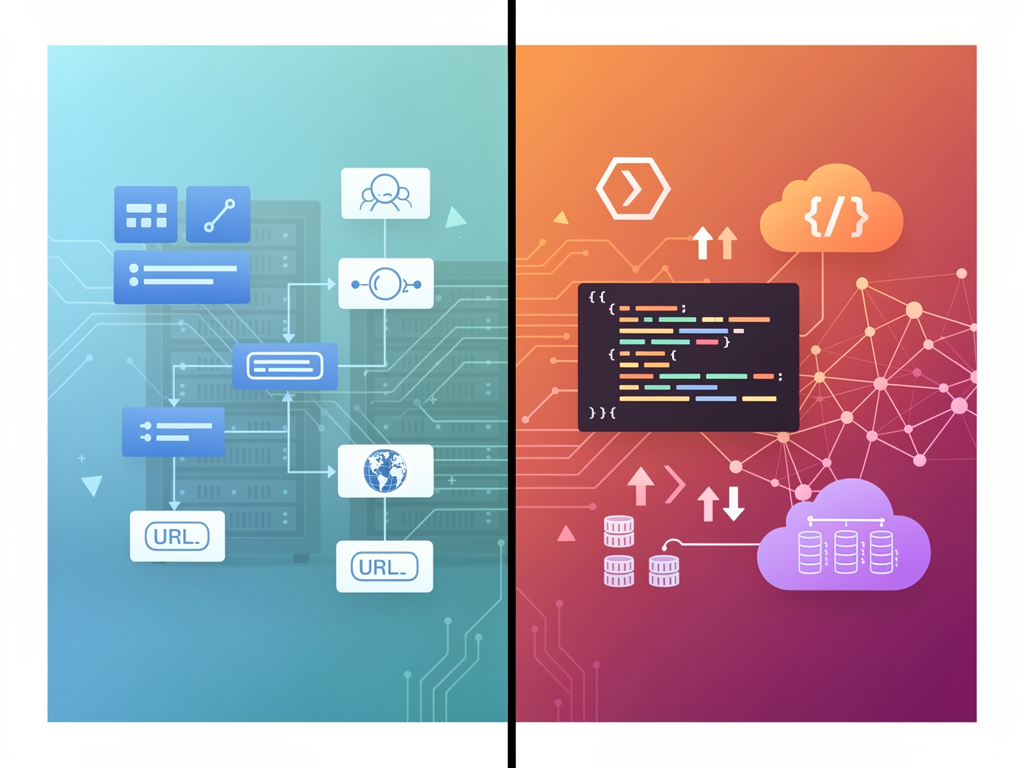
Two contenders stand out for developers building multi-tenant platforms: NextBuilder and supastarter. Both promise to accelerate your development timeline from months to days, but they target distinctly different use cases and architectural philosophies. NextBuilder focuses specifically on no-code platform builders, while supastarter offers a broader framework-agnostic approach to traditional SaaS development.
This comprehensive comparison examines both platforms across every dimension that matters: multi-tenancy implementation, pricing structures, feature completeness, customization flexibility, and real-world deployment scenarios. By the end, you will have a clear understanding of which multi-tenant boilerplate aligns with your specific project requirements and business goals.
Key Takeaways
- NextBuilder excels at no-code platform development, providing specialized features for building platforms where clients create their own applications with custom subdomains and SSL certificates.
- supastarter offers broader framework flexibility, supporting Next.js, Nuxt, and TanStack Start with a more traditional SaaS architecture approach.
- Pricing structures differ significantly, with NextBuilder offering focused no-code platform features and supastarter providing tiered options from €349 to €1,499.
- Multi-tenancy depth varies between platforms, with NextBuilder implementing dual authentication systems and supastarter focusing on organization-based tenant models.
- Self-hosting capabilities represent a major differentiator, with NextBuilder including comprehensive deployment guides for cost-effective infrastructure.
- Target audiences overlap but diverge, making the choice dependent on whether you are building a no-code platform or a conventional multi-tenant SaaS application.
Understanding the Multi-Tenant Boilerplate Landscape
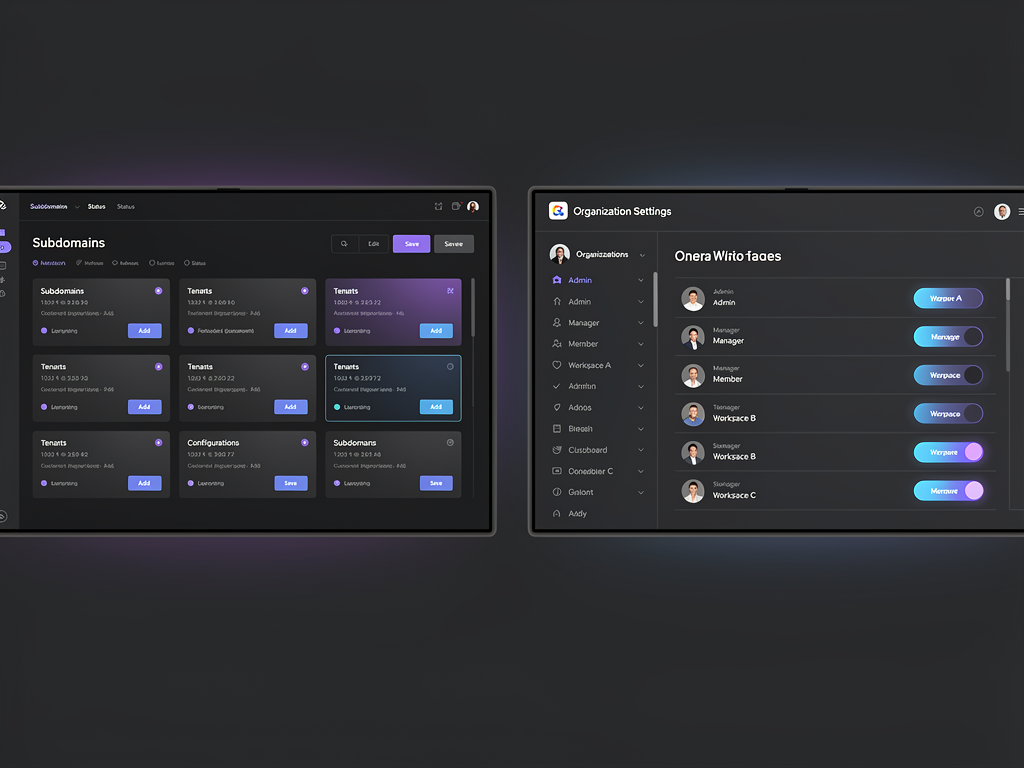
The term "multi-tenant boilerplate" encompasses a wide spectrum of solutions, from basic shared-database implementations to sophisticated platform-as-a-service architectures. Understanding where NextBuilder and supastarter fall on this spectrum requires examining what multi-tenancy actually means in modern SaaS development and why the implementation details matter so much for your long-term success.
At its core, multi-tenancy allows a single application instance to serve multiple customers while maintaining strict data isolation. The simplest approach uses a shared database with tenant ID columns filtering every query. More complex implementations provide separate schemas or even separate databases per tenant. The choice impacts performance, security, compliance requirements, and operational complexity in ways that become increasingly difficult to change after launch.
Both NextBuilder and supastarter implement row-level isolation as their primary multi-tenancy pattern, which provides the optimal balance of simplicity and security for most SaaS applications. However, their approaches to tenant management, authentication flows, and customization capabilities differ substantially. NextBuilder treats each tenant as a potential platform with its own sub-tenants (the apps created by clients), while supastarter implements a more traditional organization-member model common in B2B SaaS applications.
The distinction matters enormously depending on what you are building. If your vision involves creating a platform where customers build their own applications (think Webflow, Bubble, or Carrd), NextBuilder's architecture provides purpose-built infrastructure. If you are building a more conventional SaaS where organizations manage teams and access shared resources, supastarter's model may prove more appropriate. This fundamental architectural difference influences every subsequent comparison point.
NextBuilder: Deep Dive into No-Code Platform Architecture
NextBuilder positions itself as the complete Next.js boilerplate for building multi-tenant SaaS no-code platforms. This positioning is not merely marketing language but reflects genuine architectural decisions that permeate every feature. The platform assumes you want to build something where your customers will create their own applications, websites, or digital products using tools you provide.
The dual authentication system exemplifies this philosophy. NextBuilder implements separate authentication flows for platform users (your direct customers who pay for subscriptions) and app members (the end users of applications your customers create). This separation allows your customers to manage their own user bases without those users needing accounts on your main platform. The technical implementation uses NextAuth 5.0 with carefully scoped session management to prevent authentication context bleeding between layers.
Custom subdomains with automatic SSL provisioning represent another core capability. When a customer creates an application on your platform, NextBuilder handles the subdomain routing and certificate generation automatically. This feature alone can save weeks of development time, as implementing wildcard SSL certificates, DNS verification, and subdomain routing correctly requires deep expertise in infrastructure management.
Technical Note: NextBuilder's subdomain system supports both wildcard subdomains (app1.yourplatform.com) and custom domains (app1.customerdomain.com) with full SSL coverage. The included self-hosting guide covers Coolify configuration for automatic certificate renewal.
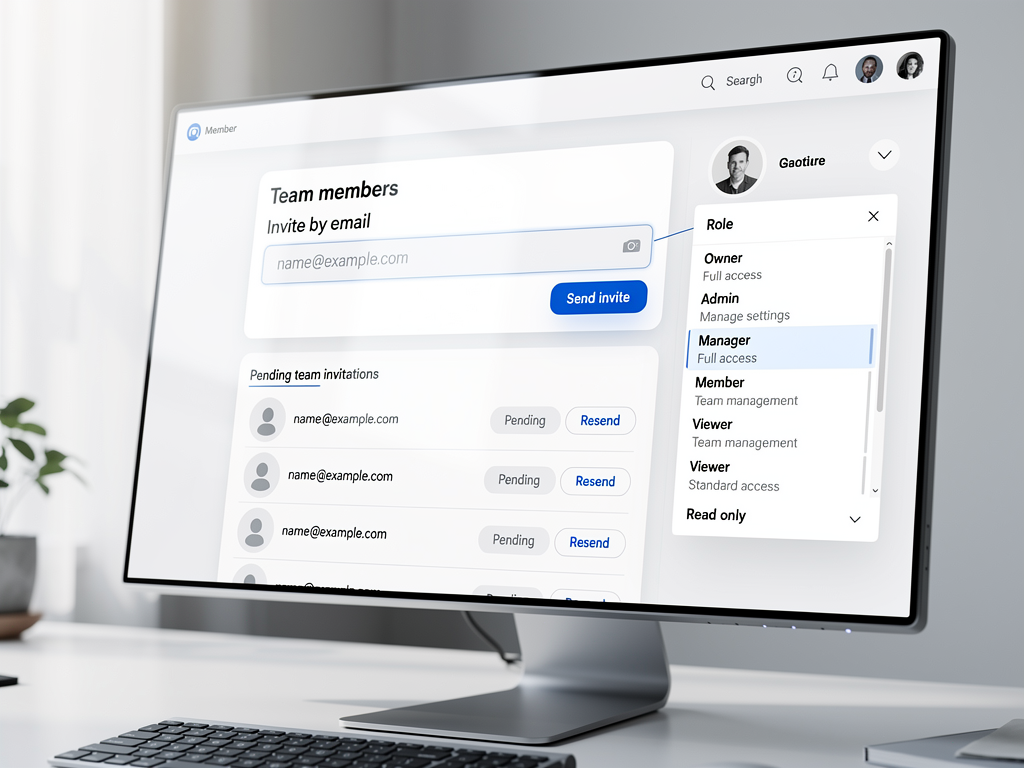
The member dashboard system provides each application created on your platform with its own user management interface. Your customers can invite team members, assign roles across five permission levels, and manage access without any intervention from you. This creates the white-label experience that platform businesses require, where end users may never realize they are using infrastructure you built.
Supastarter: Framework-Agnostic SaaS Foundation
Supastarter takes a different approach, positioning itself as a production-grade SaaS boilerplate that provides multi-tenancy support out of the box across multiple frameworks. The platform supports Next.js, Nuxt, and TanStack Start, allowing developers to choose their preferred framework while maintaining consistent multi-tenancy patterns. This flexibility appeals to teams with existing framework preferences or those building multiple products across different technology stacks.
The organization model serves as the primary tenant entity in supastarter's architecture. Each organization contains members with configurable roles, and all data queries are automatically scoped to the current organization context. This pattern works exceptionally well for B2B SaaS applications where companies subscribe to your service and manage internal teams, but it differs fundamentally from the platform-within-platform model that NextBuilder implements.
Supastarter's role-based access control (RBAC) system provides granular permission management. The default implementation includes Owner, Admin, and Member roles with configurable permissions for organization management, member management, billing access, and data operations. Developers can extend this system with custom roles and permissions specific to their application's needs.
The billing integration connects subscriptions to organizations rather than individual users. This design supports team-based pricing models where organizations pay per seat or per usage tier. Stripe integration handles subscription management, usage metering, and billing portal access. The implementation includes webhook handlers for subscription lifecycle events and automatic feature gating based on plan tiers.
One notable strength is supastarter's AI-coding optimization. The codebase includes AGENTS.md files and structured documentation specifically designed for AI coding assistants like Cursor, Claude Code, and GitHub Copilot. This optimization can significantly accelerate development when using AI-assisted workflows, as the assistants understand the codebase structure and can generate contextually appropriate code more reliably.
Multi-Tenancy Implementation Compared
The multi-tenancy implementations in NextBuilder and supastarter reflect their different target use cases. Understanding these differences helps you evaluate which approach matches your product vision and technical requirements.
| Feature | NextBuilder | Supastarter |
|---|---|---|
| Tenant Model | Platform → Clients → Apps → Members | Platform → Organizations → Members |
| Authentication Layers | Dual (platform users + app members) | Single (organization members) |
| Subdomain Support | Automatic with SSL | Manual configuration |
| Custom Domains | Built-in with SSL provisioning | Requires additional setup |
| Data Isolation | Row-level with app scoping | Row-level with org scoping |
| Permission Levels | 5 tiers | 3 tiers (extensible) |
| Nested Tenancy | Yes (apps within clients) | No (flat organization model) |
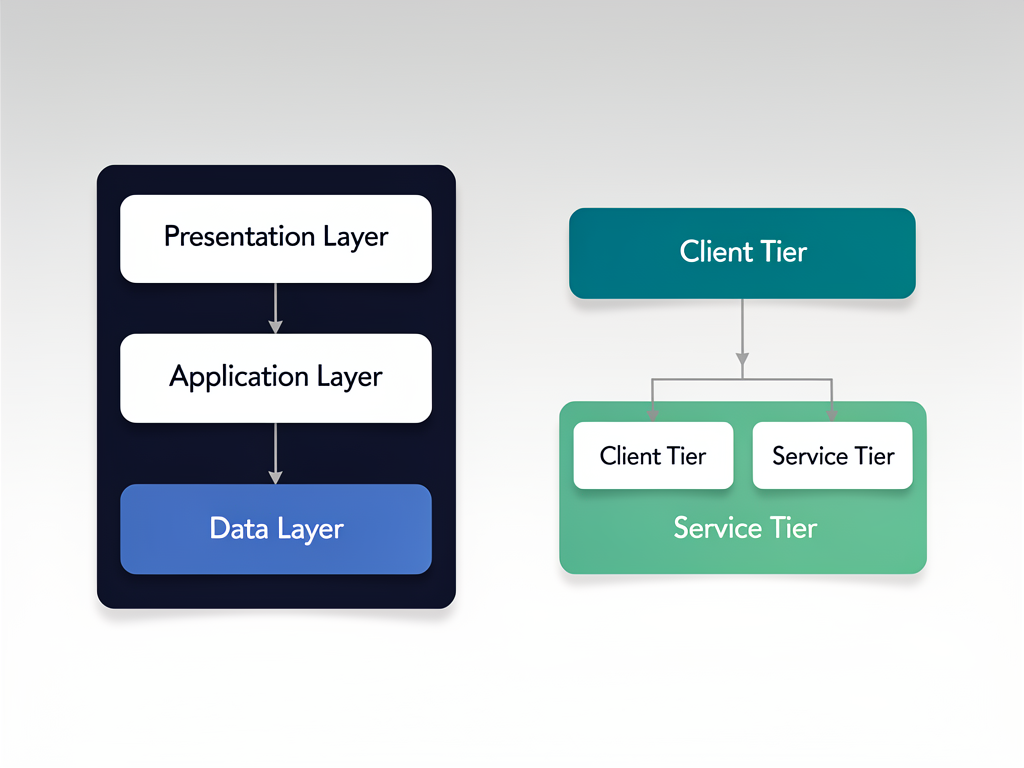
NextBuilder's nested tenancy model deserves special attention. The architecture supports three distinct levels: your platform, your clients (who subscribe to your platform), and the applications those clients create. Each application can have its own members who authenticate separately from platform users. This nesting enables true platform-as-a-service functionality where your customers become platform operators themselves.
Supastarter's flat organization model provides simpler mental mapping for traditional SaaS applications. Organizations represent companies or teams that subscribe to your service. Members belong to organizations with role-based permissions. This model works perfectly for tools like project management software, CRM systems, or collaboration platforms where the organizational hierarchy is straightforward.
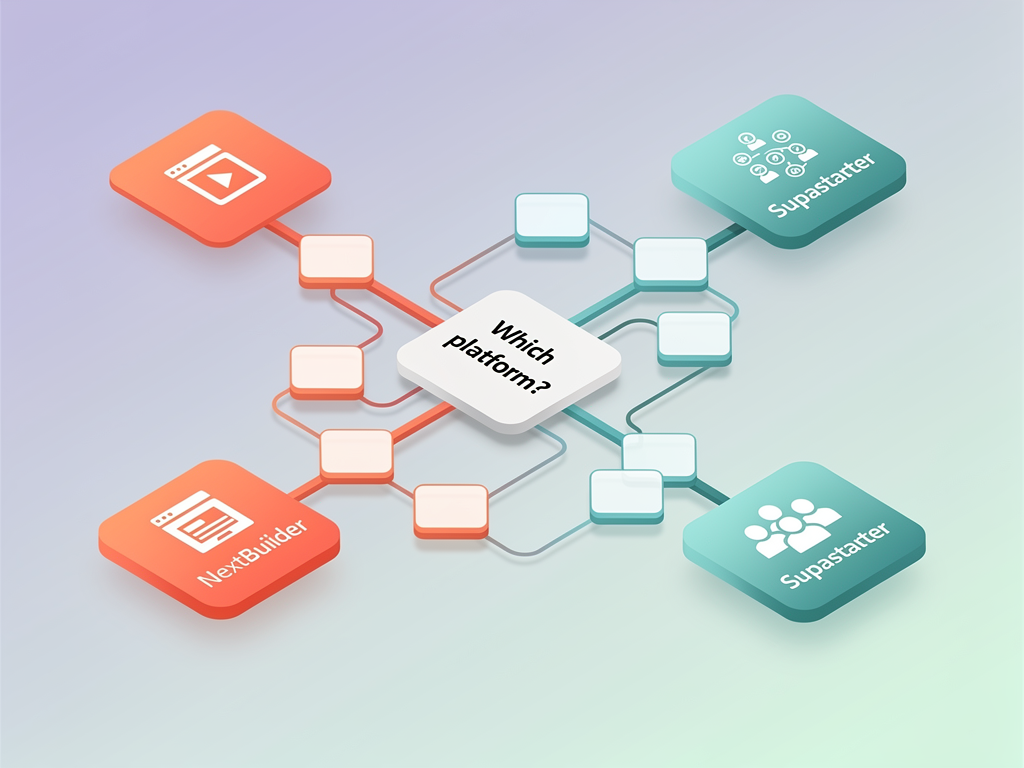
The choice between these models should drive your boilerplate selection more than any other factor. Building a website builder, form creator, or app development platform? NextBuilder's nested model provides the foundation you need. Building a traditional B2B SaaS with team subscriptions? Supastarter's organization model may prove more appropriate and easier to maintain.
Pricing and Licensing Structures
Understanding the financial commitment for each platform helps you evaluate total cost of ownership beyond the initial purchase price. Both platforms use one-time payment models, avoiding the recurring subscription fees that can accumulate significantly over a product's lifetime.
NextBuilder's pricing focuses on providing everything needed to launch a no-code platform. The package includes the complete codebase, all features described in their documentation, and notably, a comprehensive self-hosting guide. This guide covers deployment on Hetzner with Coolify and Supabase, enabling you to run enterprise-level infrastructure for approximately $15 per month in hosting costs. The self-hosting capability represents significant long-term savings compared to managed platform services.
Supastarter offers tiered pricing based on license scope and framework access. The Solo tier at €349 provides a single-framework license (Next.js, Nuxt, or TanStack Start) suitable for individual developers building one product. The Startup tier at €799 adds team licenses and priority support. The all-access tier at €1,499 includes every framework plus lifetime updates, appealing to agencies or developers building multiple products across different technology stacks.
| Pricing Aspect | NextBuilder | Supastarter |
|---|---|---|
| Entry Price | Single tier | €349 (Solo) |
| Team/Startup Tier | Included | €799 |
| All-Access | N/A | €1,499 |
| Framework Support | Next.js only | Next.js, Nuxt, TanStack |
| Self-Hosting Guide | Included | Not included |
| Lifetime Updates | Yes | Tier-dependent |
The self-hosting guide inclusion in NextBuilder deserves emphasis for cost-conscious founders. Managed platforms like Vercel, Railway, or Render can easily cost $50-200+ monthly for production SaaS applications with moderate traffic. NextBuilder's Hetzner + Coolify + Supabase stack reduces this to approximately $15 monthly while maintaining enterprise-grade reliability. Over a year, this difference alone can exceed the initial boilerplate purchase price.
Consider your framework requirements when evaluating supastarter's pricing. If you exclusively use Next.js and have no plans for Nuxt or TanStack projects, the €349 Solo tier provides excellent value. However, if you anticipate building multiple products or want framework flexibility, the €1,499 all-access tier becomes more economical than purchasing separate licenses.
Feature Completeness Analysis
Both platforms ship with extensive feature sets that would require months to build from scratch. However, the specific features included reflect their different target audiences and use cases. This section provides a detailed comparison of what you get out of the box with each platform.
Authentication and User Management
NextBuilder implements NextAuth 5.0 with dual authentication contexts. Platform users authenticate through the main application flow, while app members authenticate through application-specific flows. This separation requires careful session management but enables the platform-within-platform architecture that no-code builders need. The implementation includes email/password authentication, social logins, and magic link options.
Supastarter uses Better Auth for its authentication layer, providing a modern and flexible foundation. The implementation supports multiple authentication methods and integrates cleanly with the organization-based tenant model. Session management ties users to their organization context, ensuring data isolation throughout the application.
Payment Processing and Monetization
NextBuilder includes payment integration that supports both platform-level subscriptions and the ability for your customers to monetize their own applications. This dual monetization capability is crucial for no-code platform businesses where your revenue model may include taking a percentage of transactions processed through customer applications.
Supastarter provides Stripe integration with support for Lemon Squeezy and Polar as alternatives. The billing connects to organizations, supporting per-seat pricing, usage-based billing, and tiered subscription models. Webhook handlers manage subscription lifecycle events automatically, and the billing portal integration allows customers to manage their own payment methods and invoices.
Admin Dashboards and Analytics
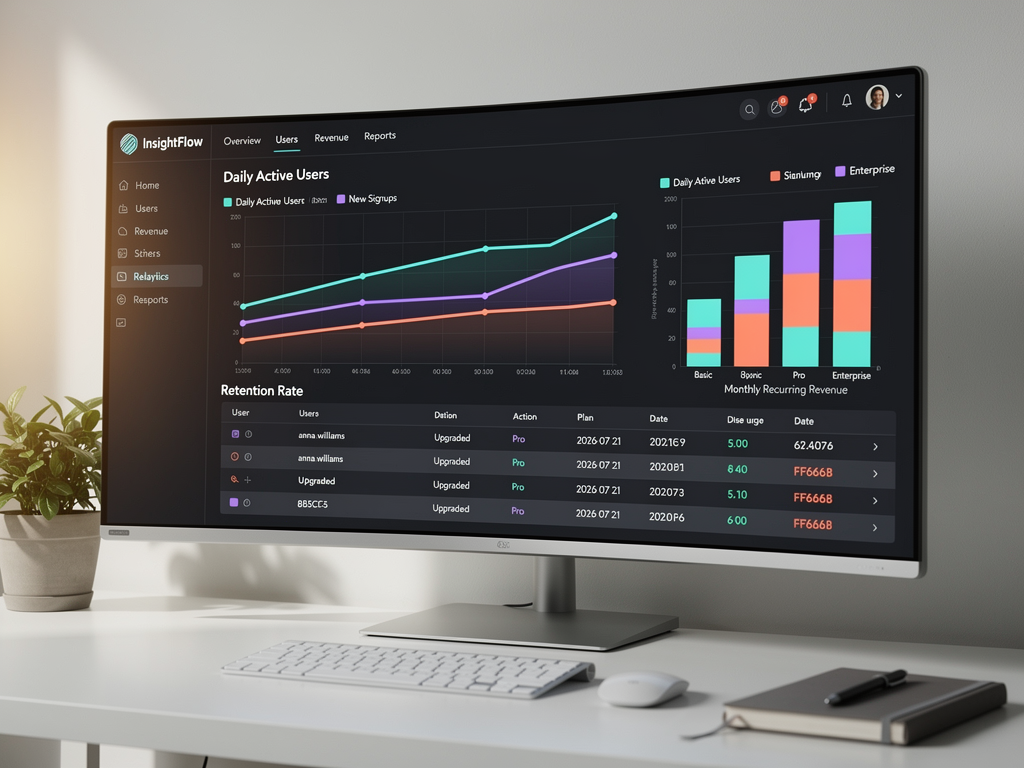
NextBuilder ships with an admin dashboard featuring real-time analytics. Platform operators can monitor user activity, subscription metrics, and application usage across all tenants. The dashboard provides the visibility needed to understand platform health and identify growth opportunities or potential issues before they impact customers.
Supastarter includes admin functionality focused on organization and member management. The analytics capabilities are more limited out of the box, though the architecture supports adding custom analytics integrations. Teams needing advanced analytics may need to integrate third-party solutions like PostHog, Mixpanel, or custom implementations.
Email and Communication Systems
NextBuilder provides a built-in email marketing system with campaign builder. Platform operators can create and send email campaigns to users, segment audiences based on subscription tiers or activity, and track engagement metrics. The system includes 10+ transactional email templates for common scenarios like welcome emails, password resets, and billing notifications.
Supastarter includes transactional email support with React Email templates. The focus is on application-triggered emails rather than marketing campaigns. Teams needing email marketing capabilities would integrate external services like Resend, Mailgun, or dedicated email marketing platforms.
Content Management and SEO
Both platforms include blog functionality with SEO optimization. NextBuilder uses MDX-based content management, allowing rich content with embedded components. Supastarter similarly provides blog infrastructure with SEO-friendly routing and metadata management. Both approaches support the content marketing strategies that SaaS businesses rely on for organic growth.
Developer Experience and Code Quality
The developer experience when working with a boilerplate significantly impacts long-term productivity. Code quality, documentation, testing infrastructure, and maintainability all matter more as your project grows beyond the initial launch phase.
NextBuilder's stack centers on Next.js 16 with TypeScript, Tailwind CSS, and Shadcn/ui for the frontend. The backend uses server actions with Prisma as the ORM connecting to PostgreSQL (supporting both Neon and Supabase as database providers). State management combines Zustand for client state and React Query for server state, providing a modern and performant architecture.
Supastarter offers more flexibility in the database layer, supporting both Prisma and Drizzle ORMs. The backend uses Hono for API routes, providing excellent performance and TypeScript support. The frontend stack mirrors NextBuilder with Tailwind CSS and modern component libraries. The multi-framework support means the codebase is structured to share logic across Next.js, Nuxt, and TanStack implementations.
Code Quality Consideration: Both platforms use strict TypeScript configurations and modern tooling. However, supastarter's AI-coding optimization with AGENTS.md files provides better support for developers using AI coding assistants as part of their workflow.
Documentation quality varies between platforms. NextBuilder provides focused documentation for its specific use case, with particular depth around the multi-tenant architecture and self-hosting configuration. Supastarter offers extensive documentation across all supported frameworks, though the breadth can make finding specific information more challenging for developers focused on a single framework.
Testing infrastructure is an area where both platforms could improve. Neither ships with comprehensive test suites comparable to open-source alternatives like Ixartz SaaS Boilerplate. Teams prioritizing test coverage from day one may need to invest additional time establishing testing patterns and writing initial test suites.
Customization and Extensibility
Every SaaS product eventually requires customization beyond what any boilerplate provides. Understanding how each platform supports extension and modification helps you evaluate long-term development velocity.
NextBuilder's architecture assumes you will build no-code creation tools on top of the platform foundation. The codebase provides hooks and patterns for implementing drag-and-drop builders, template systems, and user-generated content management. The nested tenant model supports complex permission scenarios where platform operators, clients, and end users all have different capabilities.
Supastarter provides a more traditional extension model where you add features to the existing organization-based structure. The RBAC system supports custom roles and permissions, allowing you to implement application-specific access control. The modular architecture separates concerns cleanly, making it straightforward to add new features without modifying core platform code.
Both platforms use component-based UI architectures that support customization. Shadcn/ui components (used by both) are designed for modification rather than configuration, meaning you own the component code and can adjust styling and behavior directly. This approach provides more flexibility than traditional component libraries but requires more effort for consistent design system maintenance.
Database schema extensibility follows similar patterns in both platforms. Prisma migrations (or Drizzle migrations in supastarter) allow you to add tables, modify relationships, and evolve your data model as requirements change. The multi-tenant scoping patterns established in each platform guide how new entities should relate to the tenant hierarchy.
Deployment and Infrastructure Options
How and where you deploy your SaaS application impacts costs, performance, compliance, and operational complexity. Both platforms support multiple deployment strategies, though their documentation and tooling emphasis differs.
NextBuilder includes a comprehensive self-hosting guide covering deployment on Hetzner cloud servers using Coolify as the deployment platform and Supabase for database and authentication services. This combination provides enterprise-grade infrastructure at approximately $15 monthly, making it exceptionally cost-effective for bootstrapped startups. The guide covers server provisioning, SSL configuration, environment setup, and ongoing maintenance procedures.
The self-hosting approach requires more operational knowledge than managed platforms but provides significant benefits. You control your data location for compliance requirements, avoid vendor lock-in, and maintain predictable costs regardless of traffic spikes. For platforms expecting to scale significantly, the self-hosted approach can save thousands of dollars monthly compared to managed alternatives.
Supastarter documentation focuses primarily on managed platform deployment to services like Vercel, Railway, and Render. These platforms provide excellent developer experience with minimal operational overhead, making them ideal for teams that prefer to focus entirely on product development. However, costs can escalate quickly as traffic grows, and some compliance requirements may necessitate self-hosted infrastructure.
| Deployment Aspect | NextBuilder | Supastarter |
|---|---|---|
| Self-Hosting Guide | Comprehensive (Hetzner + Coolify) | Limited |
| Managed Platform Support | Vercel, others | Vercel, Railway, Render |
| Estimated Monthly Cost | ~$15 (self-hosted) | $50-200+ (managed) |
| SSL Automation | Coolify handles automatically | Platform-dependent |
| Custom Domain Handling | Built-in with guide | Manual configuration |
The custom domain and SSL handling in NextBuilder deserves special mention for platform builders. When your customers want to use their own domains for applications they create, the infrastructure complexity increases substantially. NextBuilder's architecture and deployment guide address this scenario directly, while supastarter would require additional configuration and potentially third-party services to achieve similar functionality.
Use Case Scenarios and Recommendations
Abstract feature comparisons only go so far. Understanding how each platform performs in specific real-world scenarios helps you make a confident decision based on your actual requirements.
Scenario: Building a Website Builder Platform
You want to create a platform where customers can build and publish websites using drag-and-drop tools. Each customer should have their own dashboard, be able to create multiple websites, and optionally use custom domains for their published sites.
Recommendation: NextBuilder
NextBuilder's architecture directly supports this use case. The nested tenant model (clients → apps) maps perfectly to users creating multiple websites. Custom subdomain and domain support with automatic SSL handles the publishing infrastructure. The dual authentication system allows website visitors to have accounts on customer sites without needing platform accounts.
Scenario: Building a Project Management SaaS
You want to create a project management tool where companies subscribe, invite team members, and collaborate on projects. Billing should be per-seat, and different team members need different permission levels.
Recommendation: Supastarter
Supastarter's organization-based model fits this scenario precisely. The RBAC system supports the permission differentiation you need. Per-seat billing integration is built-in. The simpler tenant model (organizations with members) matches the mental model of project management software without the complexity of nested tenancy.
Scenario: Building a Form Builder Platform
You want to create a platform where customers can build forms, embed them on their websites, and collect responses. Customers should be able to share form access with team members and potentially charge their own customers for premium form features.
Recommendation: NextBuilder
The platform-within-platform architecture supports the nested monetization model where your customers can charge their customers. Form embedding across custom domains requires the subdomain and SSL infrastructure NextBuilder provides. The member dashboard system allows form creators to manage team access to their forms.
Scenario: Building a Multi-Framework Agency
Your agency builds SaaS products for clients using different frameworks based on project requirements. You want a consistent foundation that works across Next.js, Nuxt, and emerging frameworks.
Recommendation: Supastarter
The all-access tier provides licenses for all supported frameworks with consistent patterns across implementations. This allows your team to apply learned patterns regardless of which framework a specific project requires. The investment in the €1,499 tier pays off quickly when building multiple client projects.
Community and Support Ecosystems
The community surrounding a boilerplate affects your ability to find answers, hire developers familiar with the codebase, and stay updated on best practices. Both platforms have growing communities, though their characteristics differ.
NextBuilder benefits from the broader Next.js ecosystem for general development questions while providing focused support for platform-specific features. The self-hosting guide and documentation reflect real-world deployment experience, suggesting active maintenance and responsiveness to user needs. The affiliate program indicates a marketing focus on community growth.
Supastarter has accumulated over 1,369 developers using the platform, creating a substantial community for shared learning. The multi-framework support means the community includes developers from Next.js, Nuxt, and TanStack backgrounds, providing diverse perspectives on implementation approaches. The showcase of products built with supastarter demonstrates real-world validation of the platform's capabilities.
Documentation quality and update frequency serve as proxies for ongoing support commitment. Both platforms maintain active documentation with regular updates reflecting new features and best practices. Supastarter's blog provides educational content about multi-tenancy patterns and SaaS development beyond just platform documentation, adding value for developers learning these concepts.
For teams prioritizing long-term maintainability, evaluating GitHub activity, documentation freshness, and community responsiveness helps predict whether the platform will continue receiving updates and improvements. Both platforms show signs of active development, though the specific update cadence and feature roadmaps should be verified before purchase.
Performance and Scalability Considerations
SaaS applications must perform well under varying load conditions while maintaining cost efficiency. The architectural decisions in each boilerplate influence how well your application scales and what performance characteristics you can expect.
NextBuilder's architecture using server actions and React Query provides efficient data fetching patterns that minimize unnecessary network requests. The Prisma ORM with PostgreSQL supports the query patterns needed for multi-tenant applications, including efficient tenant-scoped queries. The subdomain routing adds minimal overhead when properly configured with edge caching.
Supastarter's use of Hono for API routes provides excellent performance characteristics. Hono is one of the fastest Node.js web frameworks available, and its integration with the multi-tenant middleware adds minimal latency to requests. The support for both Prisma and Drizzle ORMs allows teams to choose based on their performance requirements, with Drizzle offering slightly better raw performance in most benchmarks.
Database performance in multi-tenant applications depends heavily on proper indexing and query patterns. Both platforms implement tenant ID indexing on relevant tables, ensuring that tenant-scoped queries perform efficiently even as the total data volume grows. However, teams should monitor query performance as their applications scale and add additional indexes based on actual usage patterns.
The self-hosted deployment option in NextBuilder provides more control over performance optimization. You can choose server specifications, configure caching layers, and optimize database settings based on your specific workload. Managed platforms abstract these decisions, which simplifies operations but limits optimization options.
Security and Compliance Factors
Multi-tenant applications face unique security challenges around data isolation, authentication, and access control. Both platforms implement security best practices, though specific compliance requirements may necessitate additional configuration or custom development.
Data isolation in both platforms relies on row-level security patterns where every database query includes tenant context. This approach provides strong isolation when implemented correctly but requires discipline in custom development to maintain. Both platforms establish patterns that guide developers toward secure implementations, reducing the risk of accidental data leakage between tenants.
Authentication security follows modern best practices in both platforms. NextAuth 5.0 (NextBuilder) and Better Auth (supastarter) both support secure session management, CSRF protection, and secure cookie handling. Social authentication integrations use OAuth 2.0 with PKCE where supported, providing defense against common authentication attacks.
For teams with specific compliance requirements (GDPR, HIPAA, SOC 2), the self-hosting capability in NextBuilder provides more control over data residency and access logging. You can deploy to specific geographic regions, implement custom audit logging, and maintain complete control over data retention policies. Managed platform deployments may complicate certain compliance certifications, though many managed providers now offer compliance-focused tiers.
Both platforms would benefit from more comprehensive security documentation covering threat models, security configurations, and compliance considerations. Teams building applications handling sensitive data should conduct independent security reviews regardless of which platform they choose.
Migration and Lock-In Considerations
Choosing a boilerplate creates some degree of lock-in to its patterns and architecture. Understanding the migration implications helps you make a decision you can live with long-term.
Both platforms use standard technologies (Next.js, Prisma/Drizzle, PostgreSQL, Stripe) that have broad ecosystem support. If you needed to migrate away from either platform, the core technologies would remain familiar, and much of your custom code would transfer with modification rather than complete rewrites. The multi-tenancy patterns are the most platform-specific elements, and changing these would require significant effort regardless of which platform you start with.
NextBuilder's focus on no-code platform development means the architecture assumes certain patterns that may not transfer cleanly to other use cases. If your product vision changes from a platform model to a traditional SaaS model, you would face substantial refactoring. However, this specificity is also what makes NextBuilder valuable for its intended use case.
Supastarter's broader positioning means the architecture transfers more easily to different SaaS models. The organization-based multi-tenancy is a common pattern that many other platforms and custom implementations use. Migration to a different boilerplate or custom implementation would be more straightforward, though still non-trivial.
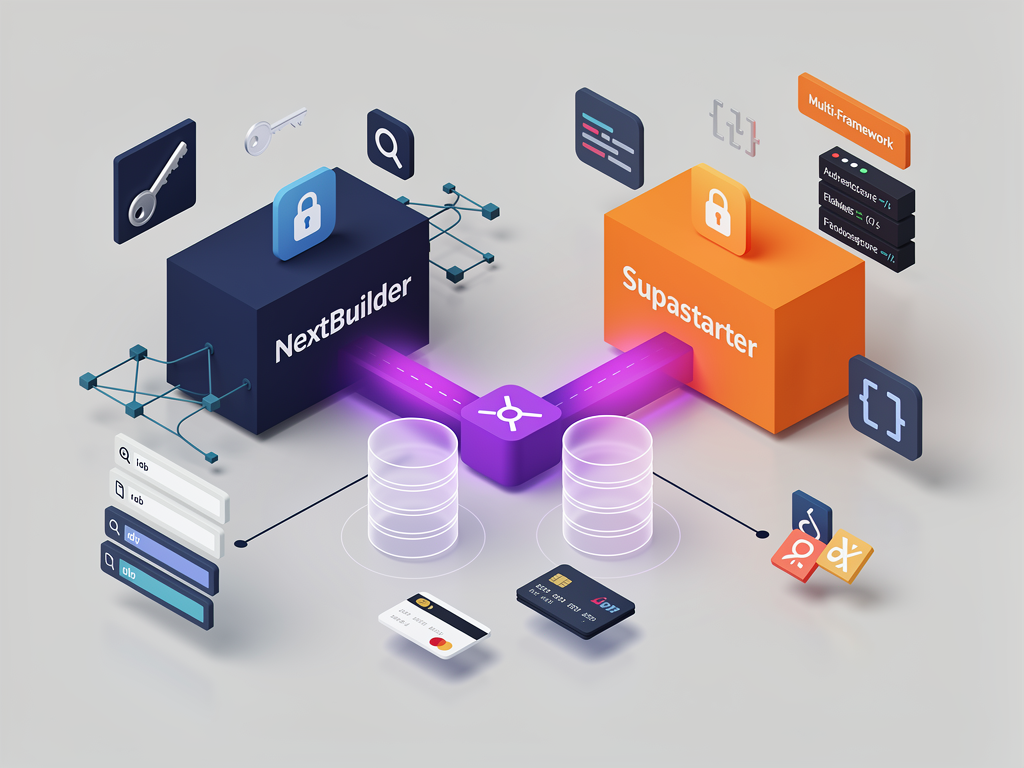
The one-time purchase model used by both platforms reduces financial lock-in compared to subscription-based alternatives. You own the code after purchase and can continue using it indefinitely without ongoing payments. This ownership model provides security against vendor changes, pricing increases, or platform discontinuation.
Making Your Final Decision
After examining both platforms across multiple dimensions, the decision framework becomes clearer. The choice between NextBuilder and supastarter should be driven primarily by what you are building, with secondary considerations around budget, framework preferences, and deployment requirements.
Choose NextBuilder if:
- You are building a no-code platform where customers create their own applications
- Custom subdomains and domains with automatic SSL are core requirements
- You need dual authentication for platform users and application members
- Self-hosting with minimal infrastructure costs is important
- Built-in email marketing and campaign management add value
- Your customers may want to monetize their own applications
Choose supastarter if:
- You are building a traditional B2B SaaS with organization-based subscriptions
- Framework flexibility (Next.js, Nuxt, TanStack) matters for your team or projects
- AI-assisted development with optimized codebase structure is part of your workflow
- You prefer managed platform deployment over self-hosting
- The organization-member model matches your product's user hierarchy
- You are building multiple products across different frameworks
Neither platform is universally "better" than the other. They serve different needs with different architectural approaches. The worst outcome would be choosing based on price alone and ending up with a platform whose architecture fights against your product requirements. Take the time to map your specific needs against each platform's strengths before committing.
Conclusion
The multi-tenant boilerplate market offers increasingly sophisticated options for founders and developers building SaaS platforms. NextBuilder and supastarter represent two distinct approaches to solving the multi-tenancy challenge, each optimized for different product categories and development workflows.
NextBuilder excels as a specialized solution for no-code platform development. Its nested tenant architecture, dual authentication system, automatic subdomain and SSL handling, and comprehensive self-hosting documentation make it the clear choice for founders building platforms where customers create their own applications. The cost-effective infrastructure approach can save thousands of dollars annually while providing enterprise-grade capabilities.
Supastarter provides a broader foundation for traditional SaaS development with excellent framework flexibility and AI-coding optimization. The organization-based multi-tenancy model fits B2B SaaS applications with team subscriptions, and the support for multiple frameworks appeals to agencies and teams building diverse product portfolios.
Both platforms represent significant time savings compared to building from scratch. The 600+ hours that NextBuilder claims to save and the production-ready features in supastarter translate to faster time-to-market and reduced technical risk. For founders validating ideas or teams with limited runway, this acceleration can mean the difference between launching and running out of resources.
Your choice should ultimately reflect your product vision, technical requirements, and team capabilities. Map your specific needs against each platform's architecture, consider the deployment and cost implications, and choose the foundation that will support your growth rather than constrain it.

Frequently Asked Questions
Can I switch from supastarter to NextBuilder (or vice versa) after starting development?
Switching between platforms after significant development is technically possible but practically challenging. Both platforms use standard technologies like Next.js, PostgreSQL, and Stripe, so your custom business logic and UI components would largely transfer. However, the multi-tenancy architecture differs fundamentally between platforms. NextBuilder's nested tenant model (clients → apps → members) requires different database schemas and authentication flows than supastarter's organization-based model. Migration would involve restructuring your database, rewriting authentication logic, and updating all tenant-scoped queries. If you are uncertain about your product direction, consider building a minimal prototype with each platform before committing. The time invested in evaluation is far less than the cost of migrating a partially-built application.
How do custom domains work in NextBuilder compared to supastarter?
NextBuilder includes built-in infrastructure for custom domains with automatic SSL certificate provisioning. When a customer on your platform wants to use their own domain for an application they created, NextBuilder handles DNS verification, certificate generation through Let's Encrypt, and routing configuration automatically. The self-hosting guide covers the Coolify configuration needed to support this functionality. Supastarter does not include this infrastructure out of the box. Implementing custom domain support would require additional configuration using services like Vercel's domain API, Cloudflare for DNS and SSL, or custom implementations with tools like Caddy or Traefik. For platforms where custom domains are a core feature, NextBuilder's built-in support saves significant development and infrastructure complexity.
Which platform is better for a solo founder with limited technical experience?
Both platforms assume meaningful technical experience with Next.js, React, and modern web development. Neither is a true no-code solution for building your platform. That said, supastarter's focus on managed platform deployment (Vercel, Railway) reduces infrastructure complexity compared to NextBuilder's self-hosting approach. If you are comfortable with basic Next.js development but want to avoid server administration, supastarter's deployment path is more straightforward. However, if you are building a no-code platform and can follow technical documentation, NextBuilder's self-hosting guide is comprehensive enough for developers without extensive DevOps experience. Consider your comfort level with server management and whether the cost savings from self-hosting justify the learning investment.
Do either platform support white-labeling for agency use?
Both platforms support white-labeling to different degrees. NextBuilder's architecture inherently supports white-labeling because applications created by your customers can have their own branding, domains, and user bases without any reference to your platform. This makes it ideal for agencies building platforms they resell to clients. Supastarter supports white-labeling at the organization level, where each organization can have custom branding within the application. However, the single-tier tenant model means all organizations share the same application instance with your branding at the platform level. For agencies building truly white-labeled solutions where end clients should never see the agency's branding, NextBuilder's architecture provides more complete separation.
What happens if either platform stops being maintained?
Both platforms use one-time purchase models where you own the code after buying. If either platform stopped receiving updates, you would retain full access to your purchased codebase and could continue developing independently. The technologies used (Next.js, Prisma, PostgreSQL, Stripe) are all open-source or have broad ecosystem support, so you would not be stranded with proprietary dependencies. However, you would lose access to future updates, bug fixes, and new features. To mitigate this risk, evaluate each platform's update history, community activity, and the maintainers' track record before purchasing. Both platforms show signs of active development as of 2026, but ongoing evaluation of maintenance commitment is prudent for any boilerplate investment.
Can I use either platform to build a marketplace or two-sided platform?
Marketplace functionality requires additional development beyond what either platform provides out of the box, but both can serve as foundations. NextBuilder's architecture supports scenarios where platform clients (sellers) create storefronts (apps) that end users (buyers) interact with. The dual authentication system and app-level member management provide infrastructure for buyer accounts on seller storefronts. Supastarter's organization model could support marketplaces where organizations represent sellers and members represent their team, with buyers as a separate user type requiring custom implementation. Neither platform includes marketplace-specific features like escrow payments, review systems, or search/discovery functionality. You would build these on top of the multi-tenant foundation. For complex marketplace requirements, evaluate whether the platform's tenant model aligns with your marketplace structure before committing.
Ready to Build Your Multi-Tenant Platform?
If you are building a no-code platform where your customers create their own applications, NextBuilder provides the specialized architecture you need. With custom subdomains, automatic SSL, dual authentication, and a comprehensive self-hosting guide that keeps infrastructure costs under $15 monthly, you can launch your platform in days rather than months. Visit Nextbuilder.dev to explore the demo, review the complete feature set, and start building your multi-tenant SaaS platform today.
Subscribe to our newsletter
Subscribe to our newsletter and stay up-to-date with the latest news and updates.