Maximize SaaS Conversions with Next.js Landing Page Templates
Learn how Next.js templates can transform your SaaS landing pages into high-converting digital storefronts. Discover strategies for optimizing performance, selecting the right templates, and leveraging key design elements to boost user engagement and conversion rates.

Zakariae
Building a SaaS product has never been more accessible, yet converting visitors into paying customers remains the ultimate challenge. Your landing page serves as the digital storefront for your software, and within mere seconds, potential users decide whether your product deserves their attention or their back button. For founders building multi-tenant platforms, no-code solutions, or subscription-based services, the landing page represents the critical bridge between marketing efforts and actual revenue.
The modern SaaS landscape demands landing pages that load instantly, communicate value clearly, and guide visitors toward conversion with minimal friction. This is precisely where Next.js templates have revolutionized how developers and entrepreneurs approach landing page development. By combining server-side rendering, optimized performance, and component-based architecture, Next.js provides the foundation for landing pages that not only look professional but also perform exceptionally in search rankings and conversion metrics.
Key Takeaways
- Performance drives conversions: Next.js landing pages consistently achieve superior Core Web Vitals scores, directly impacting both SEO rankings and user conversion rates.
- Template selection matters: Choosing a nextjs landing page template aligned with your SaaS niche accelerates development while ensuring conversion-focused design patterns.
- Multi-tenant architecture considerations: Landing pages for platform businesses require unique approaches to showcase client customization capabilities and subdomain functionality.
- SEO architecture is foundational: Proper metadata implementation, structured data, and semantic HTML from day one prevent costly rewrites later.
- Trust signals convert skeptics: Strategic placement of testimonials, security badges, and social proof elements can increase conversion rates by 15 to 30 percent.
- Mobile optimization is non-negotiable: Over 60 percent of SaaS research begins on mobile devices, making responsive design critical for capturing leads.
- Component reusability accelerates iteration: Well-structured Next.js components enable rapid A/B testing and continuous landing page optimization.
Understanding Why Landing Page Performance Determines SaaS Success
The relationship between landing page performance and business outcomes extends far beyond aesthetic preferences. Research consistently demonstrates that page load time directly correlates with bounce rates and conversion percentages. When a landing page takes longer than three seconds to become interactive, approximately 53 percent of mobile visitors abandon the page entirely. For SaaS businesses investing significant resources in paid advertising and content marketing, this abandonment translates directly into wasted acquisition spend.
Next.js addresses these performance challenges through its hybrid rendering approach. Unlike traditional single-page applications that require JavaScript execution before displaying content, Next.js can pre-render pages at build time or on each request. This means visitors see meaningful content almost instantly, even before interactive elements fully load. The framework's automatic code splitting ensures that users download only the JavaScript necessary for the current page, dramatically reducing initial bundle sizes.
Beyond raw speed metrics, search engines have explicitly incorporated Core Web Vitals into ranking algorithms. Largest Contentful Paint, First Input Delay, and Cumulative Layout Shift now influence where your landing page appears in search results. A Next.js SaaS template built with these metrics in mind provides inherent advantages over legacy frameworks, giving your product visibility advantages before any content optimization begins.
For founders building multi-tenant platforms where clients create their own applications, landing page performance becomes even more critical. Potential customers evaluating your platform will judge its capabilities partly based on how your own marketing site performs. A sluggish landing page raises immediate questions about the performance clients can expect from applications built on your platform.
Anatomy of High-Converting SaaS Landing Pages
Effective SaaS landing pages follow predictable patterns not because creativity lacks value, but because these patterns have been validated through millions of conversion tests across thousands of products. Understanding these structural elements allows you to leverage proven approaches while still differentiating your specific offering.
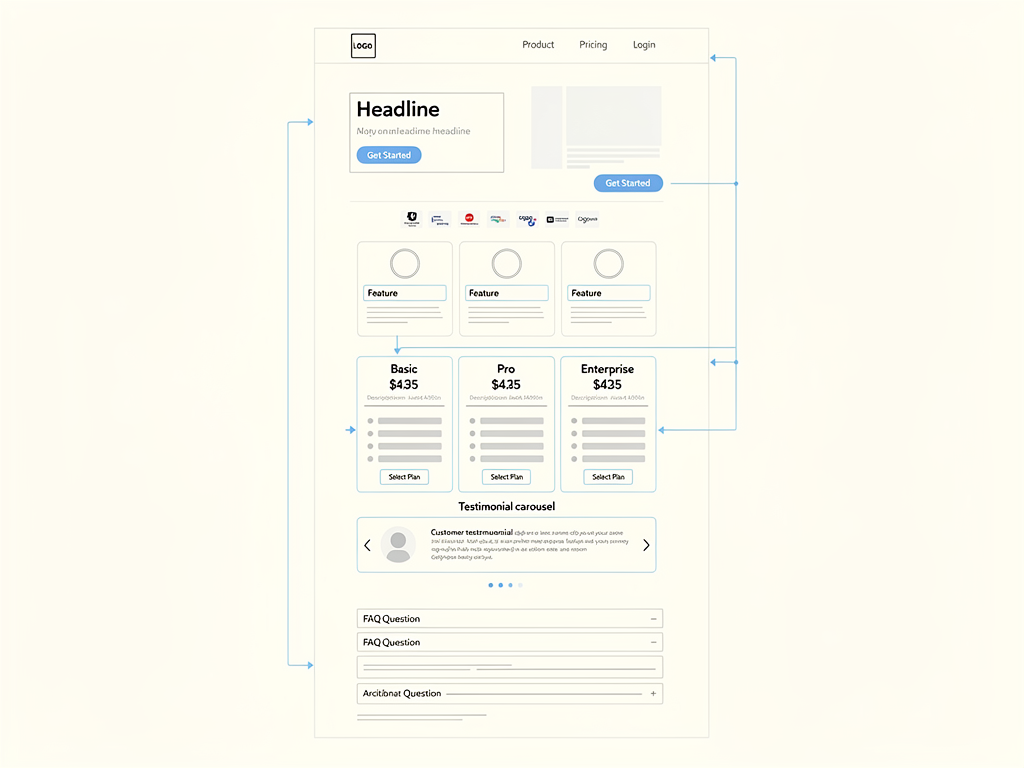
The hero section commands immediate attention and must accomplish several objectives simultaneously. Visitors need to understand what your product does, who it serves, and why it matters, all within roughly five seconds of scanning. This requires ruthless clarity in headline writing, supported by a subheadline that expands on the value proposition without overwhelming readers. A primary call-to-action button should appear prominently, using action-oriented language that reduces perceived commitment while promising clear value.
Below the hero, social proof elements establish credibility before visitors invest time in learning more. This might include recognizable client logos, aggregate statistics about users or results, or brief testimonial snippets. The goal is not comprehensive proof at this stage but rather sufficient validation that continuing to scroll represents worthwhile effort.
Feature sections should focus on benefits rather than capabilities. Instead of listing technical specifications, effective landing pages explain how features translate into outcomes users actually care about. For a multi-tenant boilerplate platform, this means emphasizing how quickly clients can launch their own applications rather than detailing the underlying subdomain routing implementation.
Pricing transparency has become increasingly expected in SaaS marketing. While some products benefit from sales-led approaches requiring consultation, most self-service SaaS products convert better when pricing appears clearly on the landing page. Visitors who cannot quickly determine whether your product fits their budget often leave rather than initiating contact.
Selecting the Right Next.js Template for Your SaaS Niche
The template marketplace has expanded dramatically, offering options ranging from free open-source projects to premium packages with extensive customization options. Selecting appropriately requires honest assessment of your technical capabilities, timeline constraints, and specific product requirements.
Free templates provide excellent starting points for developers comfortable with significant customization. Projects available through GitHub often include basic component structures, routing configurations, and styling foundations. However, these templates typically require substantial work to achieve production-ready quality, including accessibility improvements, performance optimization, and conversion-focused design refinements.
Premium templates justify their cost through comprehensive feature sets and ongoing support. The best options include pre-built sections for common SaaS landing page needs: hero variations, feature showcases, pricing tables, testimonial displays, FAQ accordions, and newsletter signup forms. When evaluating premium options, prioritize templates built specifically for SaaS products rather than generic business templates adapted for software marketing.
For founders building no-code platforms or app builder tools, template selection should emphasize visual customization capabilities. Your landing page needs to demonstrate the design flexibility your platform offers clients. A template with rigid styling constraints contradicts the message that clients can create beautiful, customized applications using your tools.
Consider also whether the template architecture supports your growth trajectory. A SaaS starter kit that works well for a single product landing page may struggle when you need to add documentation sections, blog functionality, or multiple product pages. Evaluating the template's routing structure and component organization helps predict future scalability.
Building Hero Sections That Capture Attention Immediately
The hero section carries disproportionate weight in landing page effectiveness. Eye-tracking studies consistently show that visitors spend the majority of their initial attention in this area, making optimization here particularly impactful. Next.js provides specific advantages for hero section implementation that deserve attention during development.
Image optimization through the Next.js Image component dramatically improves hero section performance. Traditional image implementations often cause layout shifts as images load, frustrating visitors and damaging Core Web Vitals scores. The Image component handles responsive sizing, lazy loading, and format optimization automatically, ensuring hero visuals enhance rather than hinder the user experience.
Headline writing for SaaS products requires balancing specificity with accessibility. Overly technical headlines alienate non-technical decision-makers, while vague headlines fail to differentiate your product from competitors. The most effective approach typically combines a clear outcome statement with an indication of the target audience or use case. For example, a platform enabling clients to build no-code applications might use a headline like "Launch Your Custom App Builder in Days, Not Months."
Call-to-action button design involves more than color selection. Button text should reduce perceived friction while promising clear value. "Start Free Trial" outperforms "Sign Up" because it specifies the commitment level and implies immediate value. "See Demo" works well for complex products requiring explanation, while "Get Started Free" emphasizes accessibility for price-sensitive visitors.
Hero section backgrounds deserve careful consideration. Video backgrounds can demonstrate product functionality but risk slow loading and distraction. Static images work well when they clearly communicate product value. Gradient backgrounds with subtle animations provide visual interest without competing with content. The choice should align with your product's positioning and target audience expectations.
Implementing Trust Signals That Convert Skeptical Visitors
Trust represents the fundamental barrier between interest and conversion. Visitors who understand your product's value and believe it could help them still hesitate without confidence that your company will deliver on promises. Strategic trust signal implementation addresses these concerns throughout the landing page journey.
Client logos provide immediate credibility when recognizable brands appear. However, logo sections require careful curation. Including only unknown companies provides minimal trust benefit, while including logos without permission creates legal risk. For early-stage SaaS products without notable clients, alternative approaches include featuring industry publications that have mentioned your product, integration partner logos, or security certification badges.
Testimonials work best when they include specific, quantifiable outcomes rather than generic praise. "Great product, highly recommend" provides minimal persuasive value compared to "Reduced our client onboarding time from two weeks to three days." Including the testimonial provider's full name, title, company, and photo increases credibility significantly. Video testimonials, while requiring more production effort, consistently outperform text-based alternatives in conversion testing.
Security and compliance badges matter particularly for SaaS products handling sensitive data. SOC 2 compliance, GDPR readiness, and SSL certification badges address specific concerns enterprise buyers evaluate during vendor selection. Positioning these badges near signup forms or pricing sections addresses security concerns at the moment of decision.
Social proof through aggregate metrics can powerfully influence visitor perception. Statements like "Trusted by 10,000+ developers" or "Processing $50M in monthly transactions" establish scale and reliability. However, these metrics must be accurate and defensible. Inflated numbers that visitors later discover were misleading damage trust more severely than modest honest numbers.
Crafting Pricing Sections That Drive Purchase Decisions
Pricing presentation significantly influences both conversion rates and average revenue per user. The structure, positioning, and framing of pricing information shapes how visitors perceive value and make purchase decisions. Next.js component architecture enables sophisticated pricing section implementations that adapt to different visitor segments and testing variations.
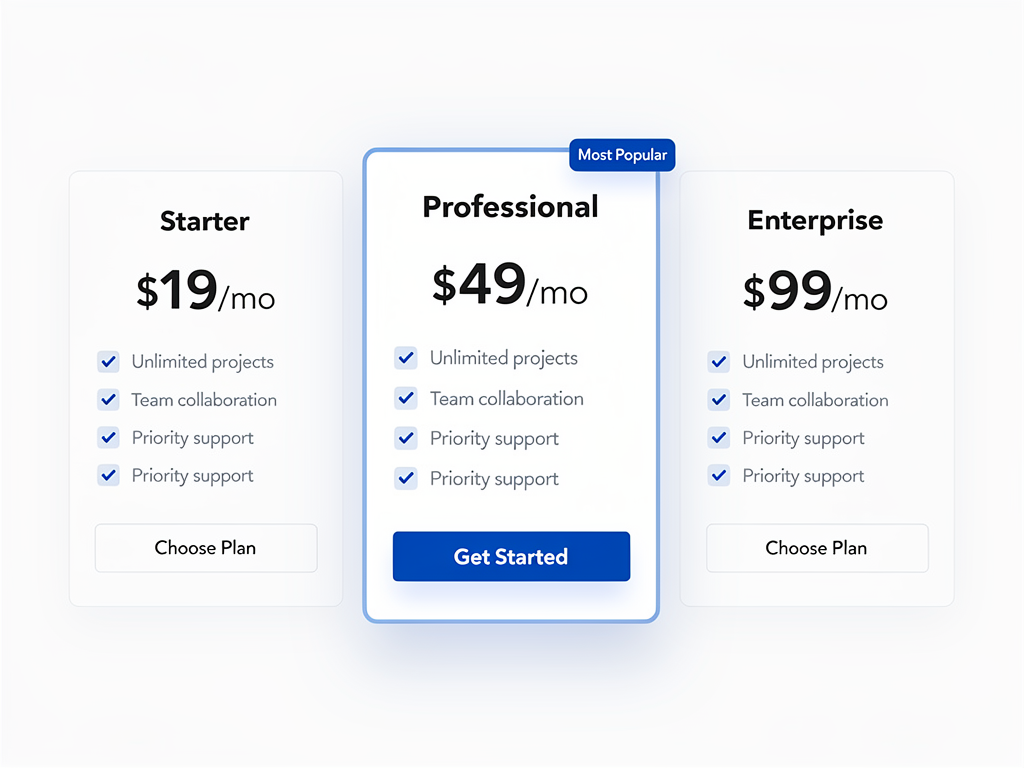
Tiered pricing remains the dominant model for SaaS products, typically featuring three to four plans targeting different customer segments. The visual design should guide attention toward your preferred plan, usually the middle tier offering the best margin-to-value ratio. This "anchor" plan benefits from visual emphasis through size, color, or "Most Popular" badges that leverage social proof.
Feature comparison tables help visitors understand plan differences but require careful organization. Listing every feature across all plans creates overwhelming comparison matrices. Instead, group features into categories and highlight the key differentiators that justify price differences between tiers. For multi-tenant platforms, emphasizing limits on client applications, custom domains, or team members clearly communicates scaling value.
Annual versus monthly pricing toggles have become standard, with annual plans typically offering discounts between 15 and 20 percent. The toggle interaction should clearly communicate savings without making monthly pricing feel like a penalty. Some products default to annual pricing display, while others default to monthly to show lower initial numbers. Testing both approaches reveals which works better for your specific audience.
Free tier or trial positioning requires strategic consideration. Prominently featuring free options can increase signup volume while potentially attracting users unlikely to convert to paid plans. The ideal approach depends on your product's viral coefficient and whether free users provide value through referrals, content creation, or marketplace participation.
Optimizing Landing Pages for Search Engine Visibility
Search engine optimization for SaaS landing pages extends beyond keyword placement into technical implementation, content structure, and user experience signals. Next.js provides powerful tools for SEO optimization that, when properly configured, create sustainable organic traffic advantages.
Metadata implementation through the Next.js Metadata API ensures search engines receive accurate information about your page content. Title tags should include your primary keyword while remaining compelling for human readers. Meta descriptions, while not directly influencing rankings, significantly impact click-through rates from search results. Writing descriptions that clearly communicate your value proposition and include calls to action improves traffic quality.
Structured data markup helps search engines understand your page content and can enable rich result features. For SaaS landing pages, relevant schema types include Organization, Product, and FAQ. Implementing FAQ schema for your frequently asked questions section can result in expanded search listings that occupy more visual space and attract more clicks.
Internal linking structure influences how search engines understand your site hierarchy and distribute ranking authority. Your landing page should link to relevant supporting content, such as documentation, blog posts, and case studies, while those pages should link back to the landing page. This creates a hub-and-spoke structure that reinforces your landing page's importance.
Page speed optimization, discussed earlier for conversion purposes, directly impacts search rankings. Google's Core Web Vitals assessment considers real user experience data, meaning that actual visitor interactions influence your search visibility. Next.js's built-in optimizations provide advantages, but additional attention to image compression, font loading, and third-party script management further improves performance scores.
Designing Feature Sections That Communicate Value Effectively
Feature sections bridge the gap between initial interest captured by the hero and the decision point represented by pricing. These sections must transform abstract capabilities into concrete benefits that resonate with visitor needs and pain points. The challenge lies in communicating enough detail to inform decisions without overwhelming visitors with technical complexity.
Benefit-focused headlines outperform feature-focused alternatives consistently. "Automatic SSL Certificates for Every Custom Domain" tells visitors what they get, while "Eliminate Security Configuration Headaches" tells them why they should care. The most effective approach combines both: a benefit-focused headline supported by feature-specific details that explain how the benefit is delivered.
Visual demonstrations of features significantly increase comprehension and retention. Screenshots, animated GIFs, or short video clips showing your product in action communicate more effectively than paragraphs of description. For platforms enabling clients to build applications, showing the builder interface and resulting applications demonstrates capability more powerfully than listing features.
Feature section organization should follow visitor priority rather than internal product categorization. Lead with features that address the most common pain points or provide the most compelling differentiation. For a Next.js boilerplate offering multi-tenant capabilities, the custom subdomain and SSL functionality likely deserves prominent positioning because it represents significant development complexity that your product eliminates.
Comparison positioning can effectively communicate value when visitors likely evaluate alternatives. Subtle comparisons that highlight your advantages without disparaging competitors work better than aggressive competitive attacks. Phrases like "Unlike traditional approaches" or "While other solutions require" frame your benefits without naming specific competitors.
Creating Effective Call-to-Action Strategies Throughout the Page
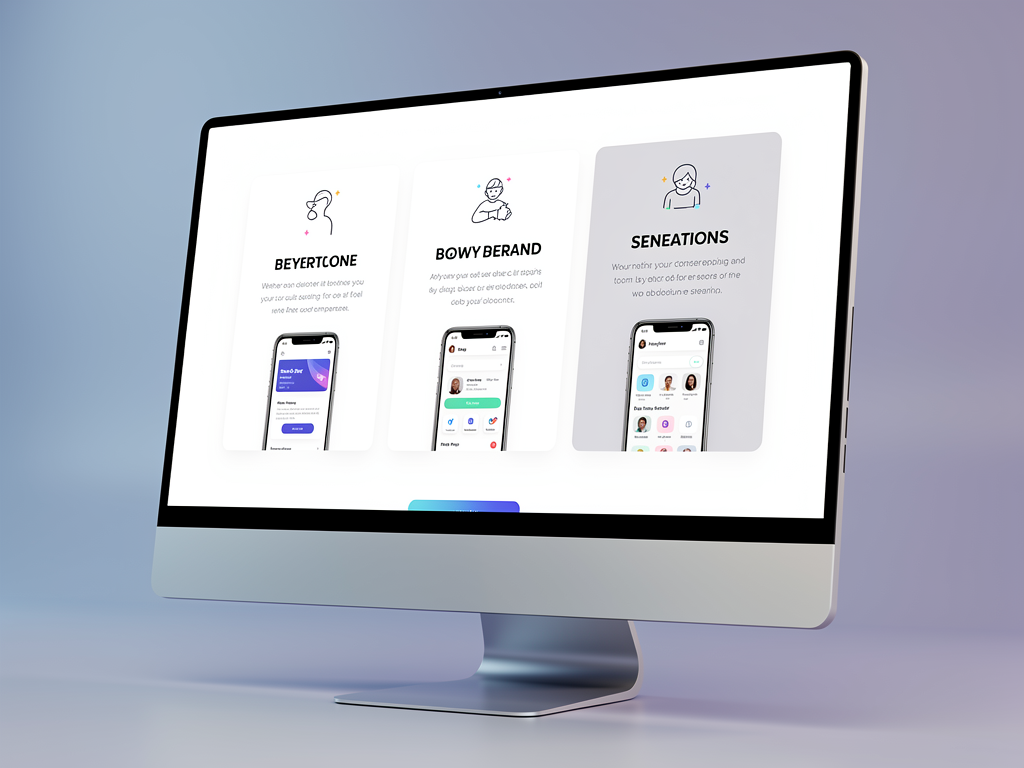
Call-to-action optimization extends beyond button design to encompass placement strategy, copy variations, and friction reduction throughout the conversion funnel. A single CTA in the hero section rarely maximizes conversion potential. Instead, strategic CTA placement at multiple decision points captures visitors at different stages of readiness.
Primary CTAs should appear prominently in the hero section and repeat at logical intervals throughout the page. After compelling feature sections or testimonials, visitors may feel motivated to act. Providing a CTA at these moments captures conversion intent before it fades. However, excessive CTA repetition creates visual clutter and can feel aggressive. Testing reveals the optimal frequency for your specific page length and audience.
Secondary CTAs address visitors not ready for primary conversion. Someone interested in your product but not ready to start a trial might appreciate options to watch a demo video, download a resource, or subscribe to a newsletter. These secondary actions maintain engagement and create remarketing opportunities for future conversion attempts.
CTA copy testing often reveals surprising preferences. Conventional wisdom suggests action-oriented verbs, but specific audiences may respond better to different approaches. "Get Started" implies effort, while "See How It Works" implies education. "Start Free" emphasizes cost, while "Try It Now" emphasizes immediacy. Systematic testing across these variations identifies what resonates with your specific visitors.
Friction reduction around CTAs significantly impacts conversion rates. Forms requesting excessive information create abandonment. For initial signups, email-only or email-plus-password forms outperform longer alternatives. Additional information can be collected during onboarding after the initial conversion barrier is crossed.
Implementing Mobile-First Responsive Design Principles
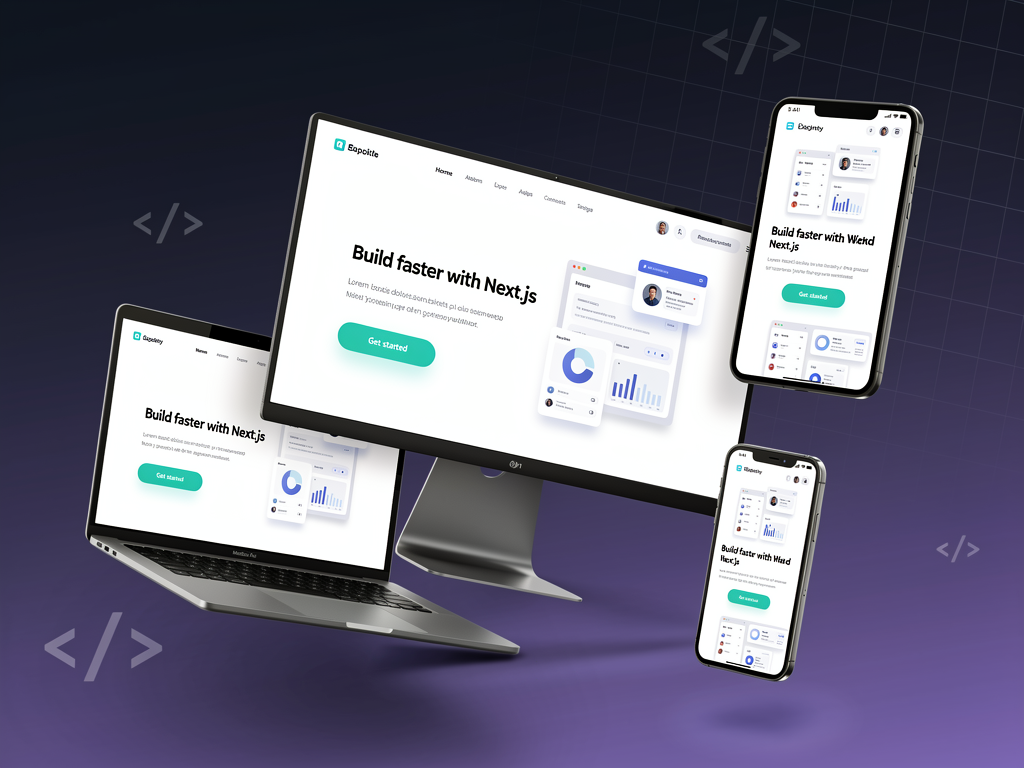
Mobile traffic now represents the majority of web visits across most industries, and SaaS research increasingly begins on mobile devices even when final purchases occur on desktop. Landing pages that provide poor mobile experiences lose significant conversion opportunities and may suffer SEO penalties from Google's mobile-first indexing approach.
Responsive design in Next.js typically leverages CSS frameworks like Tailwind CSS, which provide utility classes for responsive breakpoints. However, true mobile optimization extends beyond layout adjustments to consider interaction patterns, content prioritization, and performance constraints specific to mobile contexts.
Touch target sizing affects mobile usability significantly. Buttons and interactive elements should maintain minimum dimensions of 44 by 44 pixels to accommodate finger taps accurately. Spacing between interactive elements prevents accidental taps on adjacent items. These considerations particularly impact navigation menus, pricing toggles, and form elements.
Content prioritization for mobile often requires different approaches than desktop layouts. Long feature comparison tables that work well on wide screens become unusable on narrow mobile displays. Accordion patterns, horizontal scrolling cards, or simplified mobile-specific presentations maintain usability without sacrificing information completeness.
Mobile performance optimization deserves additional attention beyond general page speed considerations. Mobile networks often provide slower, less reliable connections than desktop environments. Aggressive image optimization, critical CSS inlining, and careful third-party script management become even more important for mobile visitors.
Leveraging Next.js App Router Architecture for Landing Pages
The Next.js App Router, introduced in version 13 and refined through subsequent releases, provides architectural advantages particularly relevant to landing page development. Understanding these capabilities enables more sophisticated implementations that improve both developer experience and end-user outcomes.
Server Components, the default in App Router, enable rendering logic to execute on the server rather than in the browser. For landing pages, this means dynamic content like testimonials fetched from a CMS or pricing pulled from a database can be rendered without shipping additional JavaScript to visitors. The result is faster page loads and improved performance scores.
Layout components in App Router enable consistent elements across multiple pages without re-rendering. Navigation headers, footers, and persistent UI elements defined in layout files remain stable as visitors navigate between your landing page, pricing page, and documentation. This creates smoother transitions and reduces perceived loading times.
Metadata generation through the App Router's generateMetadata function enables dynamic SEO optimization. For SaaS products with multiple landing pages targeting different keywords or audiences, this function can generate appropriate titles, descriptions, and Open Graph images based on page parameters. This capability supports sophisticated SEO strategies without manual metadata management for each page.
Streaming and Suspense boundaries allow progressive page rendering, showing content as it becomes available rather than waiting for all data to load. For landing pages with dynamic sections that require database queries or API calls, this means visitors see static content immediately while dynamic elements load in the background.
Integrating Analytics and Conversion Tracking Systems
Landing page optimization requires data-driven decision making, which demands proper analytics implementation from launch. Next.js applications can integrate with various analytics platforms, each offering different capabilities for understanding visitor behavior and measuring conversion effectiveness.
Google Analytics 4 provides comprehensive visitor tracking including traffic sources, behavior flow, and conversion events. Implementation in Next.js requires careful attention to client-side versus server-side rendering contexts. The recommended approach uses the Next.js Script component with appropriate loading strategies to avoid blocking page rendering while ensuring accurate tracking.
Conversion tracking should measure meaningful business outcomes rather than vanity metrics. For SaaS landing pages, relevant conversions typically include trial signups, demo requests, and newsletter subscriptions. Configuring these as conversion events enables attribution analysis showing which traffic sources and page variations drive actual business results.
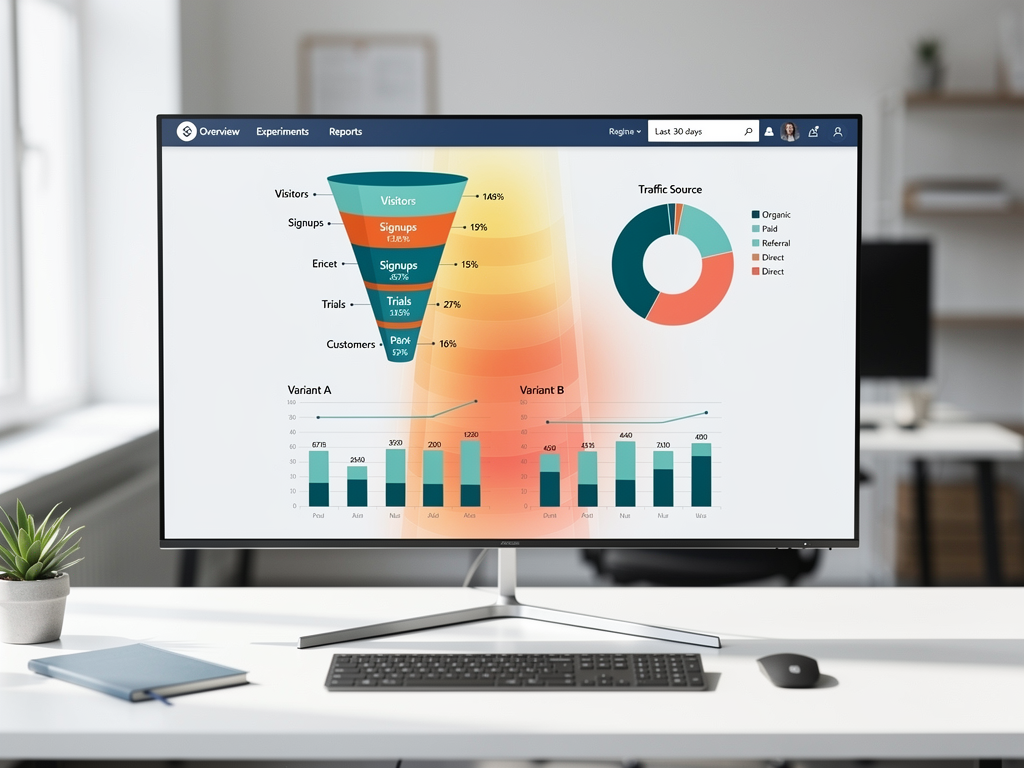
Heatmap and session recording tools like Hotjar or FullStory reveal how visitors actually interact with your landing page. These tools show where visitors click, how far they scroll, and where they encounter confusion or frustration. This qualitative data complements quantitative analytics by explaining why metrics show particular patterns.
A/B testing platforms enable systematic optimization through controlled experiments. Tools like Optimizely, VWO, or even simple feature flag implementations allow testing headline variations, CTA copy, pricing presentations, and layout changes. Statistical rigor in test design and interpretation prevents false conclusions from random variation.
Building FAQ Sections That Address Objections and Improve SEO
Frequently asked questions sections serve dual purposes on SaaS landing pages: addressing visitor concerns that might prevent conversion and providing SEO benefits through structured content. Effective FAQ implementation requires understanding both objectives and optimizing for each.
Question selection should prioritize actual visitor concerns rather than questions you wish visitors would ask. Sales team feedback, support ticket analysis, and user research reveal the genuine objections and confusions that prevent conversions. Common categories include pricing clarification, technical requirements, security concerns, and comparison with alternatives.
Answer depth should match question complexity. Simple factual questions deserve concise answers, while complex concerns require thorough explanations. Overly brief answers to legitimate concerns feel dismissive, while excessive detail for simple questions wastes visitor attention. Each answer should directly address the question without unnecessary preamble.
FAQ schema markup enables rich results in Google search, displaying questions and answers directly in search listings. This expanded presence increases click-through rates and establishes authority. Next.js supports JSON-LD structured data implementation through script tags in page components, making schema addition straightforward.
Accordion interaction patterns work well for FAQ sections, allowing visitors to scan questions quickly and expand only those relevant to their concerns. Accessibility considerations require proper ARIA attributes and keyboard navigation support. Most component libraries include accessible accordion implementations suitable for FAQ use.
Deploying and Scaling Next.js Landing Pages Effectively
Deployment strategy influences both performance and operational complexity. Next.js applications support various deployment approaches, from managed platforms to self-hosted infrastructure. The optimal choice depends on traffic expectations, budget constraints, and technical team capabilities.
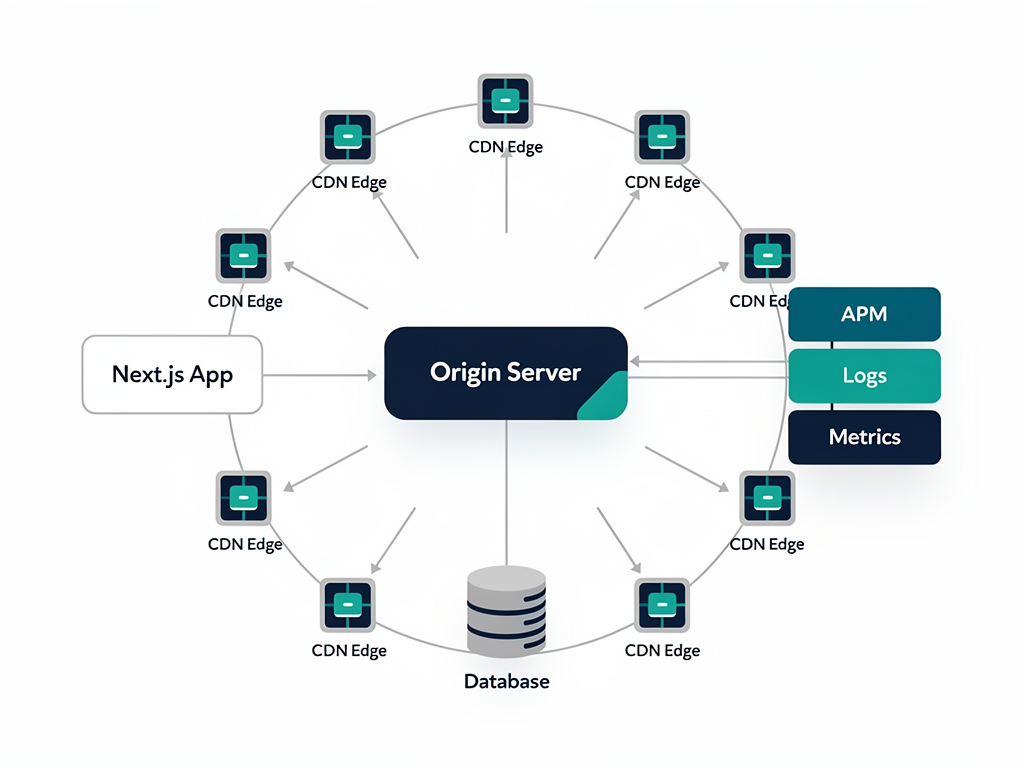
Vercel, created by the Next.js team, provides the most seamless deployment experience with automatic optimization features. The platform handles edge caching, image optimization, and serverless function deployment without configuration. For most SaaS landing pages, Vercel's free tier or Pro plan provides sufficient capacity at reasonable cost.
Self-hosting options suit organizations with specific compliance requirements or existing infrastructure investments. Docker containerization enables deployment to any container orchestration platform. For teams already managing Kubernetes clusters or using platforms like Coolify, self-hosting can reduce costs while maintaining control over the deployment environment.
CDN configuration significantly impacts global performance. Landing pages serving international audiences benefit from edge caching that serves content from geographically proximate servers. Both managed platforms and self-hosted deployments can integrate with CDN providers like Cloudflare or Fastly for improved global performance.
Monitoring and alerting systems should track both availability and performance. Uptime monitoring ensures immediate notification of outages, while performance monitoring tracks Core Web Vitals and identifies degradation before it impacts conversions. Services like Vercel Analytics, Sentry, or Datadog provide comprehensive monitoring capabilities for Next.js applications.
Accelerating Development with Production-Ready Templates and Boilerplates
The decision between building from scratch and leveraging existing templates involves tradeoffs between customization flexibility and development speed. For most SaaS founders, particularly those focused on validating product-market fit, template-based approaches provide superior time-to-market without sacrificing quality.
A SaaS boilerplate provides more than visual components. Production-ready options include authentication systems, payment integration, database schemas, and administrative interfaces. These foundational elements require significant development effort when built from scratch, effort better directed toward your product's unique value proposition.
Template customization skills determine how effectively you can adapt pre-built solutions to your specific needs. Familiarity with the underlying technologies, typically React, Tailwind CSS, and TypeScript for Next.js templates, enables confident modifications without breaking existing functionality. Teams lacking these skills may find template customization more challenging than anticipated.
For founders building multi-tenant platforms where clients create their own applications, template selection should consider the underlying architecture. Solutions designed for single-tenant applications may require significant refactoring to support multi-tenant requirements like subdomain routing, tenant isolation, and per-tenant customization. Starting with a multi-tenant boilerplate designed for these requirements saves substantial development time.
The SaaSCore Next.js boilerplate represents one option in this space, offering pre-built multi-tenant architecture alongside landing page components. Evaluating multiple options against your specific requirements ensures the best fit for your project's needs.
Testing and Iterating Landing Pages for Continuous Improvement
Landing page optimization is an ongoing process rather than a one-time project. Initial launches rarely achieve optimal conversion rates. Systematic testing and iteration based on data progressively improve performance over time, often achieving significant gains through incremental changes.
Hypothesis-driven testing produces more actionable results than random experimentation. Each test should begin with a specific hypothesis about visitor behavior and expected outcomes. "Changing the CTA button color from blue to green will increase clicks by 10 percent because green implies positive action" provides a testable prediction that informs future decisions regardless of outcome.
Statistical significance requirements prevent false conclusions from random variation. Tests require sufficient sample sizes to detect meaningful differences reliably. Online calculators help determine required sample sizes based on current conversion rates and minimum detectable effects. Running tests to completion rather than stopping early when results look promising ensures valid conclusions.
Qualitative research complements quantitative testing by revealing why visitors behave as they do. User interviews, usability testing, and survey feedback provide context that pure metrics cannot capture. A visitor might explain that they found the pricing confusing or the value proposition unclear, insights that inform hypothesis generation for future tests.
Documentation of test results creates organizational learning that persists beyond individual team members. Recording hypotheses, test configurations, results, and conclusions enables future reference and prevents repeated testing of previously validated or invalidated ideas.

Common Landing Page Mistakes and How to Avoid Them
Understanding frequent mistakes helps avoid pitfalls that undermine landing page effectiveness. These errors often stem from reasonable assumptions that prove incorrect when tested against actual visitor behavior.
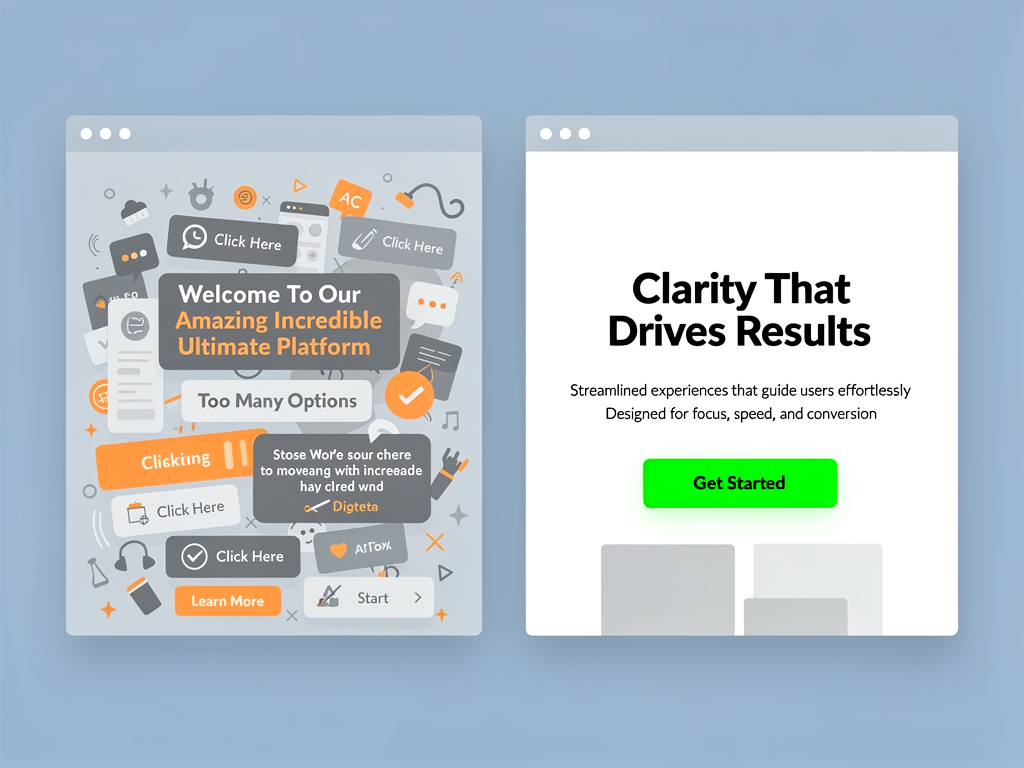
Excessive information density overwhelms visitors rather than informing them. The temptation to include every feature, benefit, and use case on a single page creates cognitive overload. Effective landing pages ruthlessly prioritize, presenting the most compelling information prominently while relegating secondary details to supporting pages or expandable sections.
Weak value propositions fail to differentiate from alternatives. Generic claims like "easy to use" or "powerful features" describe every product and therefore distinguish none. Specific, quantifiable value propositions like "launch your first app in under 48 hours" or "reduce client onboarding time by 60 percent" communicate meaningful differentiation.
Missing or unclear calls to action leave visitors without direction. Every section should guide toward a logical next step, whether primary conversion or secondary engagement. Pages that present information without clear action paths waste the attention they successfully captured.
Ignoring mobile experience alienates the majority of visitors. Desktop-centric design that merely shrinks for mobile screens fails to address the fundamentally different interaction patterns of touch devices. True mobile optimization requires designing for mobile first, then expanding for larger screens.
Neglecting page speed sacrifices both conversions and search rankings. Third-party scripts, unoptimized images, and excessive animations accumulate performance costs that visitors experience as frustrating delays. Regular performance auditing and optimization maintains the speed advantages Next.js provides.
Conclusion
Creating high-converting SaaS landing pages with Next.js templates combines technical excellence with conversion psychology. The framework provides inherent performance advantages through server-side rendering, automatic optimization, and modern architecture patterns. These technical foundations support landing pages that load instantly, rank well in search results, and provide the smooth experiences that convert visitors into customers.
Success requires attention to both strategic and tactical elements. Strategic decisions about value proposition, pricing presentation, and trust signal placement shape overall effectiveness. Tactical execution in component implementation, mobile optimization, and analytics integration determines whether strategy translates into results.
For founders building multi-tenant platforms, no-code solutions, or subscription-based services, the landing page represents a critical conversion point that deserves significant attention. The investment in proper implementation pays dividends through improved conversion rates, reduced acquisition costs, and stronger brand perception.
Template-based approaches accelerate development without sacrificing quality, enabling faster market entry and earlier validation of product-market fit. Whether using a SaaS template, Next.js starter kit, or comprehensive multi-tenant boilerplate, leveraging existing solutions for common requirements focuses development effort on unique value creation.
The iterative nature of landing page optimization means initial launches represent starting points rather than final destinations. Systematic testing, data-driven decisions, and continuous refinement progressively improve conversion rates over time. This ongoing optimization process, supported by proper analytics implementation and testing infrastructure, transforms good landing pages into exceptional conversion engines.
Frequently Asked Questions
How Long Does It Take to Build a SaaS Landing Page with Next.js?
Development timelines vary significantly based on starting point and complexity requirements. Using a comprehensive template or boilerplate, experienced developers can achieve production-ready landing pages within one to two weeks, including customization, content integration, and deployment. Building from scratch extends timelines to four to eight weeks for comparable quality. The template approach proves particularly valuable for startups prioritizing speed to market, as foundational elements like responsive layouts, component structures, and performance optimizations come pre-built. Teams should allocate additional time for content creation, which often takes longer than technical implementation. A/B testing and optimization represent ongoing efforts rather than fixed timeline items, continuing indefinitely as conversion data accumulates.
What Conversion Rate Should I Expect from a SaaS Landing Page?
Conversion rates vary dramatically based on traffic quality, product category, and pricing model. Industry benchmarks suggest average SaaS landing page conversion rates between 2 and 5 percent for visitor-to-trial conversions. However, these averages obscure significant variation. Pages receiving highly targeted traffic from specific keyword searches or qualified referral sources often achieve 10 to 15 percent conversion rates. Conversely, pages receiving broad awareness traffic may convert below 1 percent. Rather than targeting arbitrary benchmarks, focus on improving your own baseline through systematic testing. A 20 percent relative improvement in conversion rate, from 3 percent to 3.6 percent for example, represents meaningful business impact regardless of absolute numbers. Track cohort-specific conversion rates to understand which traffic sources and visitor segments convert most effectively.
Should I Use a Free or Premium Next.js Template for My Landing Page?
The choice depends on technical capabilities, timeline constraints, and budget considerations. Free templates provide excellent foundations for developers comfortable with significant customization work. They typically require additions for accessibility compliance, performance optimization, and conversion-focused design patterns. Premium templates, ranging from $50 to $500, include these refinements plus ongoing support and updates. For non-technical founders or teams prioritizing speed, premium templates often provide better value despite higher upfront costs. Calculate the implicit cost of development time against template pricing to make informed decisions. A developer spending 40 additional hours customizing a free template at $100 per hour effective cost represents $4,000 in development expense, far exceeding most premium template prices. Consider also long-term maintenance, as premium templates typically receive updates for framework changes and security patches.
How Do I Optimize My Landing Page for Core Web Vitals?
Core Web Vitals optimization in Next.js involves attention to three primary metrics. Largest Contentful Paint improves through image optimization using the Next.js Image component, font loading strategies that prevent render blocking, and server-side rendering that delivers content quickly. First Input Delay, now replaced by Interaction to Next Paint, improves by minimizing JavaScript execution through code splitting, avoiding long-running scripts, and deferring non-critical functionality. Cumulative Layout Shift improves by specifying image dimensions, reserving space for dynamic content, and avoiding layout-affecting changes after initial render. Use Google PageSpeed Insights and Chrome DevTools to identify specific issues on your page. Next.js provides many optimizations automatically, but third-party scripts, custom animations, and dynamic content loading often require manual attention. Regular monitoring ensures optimizations persist as the page evolves through content updates and feature additions.
What Elements Are Essential for a Multi-Tenant Platform Landing Page?
Landing pages for multi-tenant platforms require specific elements beyond standard SaaS pages. Demonstrating the end-user experience is critical, as potential clients need to understand what their customers will see. Include screenshots or interactive demos showing both the platform builder interface and resulting client applications. Custom domain and branding capabilities deserve prominent feature positioning, as these represent key value propositions for white-label solutions. Security and data isolation explanations address enterprise concerns about multi-tenant architectures. Pricing should clearly communicate per-tenant or usage-based models common in platform businesses. Case studies showing successful client applications built on your platform provide powerful social proof. Consider including a "powered by" badge example showing how client applications can optionally attribute your platform, demonstrating the white-label flexibility while building your brand awareness.
How Often Should I Update or Redesign My SaaS Landing Page?
Continuous incremental optimization outperforms periodic complete redesigns for most SaaS landing pages. Establish a regular testing cadence, running one to two A/B tests monthly on specific elements like headlines, CTAs, or social proof sections. These incremental improvements compound over time without the risk and resource requirements of complete redesigns. Major redesigns become appropriate when fundamental positioning changes occur, such as new target markets, significant product pivots, or brand refreshes. Technical redesigns may be necessary when framework updates provide significant advantages or when accumulated technical debt impedes further optimization. Plan for content freshness updates quarterly, ensuring testimonials, statistics, and screenshots reflect current product state. Monitor competitor landing pages for industry trends, but avoid reactive redesigns based solely on competitor changes. Data from your own testing provides more reliable guidance than assumptions about competitor effectiveness.
Ready to Build Your High-Converting SaaS Landing Page?
If you are building a multi-tenant SaaS platform and want to skip months of development work, NextBuilder provides everything you need to launch quickly. With pre-built multi-tenant architecture, custom subdomain support with automatic SSL, and a complete landing page foundation, you can focus on your unique value proposition rather than infrastructure. The included self-hosting guide helps you deploy enterprise-grade platforms for as little as $15 per month. Visit NextBuilder.dev today to see the demo and start building your no-code SaaS platform in days, not months.
Subscribe to our newsletter
Subscribe to our newsletter and stay up-to-date with the latest news and updates.