Drizzle vs Prisma: Best ORM for Multi-Tenant SaaS Apps
Discover the key differences between Drizzle and Prisma for building multi-tenant SaaS applications. Learn which ORM suits your Next.js projects best.

Zakariae

When building a multi-tenant SaaS platform, your choice of Object-Relational Mapping (ORM) tool fundamentally shapes your development workflow, application performance, and long-term maintainability. For TypeScript developers working with Next.js, the decision often comes down to two leading contenders: Prisma and Drizzle. Both provide excellent type safety and modern developer experiences, but they take fundamentally different approaches to database interaction. Understanding these differences is crucial when you are building platforms where multiple tenants share infrastructure while maintaining data isolation.
The drizzle vs prisma debate has intensified in recent years as both tools have matured significantly. Prisma has established itself as the mature, batteries-included solution with a declarative schema language and polished tooling. Drizzle has emerged as the lightweight, SQL-first alternative that keeps developers close to the database while maintaining full type safety. For SaaS founders and developers building multi-tenant applications, the right choice depends on factors including deployment environment, team expertise, performance requirements, and the specific architecture of your tenant isolation strategy.
Key Takeaways
- Prisma excels in developer experience with its declarative schema, auto-generated client, and comprehensive documentation, making it ideal for teams prioritizing rapid development and onboarding.
- Drizzle offers superior performance in serverless and edge environments with near-instant cold starts and a minimal bundle size of approximately 12 KB compared to Prisma's larger footprint.
- Multi-tenant architectures benefit differently from each ORM depending on whether you use schema-based, database-based, or row-level tenant isolation.
- Prisma 7's removal of the Rust engine has significantly improved its serverless performance, narrowing the gap with Drizzle in cold start scenarios.
- Type safety approaches differ fundamentally: Prisma requires a generation step while Drizzle provides instant TypeScript inference without code generation.
- Migration workflows vary significantly: Prisma offers a more guided experience while Drizzle provides greater control over generated SQL.
- Edge runtime support is first-class in Drizzle and now supported in Prisma 7, though Drizzle maintains advantages in this environment.
- Team SQL comfort level often determines the better choice: SQL-comfortable teams may prefer Drizzle while those wanting abstraction typically choose Prisma.
Understanding ORM Fundamentals for Multi-Tenant SaaS
Before diving into the specific comparison, it is essential to understand why ORM selection matters so much for multi-tenant applications. A multi-tenant SaaS platform serves multiple customers (tenants) from a single application instance, requiring careful consideration of data isolation, query performance, and scalability. The ORM you choose directly impacts how efficiently you can implement these requirements.
Multi-tenant architectures typically follow one of three patterns: database-per-tenant, where each customer gets their own database; schema-per-tenant, where tenants share a database but have isolated schemas; and shared schema with row-level security, where all tenants share tables with tenant identifiers on each row. Each pattern has different implications for your ORM choice, and both Prisma and Drizzle handle these scenarios with varying degrees of elegance.
The ORM also affects your ability to implement features critical to SaaS platforms: connection pooling for handling multiple tenant connections efficiently, dynamic schema management for tenant onboarding, query optimization for tenant-specific data access patterns, and migration strategies that work across tenant boundaries. When evaluating Prisma and Drizzle, you must consider how each tool addresses these multi-tenant specific requirements alongside general development concerns.
For developers building with a Next.js boilerplate or similar foundation, the ORM choice integrates deeply with your application architecture. Server components, API routes, and middleware all interact with your database layer, making the ORM's compatibility with these patterns a crucial consideration. Both Prisma and Drizzle work well with Next.js, but their different approaches to query building and type generation create distinct development experiences.
Prisma: The Schema-First Powerhouse
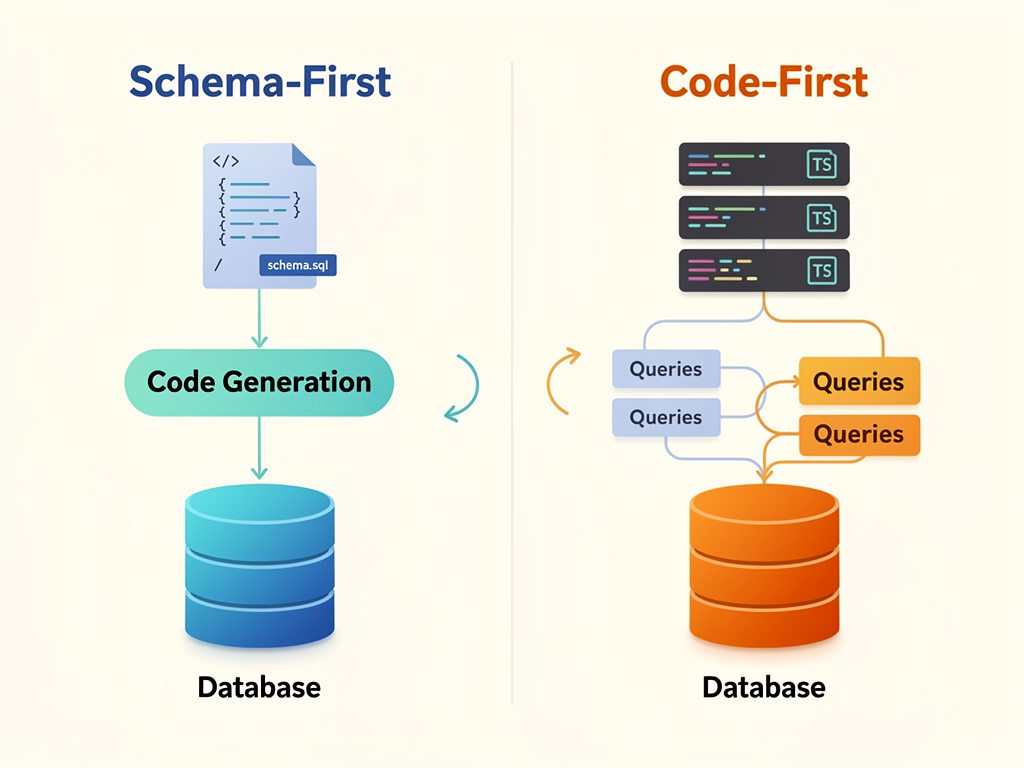
Prisma has established itself as the most widely adopted TypeScript ORM, offering a comprehensive solution that prioritizes developer experience and productivity. At its core, Prisma uses a declarative schema language (Prisma Schema Language or PSL) to define your database structure. This schema serves as the single source of truth for your data models, from which Prisma generates a fully typed TypeScript client.
The Prisma workflow begins with defining models in a .prisma file, specifying tables, columns, relationships, and constraints using an intuitive syntax. Running prisma generate creates a TypeScript client with complete type definitions for all your models and queries. This generated client provides auto-completion, type checking, and runtime query building that catches errors before they reach production.
For multi-tenant SaaS applications, Prisma offers several advantages. The Prisma Client supports middleware that can automatically inject tenant context into queries, ensuring data isolation without requiring developers to remember tenant filters on every query. The Prisma Migrate tool provides a robust migration system that tracks schema changes and generates SQL migrations, which can be applied across tenant databases or schemas systematically.
Prisma's ecosystem includes Prisma Studio, a visual database browser that simplifies debugging and data exploration. For SaaS developers managing multiple tenants, this tool provides quick visibility into tenant-specific data without writing queries. The extensive documentation and large community mean that common patterns for multi-tenant implementations are well-documented and supported.
Pro Tip: When implementing row-level security with Prisma, use middleware to automatically append tenant filters to all queries. This prevents accidental data leakage between tenants and centralizes your isolation logic in one place.
The trade-offs with Prisma include the code generation step, which adds friction to the development workflow, and historically, performance concerns in serverless environments due to the Rust query engine. However, Prisma 7, released in late 2025, addressed the serverless concern by removing the Rust engine entirely, resulting in a pure TypeScript client with significantly improved cold start times and a 90% reduction in bundle size.
Drizzle: The SQL-Native Challenger
Drizzle ORM represents a fundamentally different philosophy: stay close to SQL while maintaining full type safety. Instead of a separate schema language, Drizzle defines schemas directly in TypeScript. There is no code generation step; types are inferred instantly as you write your schema definitions. The query builder syntax mirrors SQL closely, making it immediately familiar to developers comfortable with database queries.
The Drizzle approach appeals to developers who want transparency into the SQL their application executes. When you write a Drizzle query, you can easily predict the resulting SQL, which simplifies debugging and performance optimization. This SQL-first philosophy means that complex queries, joins, and aggregations feel natural rather than fighting against an abstraction layer.

For multi-tenant applications, Drizzle's lightweight nature offers significant advantages. The minimal bundle size (approximately 12 KB minified and gzipped) and near-instant cold starts make it ideal for serverless and edge deployments where each request may spin up a new instance. When your SaaS serves tenants globally, deploying to edge locations with Drizzle can dramatically reduce latency.
Drizzle's relational query API provides a more Prisma-like experience for developers who prefer object-based queries while maintaining the performance benefits of the core library. This flexibility allows teams to choose the query style that best fits each use case: SQL-like queries for complex operations and relational queries for simpler CRUD operations.
The Drizzle Kit CLI tool handles migrations, generating SQL files that you can review and modify before applying. This control is valuable for multi-tenant scenarios where you may need to customize migrations for different tenant configurations or apply them selectively across tenant databases. The generated SQL is clean and readable, making it easy to understand exactly what changes will be applied.
Drizzle's growing ecosystem includes Drizzle Studio, a data browser similar to Prisma Studio, though currently less polished. The community is smaller but highly engaged, with rapid development and frequent releases adding new features and database support. For teams building on cutting-edge infrastructure like Cloudflare Workers, Vercel Edge, or similar platforms, Drizzle's first-class edge support is often the deciding factor.
Performance Comparison for SaaS Workloads
Performance characteristics differ significantly between Prisma and Drizzle, with implications that vary based on your deployment model and traffic patterns. Understanding these differences helps you choose the right tool for your specific SaaS requirements.
| Metric | Drizzle | Prisma 7 | Impact on Multi-Tenant SaaS |
|---|---|---|---|
| Bundle Size | ~12 KB | ~1.6 MB | Affects serverless cold starts and edge deployments |
| Cold Start Time | Near-instant | Competitive (improved in v7) | Critical for serverless functions serving tenant requests |
| Query Latency | Minimal overhead | Slightly higher abstraction cost | Matters for high-frequency tenant operations |
| Connection Pooling | Manual configuration | Built-in with Prisma Accelerate | Essential for managing connections across tenants |
| Memory Footprint | Minimal | Larger due to generated client | Affects container sizing and costs |
Cold start performance is particularly relevant for multi-tenant SaaS applications using serverless architectures. When a tenant makes a request that triggers a new function instance, the ORM initialization time directly impacts response latency. Drizzle's minimal footprint means near-instant initialization, while Prisma 7's improvements have made it competitive, though still slightly slower.
For query execution speed, both ORMs perform well for typical SaaS workloads. The differences become more apparent in high-throughput scenarios or when executing complex queries. Drizzle's thin abstraction layer means less processing between your code and the database, while Prisma's query engine adds a small overhead in exchange for features like query optimization and batching.
Connection pooling is critical for multi-tenant applications where many tenants may be active simultaneously. Prisma offers Prisma Accelerate, a managed connection pooling service that handles connection management automatically. Drizzle requires manual configuration of connection pooling through external tools like PgBouncer, giving you more control but requiring additional setup.

When building a SaaS boilerplate or production application, consider your expected traffic patterns. If you anticipate bursty traffic with many cold starts (common in B2B SaaS with business-hours usage), Drizzle's performance advantages may be significant. For applications with consistent traffic where instances stay warm, the performance difference becomes less important, and other factors like developer experience may dominate your decision.
Type Safety and Developer Experience
Both Prisma and Drizzle provide excellent TypeScript support, but their approaches to type safety create different developer experiences. Understanding these differences helps you choose the tool that best fits your team's workflow and preferences.
Prisma's type safety comes from the generated client. After running prisma generate, you get a fully typed client with auto-completion for all models, fields, and query operations. The types are comprehensive, covering not just basic CRUD but also complex operations like nested writes, transactions, and aggregations. The downside is the generation step: every schema change requires regenerating the client before types update.
Drizzle's type safety is immediate. Because schemas are defined in TypeScript, types update instantly as you modify your schema files. There is no generation step, no waiting, and no risk of types being out of sync with your schema. This instant feedback loop can significantly improve development velocity, especially during rapid iteration phases common in early-stage SaaS development.
The query building experience differs substantially between the two tools. Prisma's API uses an object-based approach that abstracts SQL concepts:
Prisma queries read naturally for developers familiar with object-oriented patterns. You specify what data you want (findMany, findUnique) and what relations to include (include), and Prisma handles the SQL generation. This abstraction is powerful for common operations but can feel limiting for complex queries that do not fit the API's patterns.
Drizzle queries mirror SQL structure more directly. You build queries using select, from, where, and join operations that map to their SQL equivalents. For developers comfortable with SQL, this feels natural and predictable. For those less familiar with SQL, there is a steeper learning curve compared to Prisma's more abstracted approach.
Team Consideration: If your team includes developers with varying SQL experience levels, Prisma's abstraction may help maintain consistency. If your team is SQL-comfortable and values query transparency, Drizzle's approach may accelerate development.
For multi-tenant applications specifically, both ORMs support the patterns you need. Prisma's middleware can inject tenant context automatically, while Drizzle's explicit query building makes tenant filters visible in every query. The choice often comes down to whether you prefer implicit (Prisma) or explicit (Drizzle) tenant handling in your codebase.
Migration Strategies for Multi-Tenant Architectures
Database migrations in multi-tenant SaaS applications present unique challenges. You may need to apply migrations across hundreds or thousands of tenant databases, handle tenant-specific schema variations, or coordinate migrations with tenant onboarding workflows. Both Prisma and Drizzle provide migration tools, but with different philosophies and capabilities.
Prisma Migrate offers a guided migration experience. When you modify your Prisma schema, running prisma migrate dev generates a timestamped migration folder containing the SQL to transform your database. Prisma tracks which migrations have been applied and ensures they run in order. The tool handles common scenarios like adding columns, creating tables, and modifying relationships automatically.
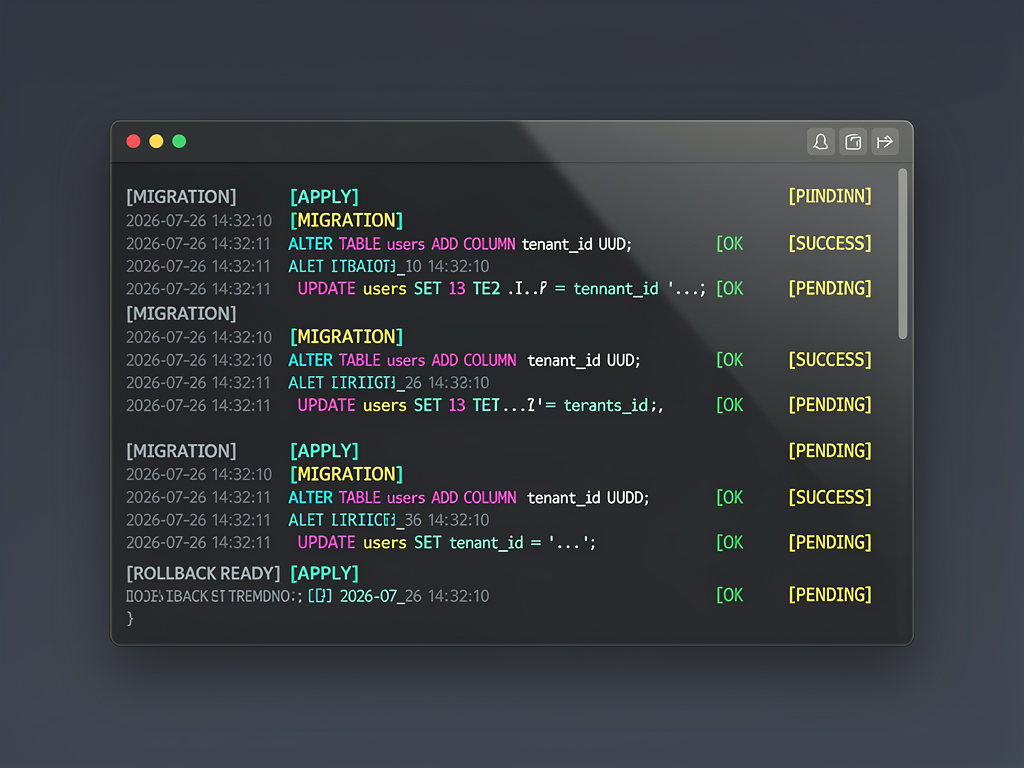
For multi-tenant scenarios, Prisma's migration approach works well with shared-schema architectures where all tenants use the same database structure. You apply migrations once, and all tenants benefit. For database-per-tenant or schema-per-tenant architectures, you need to script the migration application across all tenant databases, which Prisma supports but does not automate out of the box.
Drizzle Kit generates numbered SQL migration files that you can review and modify before applying. Running drizzle-kit generate creates migration files based on schema changes, while drizzle-kit migrate applies them. The generated SQL is clean and readable, making it easy to understand and customize migrations for specific requirements.
Drizzle's approach provides more control over the migration process, which can be valuable for multi-tenant architectures with complex requirements. You can modify generated migrations to handle tenant-specific logic, split migrations for gradual rollout across tenant groups, or integrate with custom deployment pipelines. This flexibility comes at the cost of more manual management compared to Prisma's more automated approach.
When building a multi-tenant boilerplate or production platform, consider these migration scenarios:
- Tenant onboarding: How will you initialize the database structure for new tenants? Both ORMs support programmatic migration execution.
- Schema evolution: How will you handle breaking changes that require data migration? Drizzle's explicit SQL gives you more control; Prisma's abstractions handle common cases automatically.
- Rollback strategies: Neither ORM provides automatic rollback generation. Plan your rollback strategy regardless of which tool you choose.
- Zero-downtime migrations: For SaaS applications requiring high availability, both ORMs support migration patterns that avoid downtime, but implementation requires careful planning.
Edge and Serverless Deployment Considerations
Modern SaaS applications increasingly deploy to edge and serverless environments to reduce latency and improve scalability. The ORM you choose significantly impacts your ability to leverage these deployment models effectively.
Drizzle was designed with edge environments in mind. Its minimal bundle size, zero external dependencies, and instant initialization make it ideal for platforms like Cloudflare Workers, Vercel Edge Functions, and similar environments. When your multi-tenant SaaS serves customers globally, deploying database access logic to edge locations can dramatically reduce latency for tenant operations.
Drizzle's edge support extends to database connectivity. It works seamlessly with edge-compatible databases like Neon, Turso, PlanetScale, and Cloudflare D1. These databases provide HTTP-based or WebSocket connections that work in edge environments where traditional TCP connections are not available.
Prisma 7 significantly improved edge support by removing the Rust query engine that previously required native binaries incompatible with edge runtimes. The pure TypeScript client now works in Vercel Edge and Cloudflare Workers, though with a larger bundle size than Drizzle. For teams already invested in Prisma, this improvement removes a major barrier to edge deployment.

For serverless deployments on platforms like AWS Lambda, Google Cloud Functions, or Vercel Serverless Functions, both ORMs work well. The primary consideration is cold start time, where Drizzle maintains an advantage. However, techniques like provisioned concurrency (AWS) or keeping functions warm can mitigate cold start concerns for either ORM.
When evaluating edge and serverless deployment for your SaaS template, consider:
- Database location: Edge deployment only helps if your database is also accessible with low latency. Consider edge-compatible databases or read replicas.
- Connection management: Serverless environments create and destroy connections frequently. Both ORMs benefit from connection pooling solutions.
- Bundle size limits: Some platforms impose size limits on deployed functions. Drizzle's smaller footprint provides more headroom for your application code.
- Warm-up strategies: For latency-sensitive applications, implement warm-up strategies regardless of ORM choice.
Implementing Row-Level Security for Tenant Isolation
Row-level security (RLS) is a common pattern for multi-tenant SaaS applications where all tenants share the same database tables. Each row includes a tenant identifier, and the application ensures queries only access data belonging to the current tenant. Both Prisma and Drizzle support this pattern, but with different implementation approaches.
Prisma's middleware feature provides an elegant way to implement RLS. You can create middleware that intercepts all queries and automatically appends tenant filters based on the current context. This centralized approach ensures tenant isolation without requiring developers to remember filters on every query:
The middleware approach reduces the risk of accidentally exposing data between tenants, as the filter is applied automatically. However, it requires careful implementation to handle all query types correctly and can make debugging more complex since the tenant filter is not visible in the query code.
Drizzle's explicit query building makes tenant filters visible in every query. While this requires more discipline from developers, it also provides complete transparency into what data each query accesses:
The explicit approach makes code reviews easier since tenant isolation is visible in the query itself. It also simplifies debugging since you can see exactly what filters are applied. The trade-off is the risk of forgetting tenant filters, though this can be mitigated through code review practices and custom query builders.
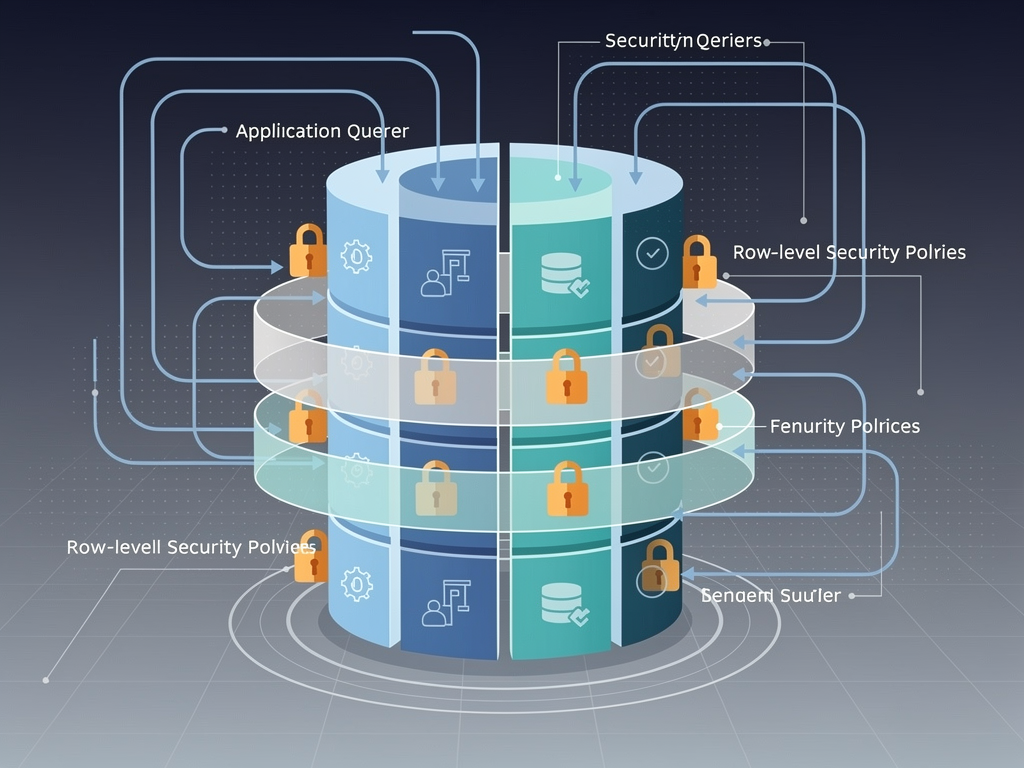
For production multi-tenant applications, consider combining application-level filtering with database-level RLS policies. PostgreSQL's native RLS feature can provide an additional layer of protection, ensuring that even if application code fails to filter correctly, the database prevents cross-tenant data access. Both Prisma and Drizzle work with database-level RLS, though you need to ensure the tenant context is passed to the database connection.
Schema Design Patterns for Multi-Tenant Applications
The way you design your database schema significantly impacts both performance and maintainability of your multi-tenant SaaS. Both Prisma and Drizzle support various schema patterns, but their different approaches to schema definition create distinct workflows.
Shared schema with tenant identifiers is the most common pattern for SaaS applications. All tenants share the same tables, with a tenant_id column on each table requiring tenant-specific data. This pattern is simple to implement and maintain, works well with both ORMs, and scales efficiently for most use cases.
In Prisma, you define the tenant relationship in your schema:
Drizzle's TypeScript schema definition achieves the same result:
Schema-per-tenant provides stronger isolation by giving each tenant their own database schema within a shared database. This pattern is more complex to implement but provides better isolation and can simplify compliance requirements. Prisma supports this through dynamic schema configuration, while Drizzle can work with schema prefixes in table names.
Database-per-tenant provides the strongest isolation but is most complex to manage. Each tenant gets their own database, requiring connection management across potentially thousands of databases. Both ORMs support this pattern, but you need additional infrastructure for connection pooling and migration management.
| Pattern | Isolation Level | Complexity | Prisma Support | Drizzle Support |
|---|---|---|---|---|
| Shared Schema + RLS | Application-level | Low | Excellent (middleware) | Excellent (explicit filters) |
| Schema-per-Tenant | Database-level | Medium | Good (dynamic config) | Good (schema prefixes) |
| Database-per-Tenant | Complete | High | Good (connection switching) | Good (connection switching) |
When building a Next.js starter kit or production application, the shared schema pattern with row-level security is typically the best starting point. It provides sufficient isolation for most use cases while keeping infrastructure simple. You can always migrate to stronger isolation patterns later if requirements demand it.
Ecosystem and Community Support
The ecosystem surrounding an ORM affects your development experience beyond the core library. Documentation quality, community size, third-party integrations, and available learning resources all impact how quickly you can build and maintain your SaaS application.
Prisma's ecosystem is mature and extensive. The official documentation is comprehensive, covering not just basic usage but also advanced patterns, deployment guides, and troubleshooting. The community is large, with active Discord and GitHub discussions, numerous blog posts and tutorials, and Stack Overflow coverage for common issues. Third-party integrations exist for most popular frameworks and tools.
Prisma's ecosystem includes several official tools and services:
- Prisma Studio: A polished visual database browser for exploring and editing data
- Prisma Accelerate: Managed connection pooling and global caching
- Prisma Pulse: Real-time database change streaming
- Extensive documentation: Guides for every major framework and deployment platform
Drizzle's ecosystem is smaller but growing rapidly. The documentation has improved significantly and covers core functionality well, though some advanced patterns require community resources. The community is highly engaged, with active Discord discussions and frequent contributions. The smaller size means you may encounter scenarios not covered in documentation, requiring more exploration.
Drizzle's ecosystem includes:
- Drizzle Kit: CLI for migrations and schema management
- Drizzle Studio: Visual database browser (less polished than Prisma Studio but functional)
- Growing integration support: Official adapters for major databases and platforms
- Active development: Frequent releases with new features and improvements
For teams building production SaaS applications, Prisma's larger ecosystem provides more resources for solving problems and onboarding new team members. Drizzle's smaller ecosystem means more self-reliance but also a more focused, opinionated tool. Consider your team's comfort level with exploring solutions independently when making this decision.
Integration with Next.js and Modern Frameworks
Both Prisma and Drizzle integrate well with Next.js, but their different architectures create distinct patterns for server components, API routes, and middleware. Understanding these patterns helps you build efficient multi-tenant applications with either ORM.
Server Components in Next.js can directly access your database through either ORM. Prisma's client works seamlessly in server components, providing type-safe queries with the familiar API. Drizzle's lightweight nature makes it particularly well-suited for server components, with minimal overhead per request.
For multi-tenant applications, you typically extract the tenant context from the request (via subdomain, header, or authentication) and pass it to your database queries. Both ORMs support this pattern, though the implementation differs:
API Routes work similarly with both ORMs. The main consideration is connection management: ensure you are not creating new database connections on every request. Both ORMs support connection reuse patterns appropriate for serverless environments.
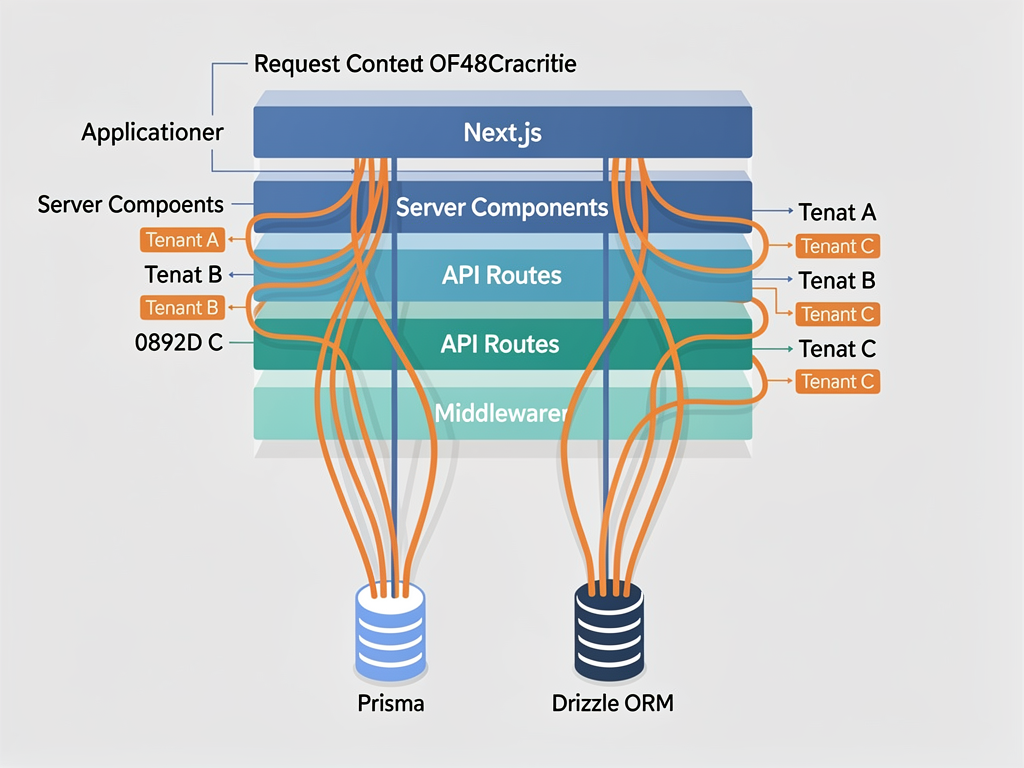
Middleware for tenant resolution typically runs before your database queries. You can use Next.js middleware to extract tenant information from the request and make it available to your server components and API routes. Both ORMs work well with this pattern, receiving tenant context through function parameters or context objects.
When building a Next.js SaaS template, consider these integration patterns:
- Singleton pattern: Create a single ORM client instance and reuse it across requests to avoid connection overhead
- Context providers: Use React context or similar patterns to make tenant information available throughout your component tree
- Type-safe tenant context: Define TypeScript types for your tenant context to catch errors at compile time
- Caching strategies: Both ORMs work with Next.js caching; consider cache invalidation strategies for tenant-specific data
Cost Considerations for SaaS Platforms
The ORM you choose impacts your infrastructure costs in several ways. While the ORM itself is typically free (both Prisma and Drizzle are open source), the deployment patterns they enable or require affect your overall costs.
Serverless costs are directly affected by cold start times and execution duration. Drizzle's faster cold starts and smaller bundle size can reduce costs in high-volume serverless deployments. The difference may be small per request but compounds across millions of tenant requests.
Connection pooling costs vary between the ORMs. Prisma Accelerate is a paid service (with a free tier) that provides managed connection pooling. Drizzle requires you to set up your own pooling solution, which may be free (self-hosted PgBouncer) or paid (managed database features). Consider the operational overhead of self-managing versus the cost of managed services.
Database costs are influenced by query efficiency. Both ORMs generate efficient queries for common operations, but Drizzle's SQL-first approach may help you write more optimized queries for complex scenarios, potentially reducing database load and costs.
| Cost Factor | Drizzle Impact | Prisma Impact |
|---|---|---|
| Serverless execution time | Lower (faster cold starts) | Higher (larger bundle) |
| Connection pooling | Self-managed or third-party | Prisma Accelerate (paid tiers) |
| Development time | Varies by team SQL comfort | Generally faster onboarding |
| Maintenance overhead | More manual query optimization | More abstraction to manage |
For early-stage SaaS applications, development velocity often matters more than infrastructure optimization. Prisma's faster onboarding may save development costs that outweigh any infrastructure savings from Drizzle. As your application scales and infrastructure costs become significant, you can always optimize or migrate.
Making the Decision: A Framework for Choosing
After examining both ORMs across multiple dimensions, here is a framework for making your decision based on your specific situation and requirements.
Choose Prisma if:
- Your team prioritizes developer experience and rapid onboarding
- You want comprehensive documentation and a large community for support
- Your team has varying levels of SQL experience
- You value visual tools like Prisma Studio for debugging
- You are willing to use managed services like Prisma Accelerate for connection pooling
- Your deployment environment is traditional servers or standard serverless (not edge-focused)
Choose Drizzle if:
- Your team is comfortable with SQL and values query transparency
- You are deploying to edge environments where bundle size and cold starts matter
- You want instant type inference without code generation steps
- You prefer explicit control over queries and migrations
- You are building for platforms like Cloudflare Workers or similar edge runtimes
- You want a minimal abstraction layer between your code and the database
For teams building with a SaaS starter kit or boilerplate, consider what the boilerplate provides. Some boilerplates offer both options, letting you choose based on your preferences. Others are opinionated about the ORM choice, which simplifies decisions but may not match your requirements. SaasCore, for example, provides a comprehensive Next.js boilerplate with flexible database options that can work with either ORM approach.
Future Outlook and Trends
The ORM landscape continues to evolve rapidly, with both Prisma and Drizzle actively developing new features. Understanding the trajectory of each tool helps you make a decision that remains valid as your SaaS grows.
Prisma's direction focuses on expanding its platform with services like Accelerate and Pulse, providing managed solutions for common database challenges. The removal of the Rust engine in version 7 signals a commitment to broader runtime support. Expect continued investment in developer experience and enterprise features.
Drizzle's direction emphasizes performance, edge support, and staying close to SQL. The rapid development pace suggests continued feature additions while maintaining the lightweight philosophy. Expect expanded database support and improved tooling while preserving the SQL-first approach.
For multi-tenant SaaS applications, both ORMs are investing in features that matter: better connection management, improved type safety, and broader platform support. Neither is likely to become obsolete, and both have strong communities ensuring continued development.

Conclusion
Choosing between Prisma and Drizzle for your multi-tenant SaaS application is not about finding the objectively better tool. Both are excellent ORMs with strong type safety, active development, and proven production use. The right choice depends on your team's SQL comfort level, deployment environment, and development priorities.
Prisma offers a mature, batteries-included experience with excellent documentation, visual tools, and a large community. It abstracts SQL complexity behind an intuitive API, making it ideal for teams that want to focus on product development rather than database intricacies. The improvements in Prisma 7 have addressed previous serverless concerns, making it viable for modern deployment patterns.
Drizzle provides a lightweight, SQL-first approach that keeps you close to the database while maintaining full type safety. Its minimal bundle size and instant cold starts make it the clear choice for edge deployments. Teams comfortable with SQL will appreciate the transparency and control Drizzle provides.
For multi-tenant architectures specifically, both ORMs support the patterns you need: row-level security, dynamic tenant context, and flexible schema designs. The implementation details differ, but neither ORM will block you from building a robust, scalable multi-tenant platform.
Whichever ORM you choose, focus on implementing proper tenant isolation from the start, designing your schema for your expected scale, and building with the deployment environment in mind. The ORM is a tool in service of your product, and both Prisma and Drizzle are capable tools for building successful SaaS applications.
Frequently Asked Questions
Can I switch from Prisma to Drizzle (or vice versa) after starting my project?
Yes, migration between ORMs is possible but requires significant effort. Both ORMs work with the same underlying databases (PostgreSQL, MySQL, SQLite), so your data remains intact. The migration involves rewriting your schema definitions, updating all query code, and adjusting your migration workflow. For a typical multi-tenant SaaS with dozens of models and hundreds of queries, expect several weeks of development time for a complete migration. To minimize risk, consider building new features with the target ORM while gradually migrating existing code. Some teams run both ORMs simultaneously during transition, though this adds complexity. The best approach is to choose carefully upfront, but know that migration is feasible if your requirements change significantly.
How do Prisma and Drizzle handle database connection limits in multi-tenant scenarios?
Connection management is critical for multi-tenant applications where many tenants may be active simultaneously. Prisma addresses this through Prisma Accelerate, a managed connection pooling service that maintains a pool of database connections and efficiently routes queries. This service handles connection limits automatically, scaling based on demand. Drizzle requires you to implement connection pooling separately, typically using tools like PgBouncer for PostgreSQL or the connection pooling features of managed database services like Neon or Supabase. Both approaches work well, but Prisma's integrated solution requires less configuration while Drizzle's approach provides more control. For applications expecting hundreds of concurrent tenants, plan for connection pooling regardless of ORM choice, and consider database services that offer built-in pooling.
Which ORM performs better for complex analytical queries common in SaaS dashboards?
For complex analytical queries involving multiple joins, aggregations, and window functions, Drizzle typically provides more control and predictability. Its SQL-like query builder lets you construct exactly the query you need, making it easier to optimize for specific analytical workloads. Prisma handles common analytical patterns well through its aggregation API, but complex queries may require raw SQL fallback. In practice, many SaaS applications offload heavy analytics to specialized tools (data warehouses, analytics databases) rather than running complex queries against the primary database. For dashboard queries that aggregate tenant-specific data, both ORMs perform adequately. The performance difference usually comes from query design and database indexing rather than ORM overhead. Consider your specific analytical requirements and test with realistic data volumes before making a decision based on analytical performance.
How do these ORMs work with database-level row-level security policies?
Both Prisma and Drizzle work with PostgreSQL's native row-level security (RLS) policies, providing an additional layer of tenant isolation beyond application-level filtering. To use database RLS, you define policies in PostgreSQL that restrict row access based on the current user or session variables. Both ORMs can set session variables (like the current tenant ID) before executing queries, allowing RLS policies to filter results automatically. This approach provides defense-in-depth: even if application code fails to filter correctly, the database prevents cross-tenant data access. Implementation requires setting the tenant context on each database connection, which both ORMs support through connection configuration or query prefixes. Database RLS adds slight overhead to query execution but provides strong security guarantees valuable for compliance-sensitive SaaS applications.
What is the learning curve difference between Prisma and Drizzle for a team new to TypeScript ORMs?
Prisma generally has a gentler learning curve for teams new to TypeScript ORMs, especially those without strong SQL backgrounds. Its declarative schema language is intuitive, the generated client provides excellent auto-completion, and the extensive documentation covers common scenarios thoroughly. Most developers can write basic CRUD operations within hours of starting. Drizzle's learning curve depends heavily on SQL familiarity. Developers comfortable with SQL will find Drizzle's query builder immediately intuitive, potentially learning faster than with Prisma. Those less familiar with SQL face a steeper curve, needing to understand both Drizzle's API and underlying SQL concepts. For mixed-experience teams, Prisma's abstraction helps maintain consistency, while Drizzle may create knowledge gaps between SQL-comfortable and SQL-learning team members. Consider your team's background and invest in appropriate training regardless of choice.
How do Prisma and Drizzle handle schema changes in production multi-tenant environments?
Both ORMs provide migration tools, but production deployment strategies differ. Prisma Migrate generates timestamped migration folders and tracks applied migrations in a database table. For multi-tenant applications with shared schemas, you apply migrations once and all tenants benefit. For database-per-tenant architectures, you need scripts to apply migrations across all tenant databases, which Prisma supports but does not automate. Drizzle Kit generates numbered SQL migration files that you review before applying. This explicit approach gives you more control over migration content and timing, valuable for multi-tenant scenarios requiring careful coordination. Both ORMs support zero-downtime migration patterns (adding columns as nullable, backfilling data, then adding constraints), but implementation requires careful planning. For production multi-tenant deployments, establish a migration testing pipeline that validates changes against representative tenant data before production rollout, regardless of ORM choice.
Ready to Build Your Multi-Tenant SaaS Platform?
Whether you choose Prisma or Drizzle for your database layer, having a solid foundation accelerates your development significantly. NextBuilder provides a complete Next.js boilerplate for building multi-tenant SaaS platforms, with production-ready features including custom subdomains with SSL, client dashboards, admin analytics, and flexible database integration. Skip months of infrastructure work and focus on what makes your SaaS unique. Get started with NextBuilder today and launch your multi-tenant platform in days instead of months.
Subscribe to our newsletter
Subscribe to our newsletter and stay up-to-date with the latest news and updates.